This is a sponsored story, one of our paid services. We maintain full editorial independence. Read more here.
Why SOSOBROTHERS Is Limiting Its 33 oz. Range to Maximum 20 Pieces a Month
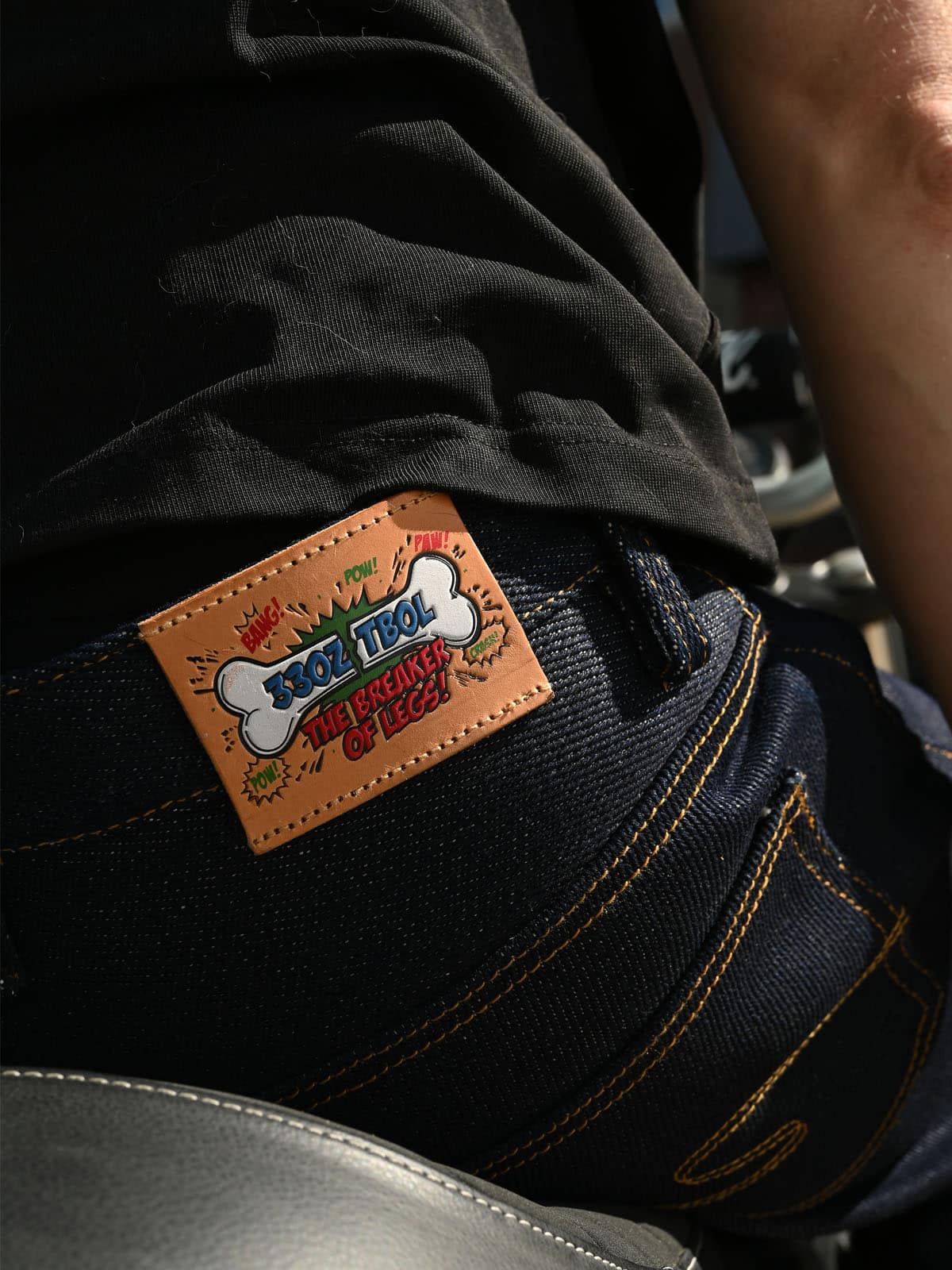
33 oz. isn’t just another fabric in the range—it’s essential to SOSOBROTHERS, the Swedish custom-made brand. The Breaker of Legs and The Breaker of Arms became products customers could come back to.
Making denim this heavy is difficult. Keeping it in production is an even bigger challenge—and right now, there’s no guarantee more can be made once the current rolls are gone. For the foreseeable future, the entire 33 oz. range is limited to up to 20 pieces a month.
The reason becomes clearer when you follow the denim through production: from the yarn and the loom to the sewing floor, and then into the hands of the people who have to break it in and wear it.
Why 33 oz. Is So Difficult to Make
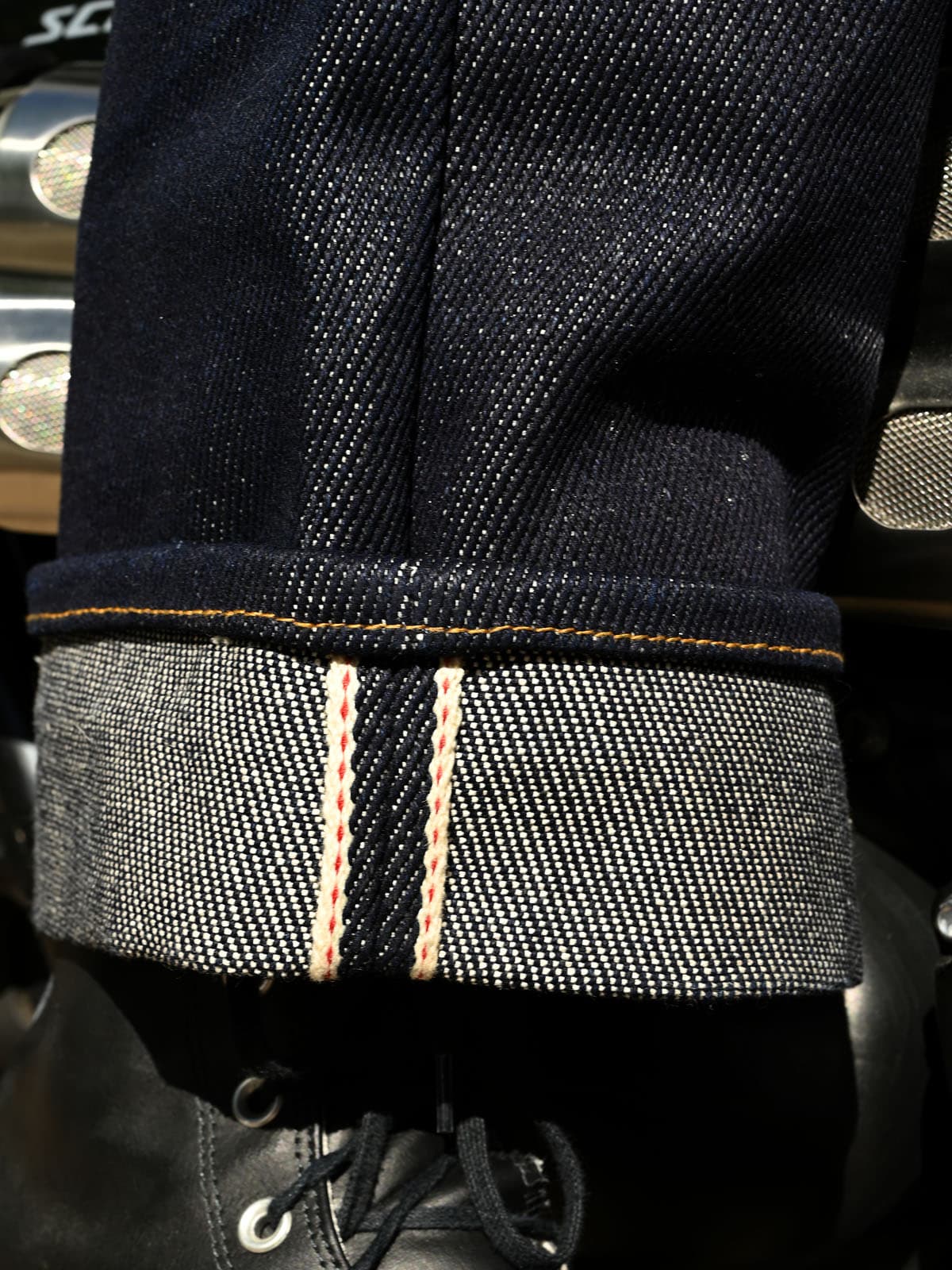
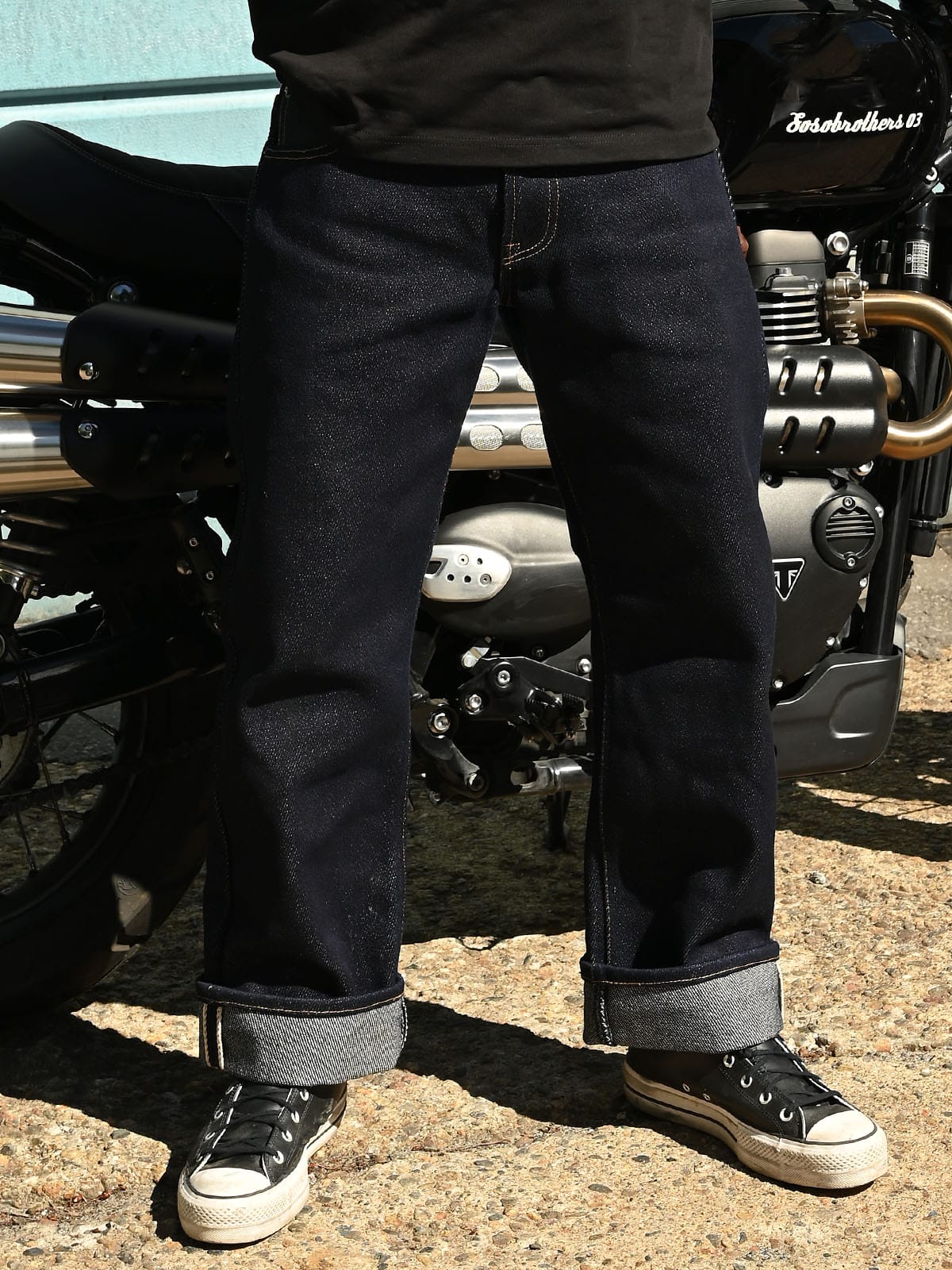
I’ve handled this denim for my review of The Breaker of Legs (TBOL) jeans. The sheer weight is one thing, but what really stands out is how reluctant the fabric is to fold and crease. That starts with the yarn.
It’s made from Australian long-staple cotton. The latest batch uses 4-ply 6s yarn in both warp and weft to make the denim stiffer. You need all that yarn to get enough mass into the cloth. But the number that really caught my attention was loom speed.
Vintage shuttle looms normally weave 100–120 yards of denim per day. With denim this heavy, output drops to around 30 yards. The immense load simply forces the loom to run that much slower.
Material loss rises sharply too. The supplier puts it at around 5–6% on 22 oz. denim, but as high as 25–30% on the 33 oz. A worker who would normally monitor six to eight looms is effectively tied to one. And even before weaving starts, dyeing, sizing, twisting and warping also need tighter control.
The Loom Is Only Half the Problem
Getting the denim off the loom only solves the first problem. Because somebody still has to cut it and sew it.
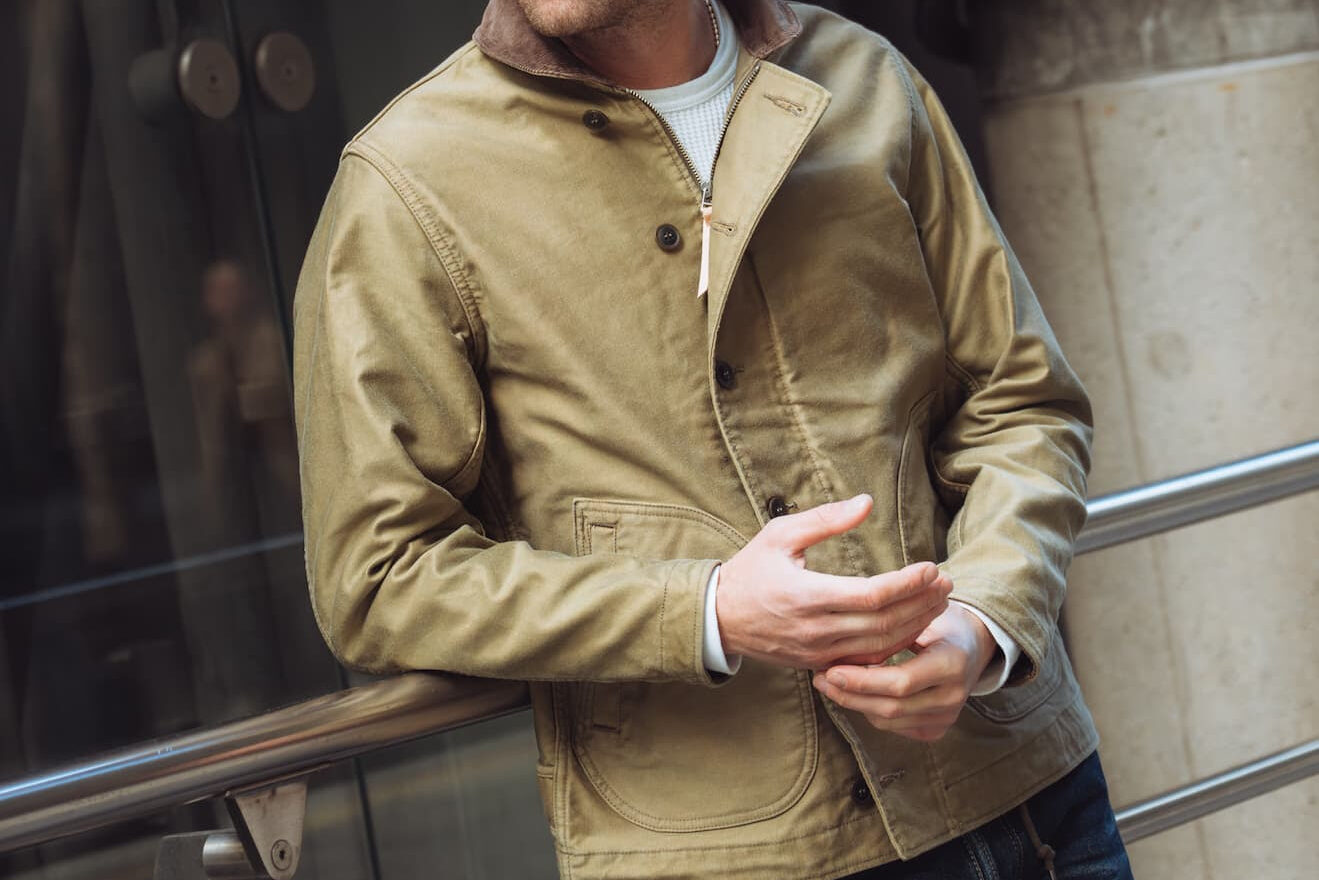
On SOSOBROTHERS’ 33 oz. jacket—The Breaker of Arms (TBOA)—on every seam, fold and buttonhole, you have several layers of already extreme denim, folded by hand, passing under a needle.
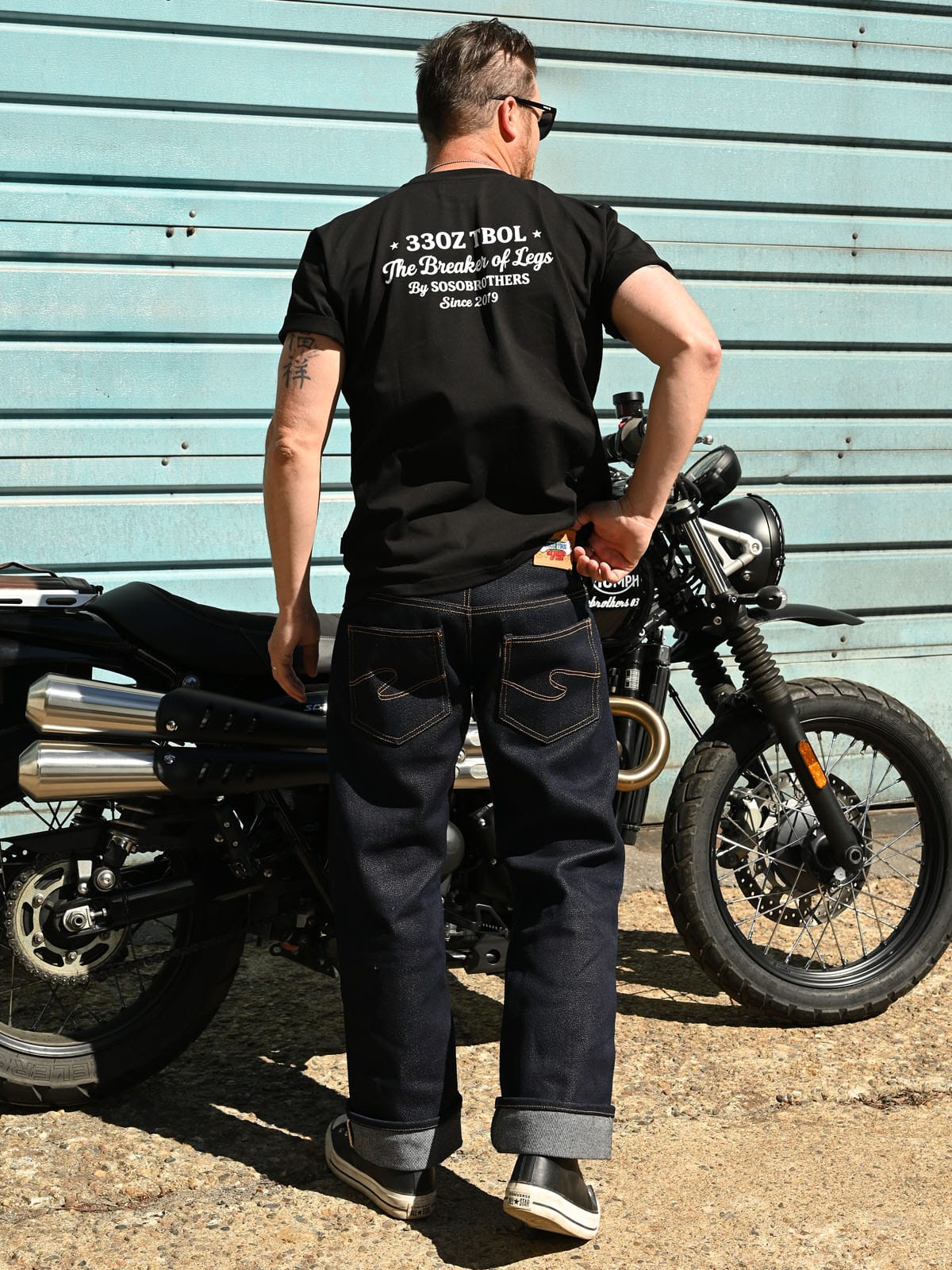
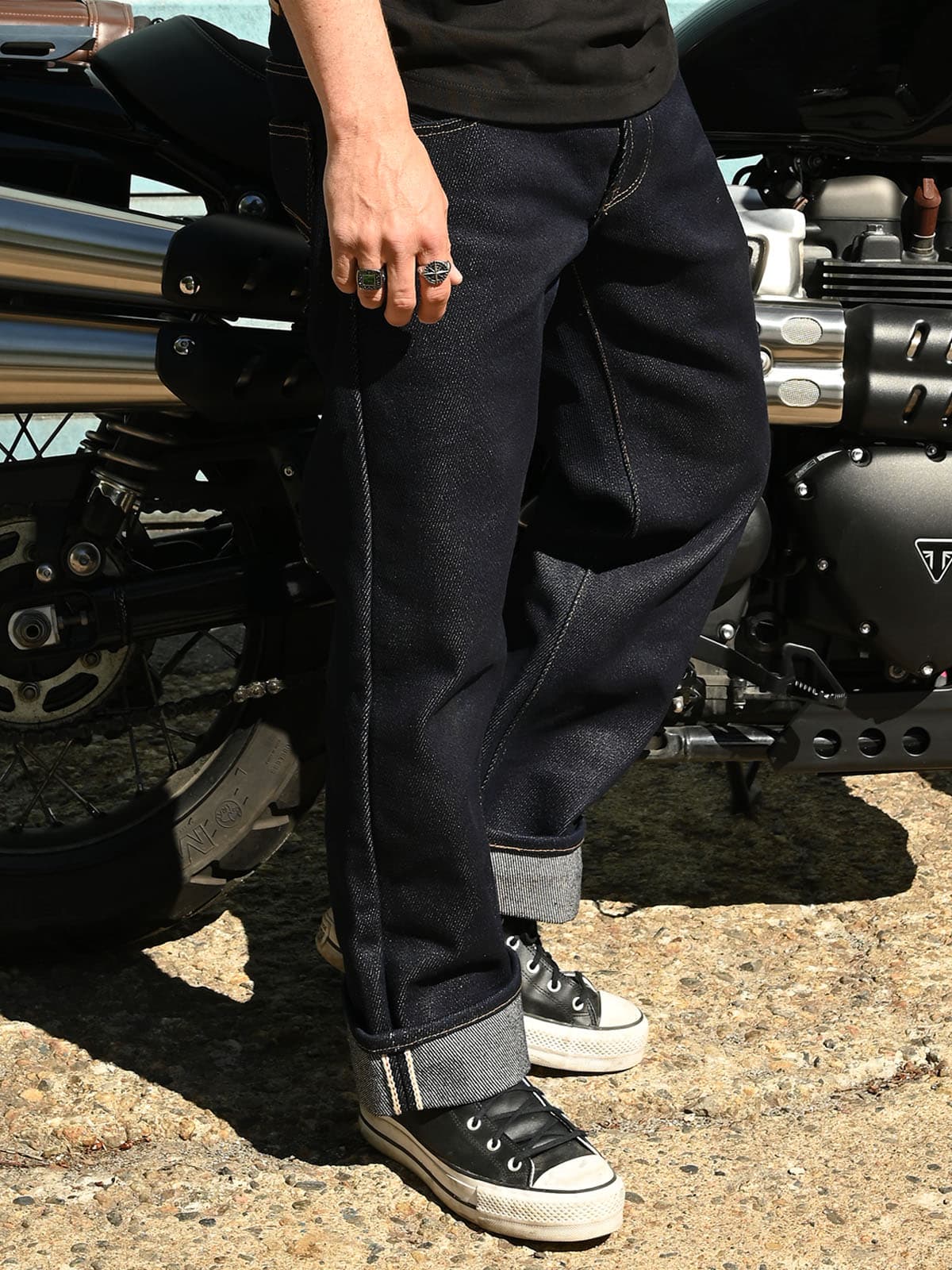
The equipment has to be able to cope with it, but so does the operator. All heavyweight jackets from 20 oz. upwards are handled by one highly specialised maker, assisted by his wife. That means the 33 oz. jackets are competing for a very specific kind of production capacity.
Once the jacket leaves the sewing floor and arrives at your doorstep, it’s your turn to fight it.
What 33 oz. Is Like to Break In
Danno (@33oz_curls) bought a double-indigo TBOA to replace a worn-out work jacket. He put it on, buttoned it, soaked it while wearing it, and kept it on as it dried.
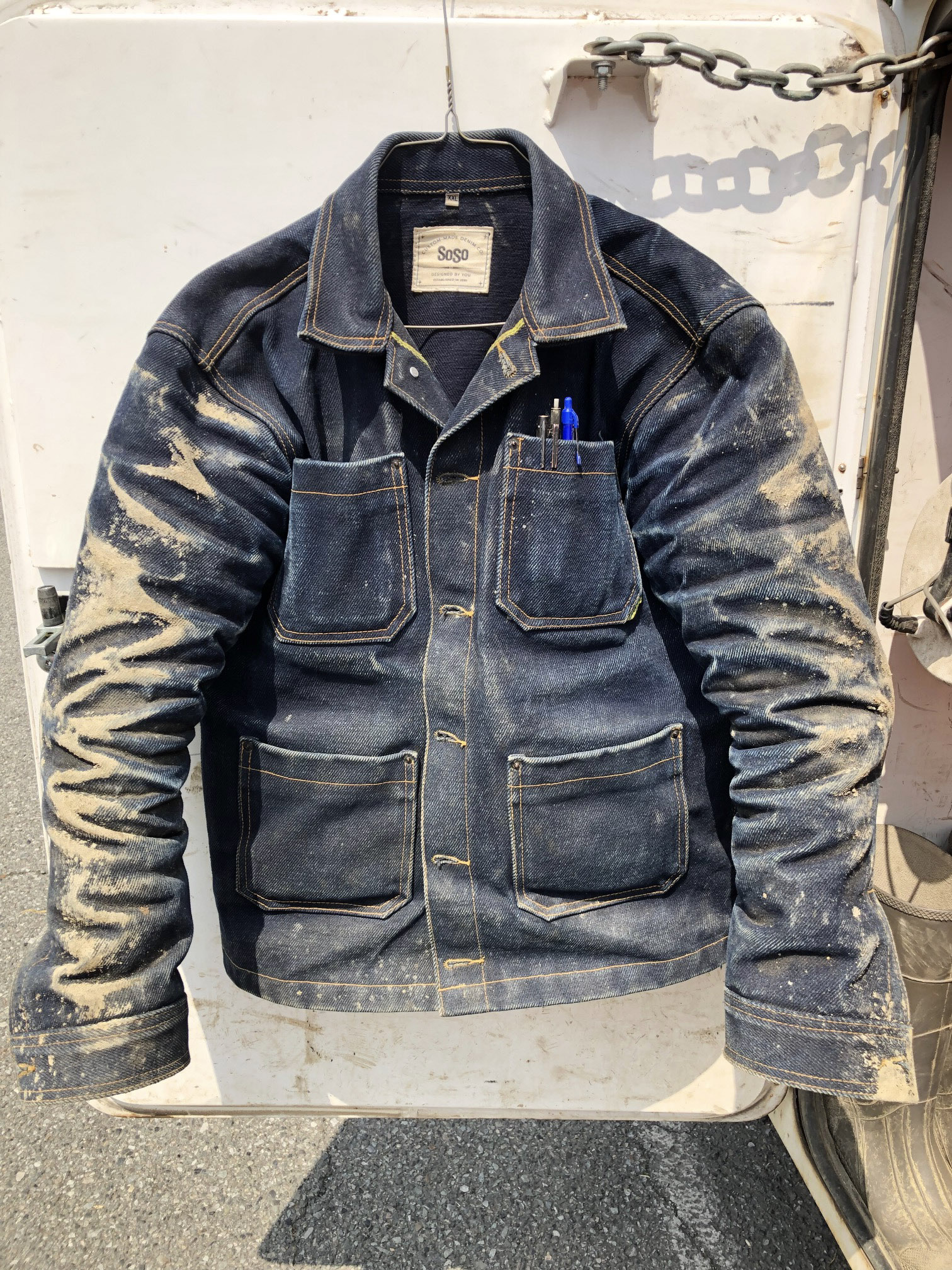
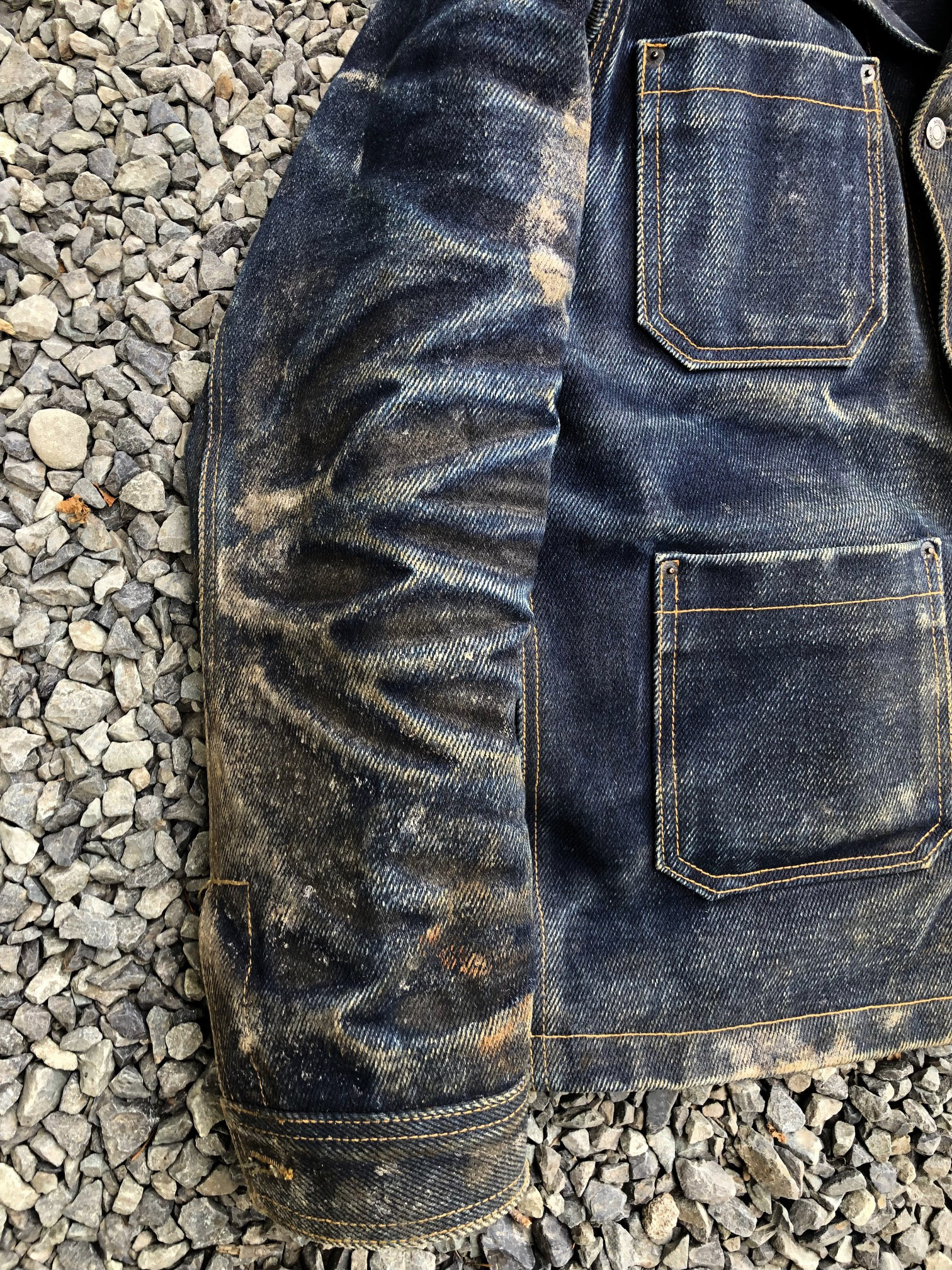
Wearing a short-sleeved tee underneath was a bad idea. As the denim dried and the elbow creases formed, the fabric rubbed his skin close to bleeding. For the first week, he switched to long sleeves and even a layer underneath.
He works for a municipal water department, so the jacket has gone down holes with him while he’s repaired pipes and hydrants, scraped against dirt walls and rubbed against old rusty pipework.
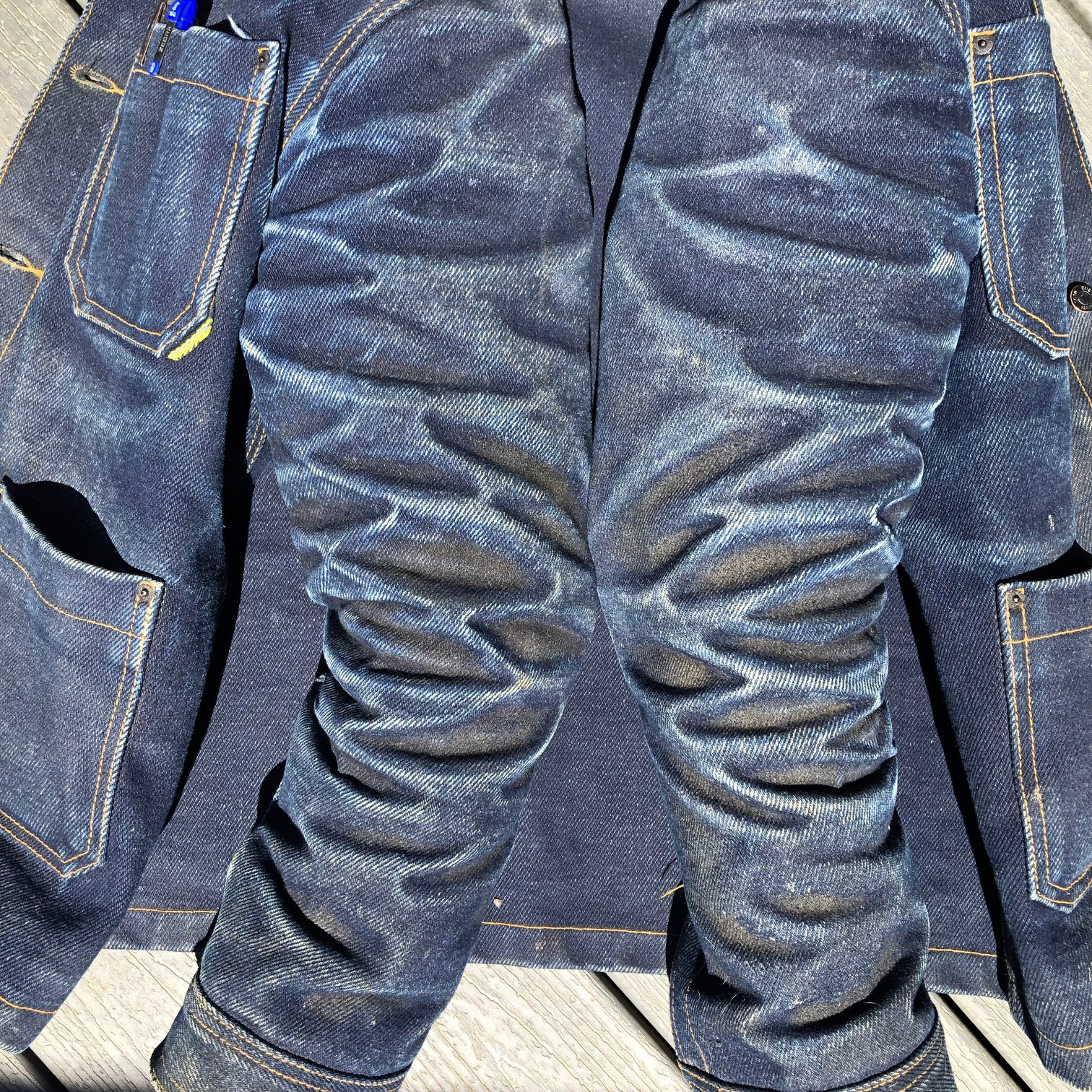
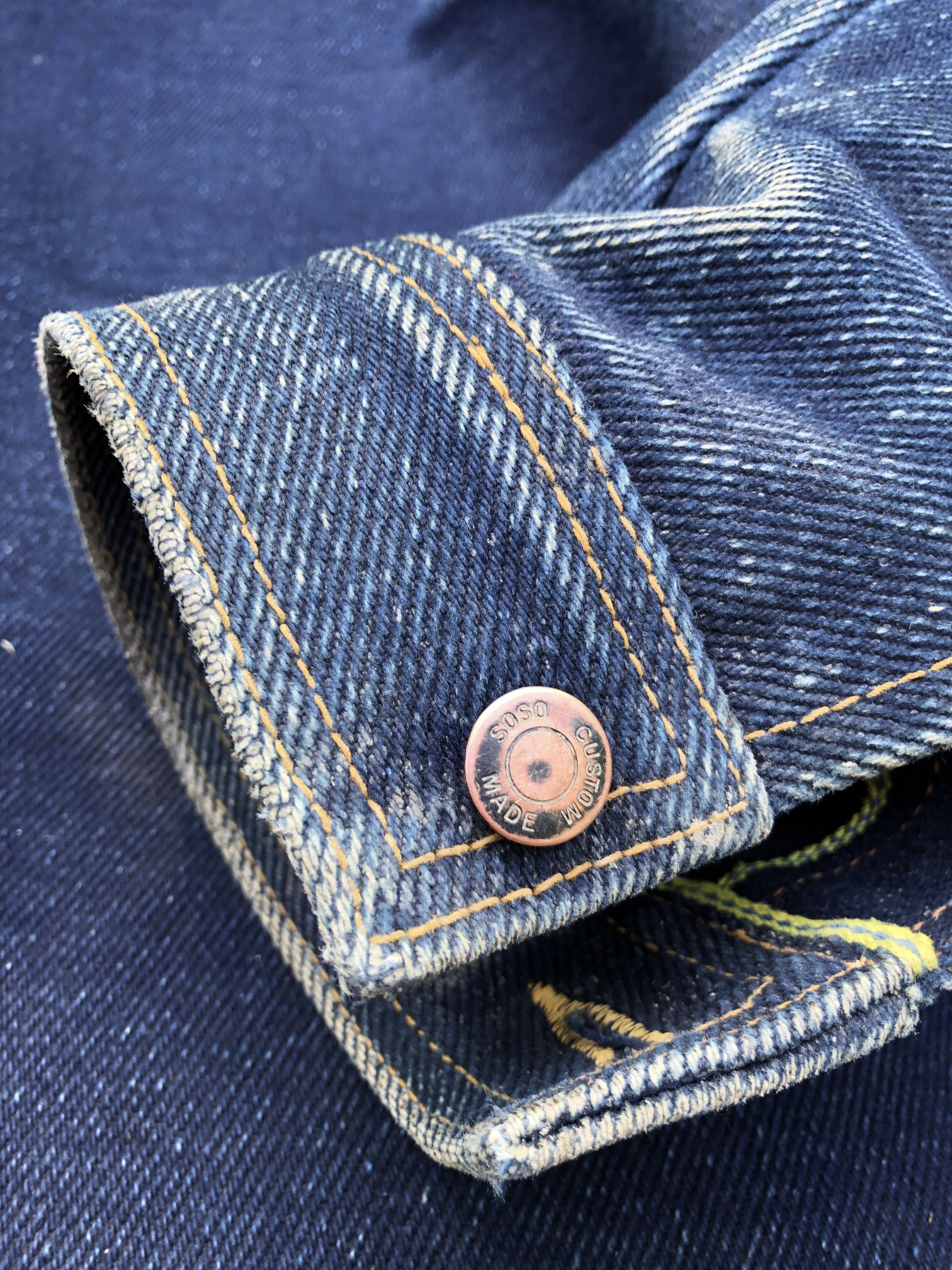
Once the main flex points were established, the jacket changed. “It feels like armour made just for you,” he says. His advice is equally subtle: “The more you wear it, the faster it breaks in. If you tiptoe around it, it will give you hell.”
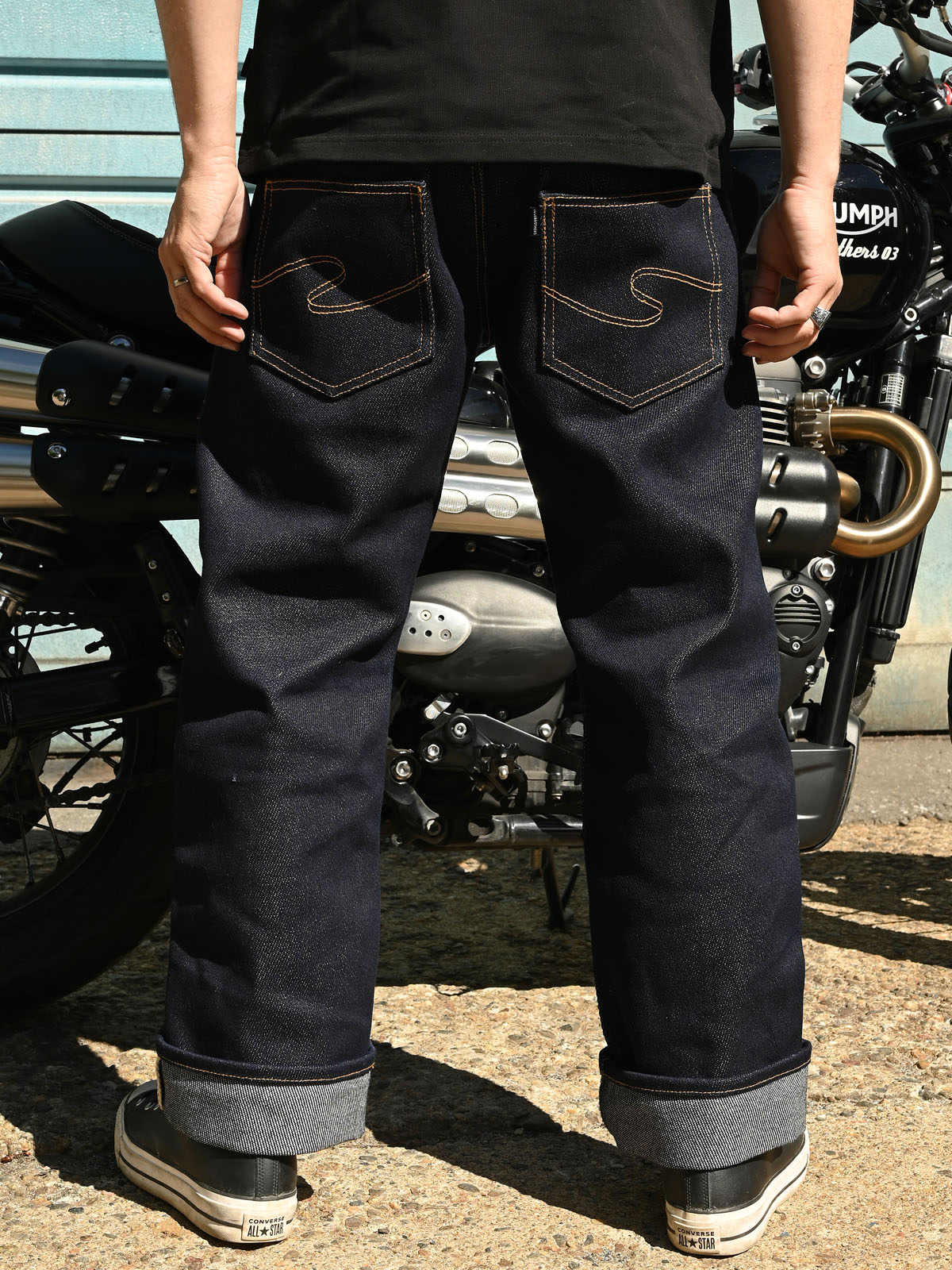
By the time he bought The Breaker of Legs jeans, he knew what he was getting into. He wore long johns, soaked the jeans, worked the stubborn buttonholes open with a screwdriver and did enough squats to get the knees moving.
“You’ll need a wrench for the buttons unless you’re a sadist,” he says.
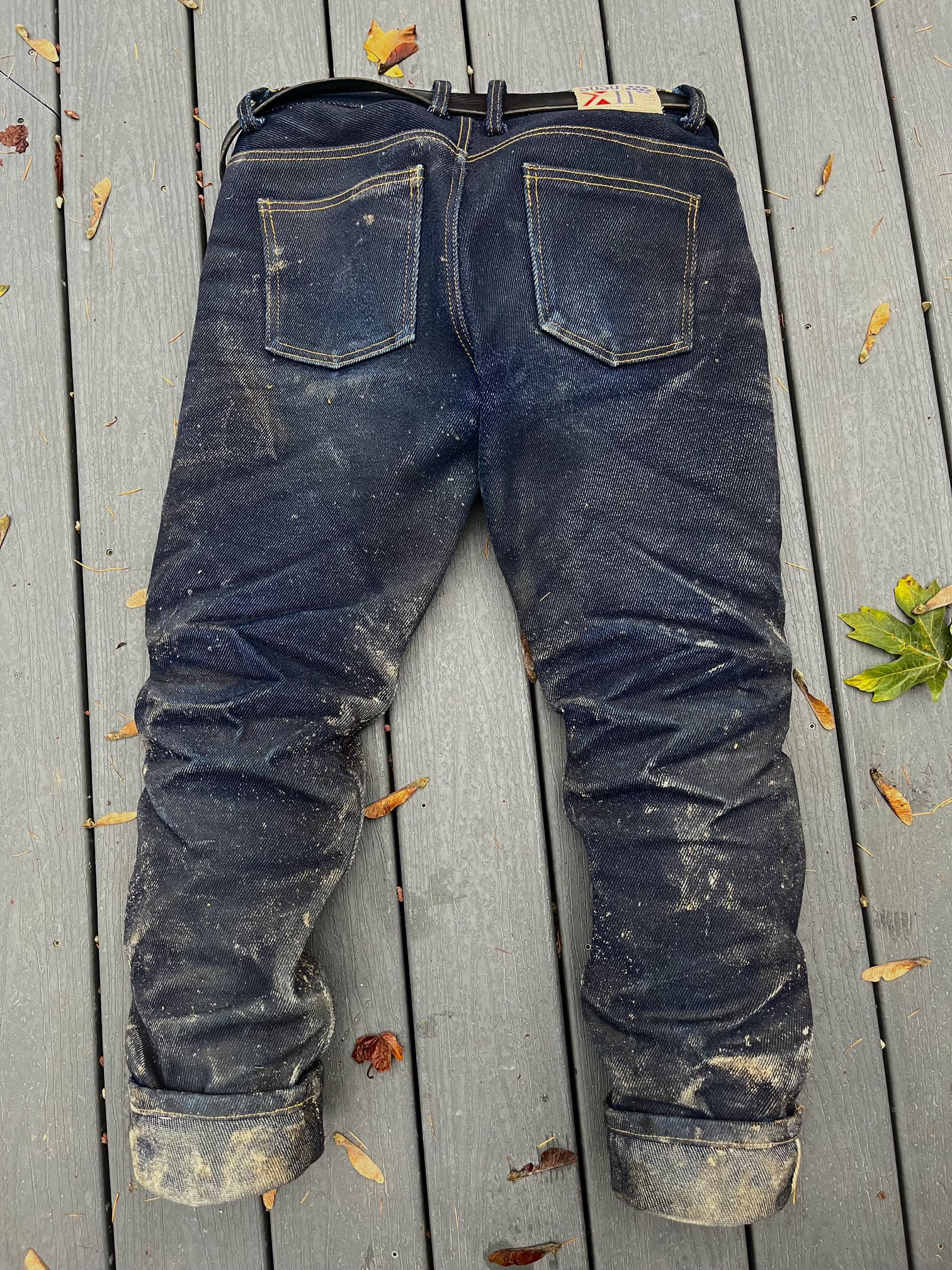
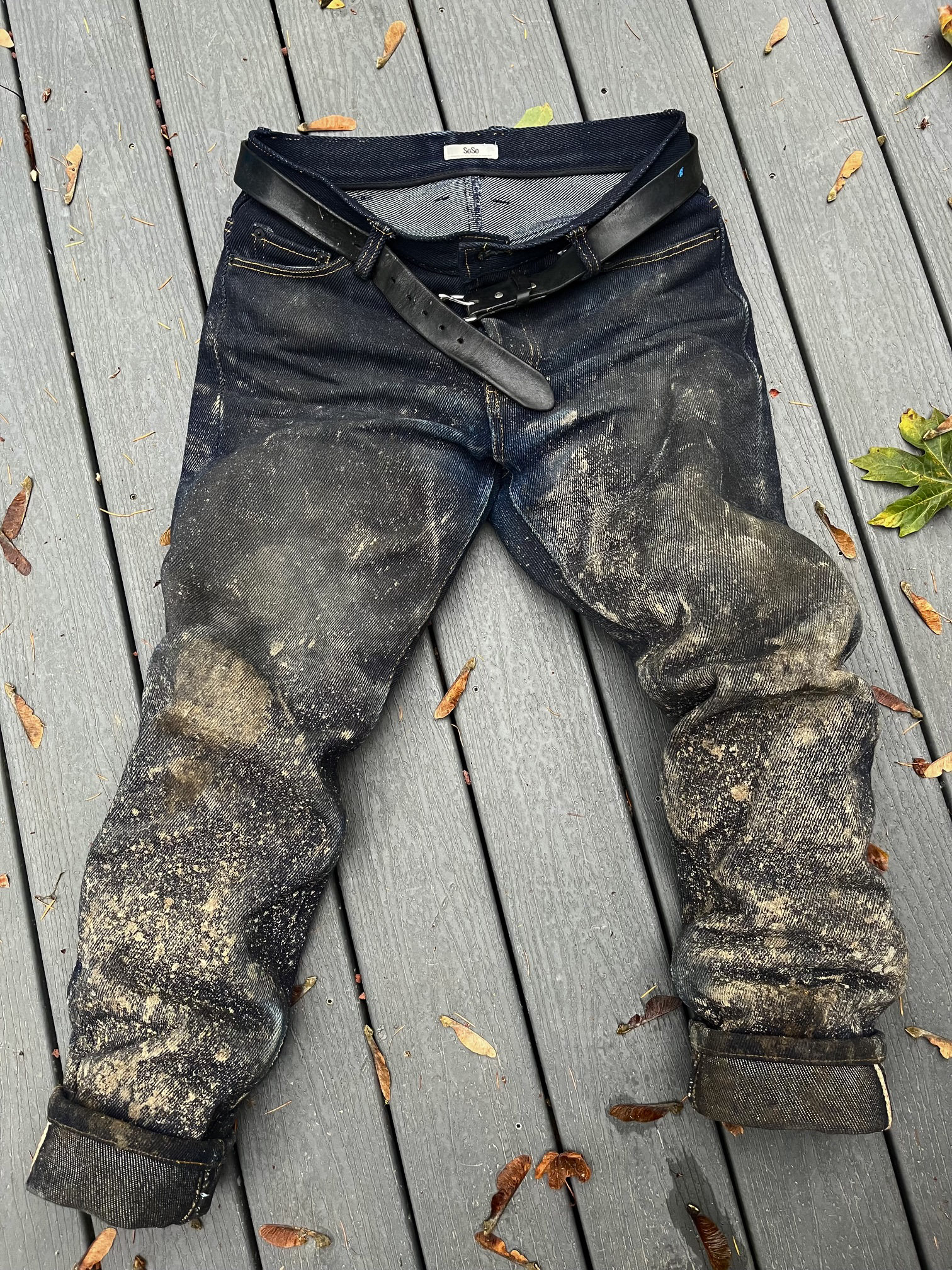
His experience shows what happens after the initial fight: the flex points settle in and the garment starts to shape itself around the wearer. He now compares the broken-in jacket to a heavy leather jacket.
Why the 20-Piece Cap Exists
The limitation on availability applies across the range of 33 oz. products. Once 20 pieces sell in a month, the range goes out of stock until the following month—or until further notice if supply requires it.
The number itself is a business decision, not a loom calculation. But slower weaving, high material loss, greater labour demand, specialist sewing capacity and uncertainty around future supply all make volume harder to manage.
For now, SOSOBROTHERS is working with the mill to find a way to keep the 33 oz. denim in production. The current stock comes from what may be the last couple of usable rolls, with no further production secured. That’s why availability will remain limited for the foreseeable future—and why there’s now a genuine question over whether The Breakers can continue once the existing denim is gone.
Share