
Affiliate disclaimer: We work with most brands and retailers featured and earn commission on purchases.
The Essentials of Well-Made Raw Selvedge Jeans
Blue jeans are a cornerstone of every wardrobe—timeless and versatile. For denimheads, they’re more than that. They’re a blank canvas for fades, a record of the lives we’ve lived, a badge of honour.
If you’re starting to care more about what you wear, this guide explains not just what to buy—but why selvedge matters, and what to look for in a well-made pair.

New to selvedge denim? Think of this as a crash course. Already got a few pairs? It’s a reminder that craftsmanship still matters—and where to find the best of it.
TL;DR – Why Selvedge Matters
Great fades start with great denim. These are three of the best pairs to buy:
Want more options? Skip ahead to the full list.
DENIM, EXPLAINED
Not Sure Where to Start?
If you’re trying to make sense of raw and selvedge denim, the guides below will help you narrow things down—by brand, weight, and what actually matters when choosing jeans.
- The Best Raw Denim Brands – A big-picture overview of the most important jeans brands—and how they differ.
- Lightweight Raw Denim – A curated guide to lighter-weight jeans that are easier to wear day to day.
- Best Heavyweight Jeans – A guide to heavier denim, what makes it special, and who it’s actually for.
New to Raw Denim?
Get expert insights on raw denim, selvedge, fades, fits, and buying better jeans—delivered to your inbox by me, Thomas, founder of Denimhunters, and author of the guide you’re reading right now.
Why Well-Made Raw Selvedge Jeans Matter
Well-made raw selvedge jeans are essential because they’re timeless, adaptable, and built to last. They’ll never go out of style and can be worn with anything. Let’s take a closer look at each of these points.

Well-Made Selvedge Jeans Are Timeless
In 1873, a Latvian tailor and a German drygoods merchant received a patent in San Francisco that set the standard for jeans—a design that’s remained virtually unchanged ever since.
Denim was a working man’s fabric—hard-wearing, practical, made for those who laid tracks, felled trees, and mined the rich earth. They shaped the world with their hands and live on as some of history’s grittiest, hardest-working men.
That utilitarian aesthetic became fashionable. Wide swaths of society embraced jeans and the blue-collar look. First, it was dude-ranchers playing cowboy, then, after WWII, denim became the uniform of a generation of rebels.
What Does ‘Raw’ Mean?
Raw denim is the kind that hasn’t been washed or treated before you start wearing it. It’s also called ‘dry’ and ‘unwashed.’ No matter what you call it, the denim is still deep dark blue, and, when it arrives in your hands, none of the fading work has been done for you. You have to do it yourself.
… And What About ‘selvedge’?
The word ‘selvedge’ comes from ‘self-edge,’ which refers to the self-finished edges on each side of shuttle-loomed denim. You’ll see these edges when you cuff your jeans. The selvedge ID is usually white and often has a coloured yarn in the middle, typically red, but it can be any colour.
Well-Made Selvedge Jeans Are Adaptable
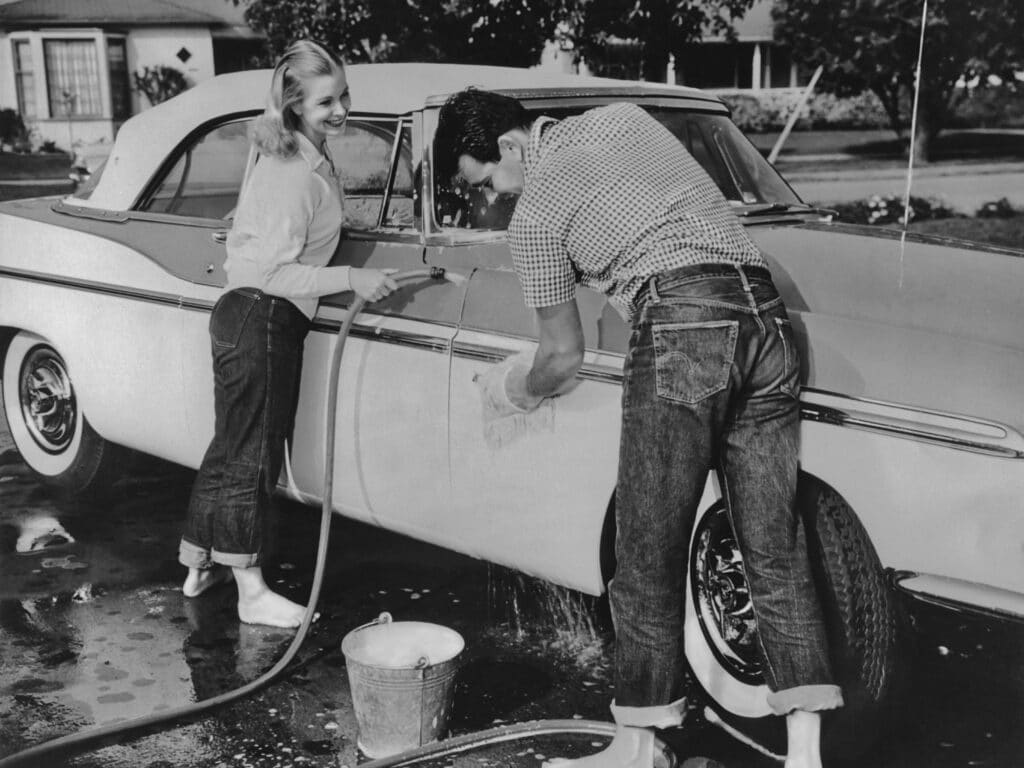
The blue-collar look endured because denim works across styles and settings. From the US and Australia to Italy and Japan, jeans became a cornerstone of casual dress.
They work with almost anything—blazers and oxford shirts, white tees and motorcycle jackets, flannels, hoodies, even more denim. Whatever your style or setting, jeans are nearly always a perfect fit.
This goes double with well-made denim. Mass-market pairs might pass muster with a blazer, but premium selvedge with rolled cuffs will clear the bar with ease. The indigo tones are richer and deeper, the finish is sharper, and every detail draws the eye. In short, they make every outfit better.
How to Spot Quality in Raw Selvedge Jeans
When we talk about well-made jeans, we mean more than a high price tag. We’re looking for something that—if you removed the label—would still feel like it’s worth every penny. Here’s what to look for:
The Denim Itself
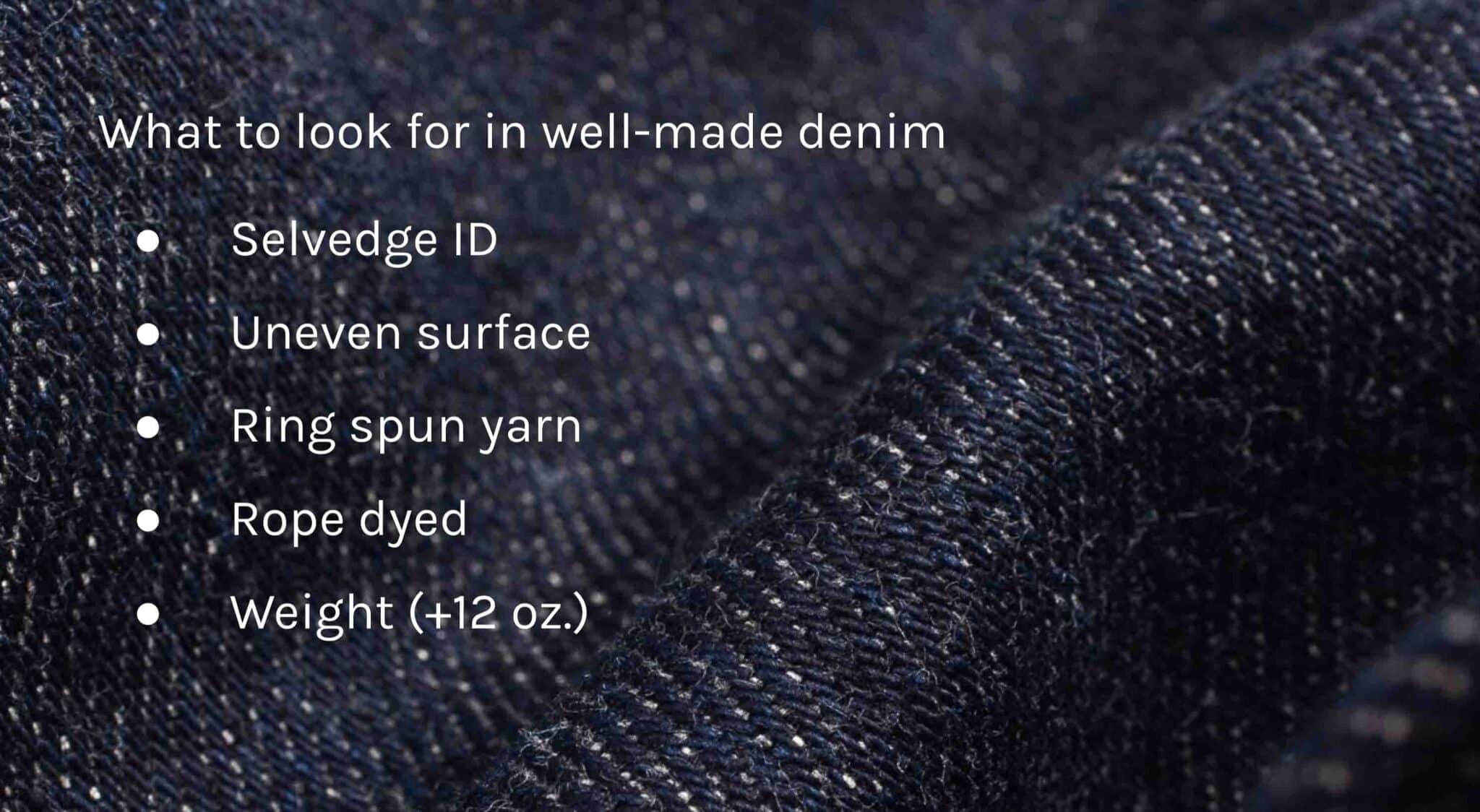
Premium selvedge denim has a texture and irregularity that mass-market fabric lacks. That’s what produces that unique character and those beautiful fades. The more you wear and wash it, the more the fabric’s personality emerges.
Check for the terms below and ask your retailer if you’re in doubt:
- Selvedge – not a guarantee of quality, but it does mean the denim’s woven on shuttle looms.
- Sanforized – denim has been factory-treated to reduce shrinkage. These pairs usually stretch as the stiff denim relaxes.
- Once-washed – pre-washed at the factory to prevent major shrinkage. Also expected to stretch slightly with wear.
- Unsanforized / Loom state / Shrink to fit – untreated denim that will shrink 5–10% the first time you wash it
If you’re new to raw denim, start with a sanforized or once-washed jeans and double-check size guides when you’re ordering online.
The Build
True quality reveals itself in the construction—how the jeans are sewn, finished, and built to wear well.
Check the details below:
- Stitching – should be straight, tight, and clean, with no loose threads. Stress points—the pocket openings, fly, and crotch—should feel reinforced and ready for years of wear.
- Hardware – solid buttons, copper rivets, and a sturdy leather patch signal makers who care about longevity.
- Construction – flat felled inseams, lined back pockets, and heavy pocket bags are signs of makers going the extra mile to produce something beautiful inside and out.
- Fit and comfort – well-made jeans should fit well, but comfort comes later. Raw denim should fit snugly in the waist and thigh—it’ll soften and mould to your body over time. A good fit matters, but it’s only part of the story.
These are the hallmarks of quality selvedge jeans: clean stitching, seams that hold, solid hardware that doesn’t rattle, a sturdy leather patch, copper rivets (especially when concealed), and pocket bags with real heft.
Don’t Chase the Brand—Chase the Fit
Fit is deeply personal. Don’t get too wrapped up in reputation—what’s popular isn’t always what works best for you. Keep trying until you find a cut that flatters every inch of you.

The Maker’s Intention
Great makers build jeans meant to last and improve, not to be replaced. Their best work is usually conservative and timeless: no experimental shapes or loud details, just refined materials and careful assembly.
The pairs that rise to the top aren’t the most extreme or unusual—they’re the ones that age gracefully, revealing the craftsmanship and patience behind them in every fade and seam.
Don’t take brands’ word for it that they care deeply about their work and about denim and workwear heritage. Look for the details we’ve outlined above and, if possible, at faded examples. The maker’s passion is obvious when you know what to look for.
The Brands That Do Well-Made Selvedge Jeans
There are hundreds of selvedge brands to pick from. The best brands tend to rise to the top, earning strong reputations among denimheads by obsessing over fabric, fit, and longevity.
These are ten brands that we feel either set the standard for well-made pairs that are built and worn with equal degrees of passion. If you’re looking for a pair that will go the distance and develop beautiful fades, the makers below are the best place to start.
Iron Heart
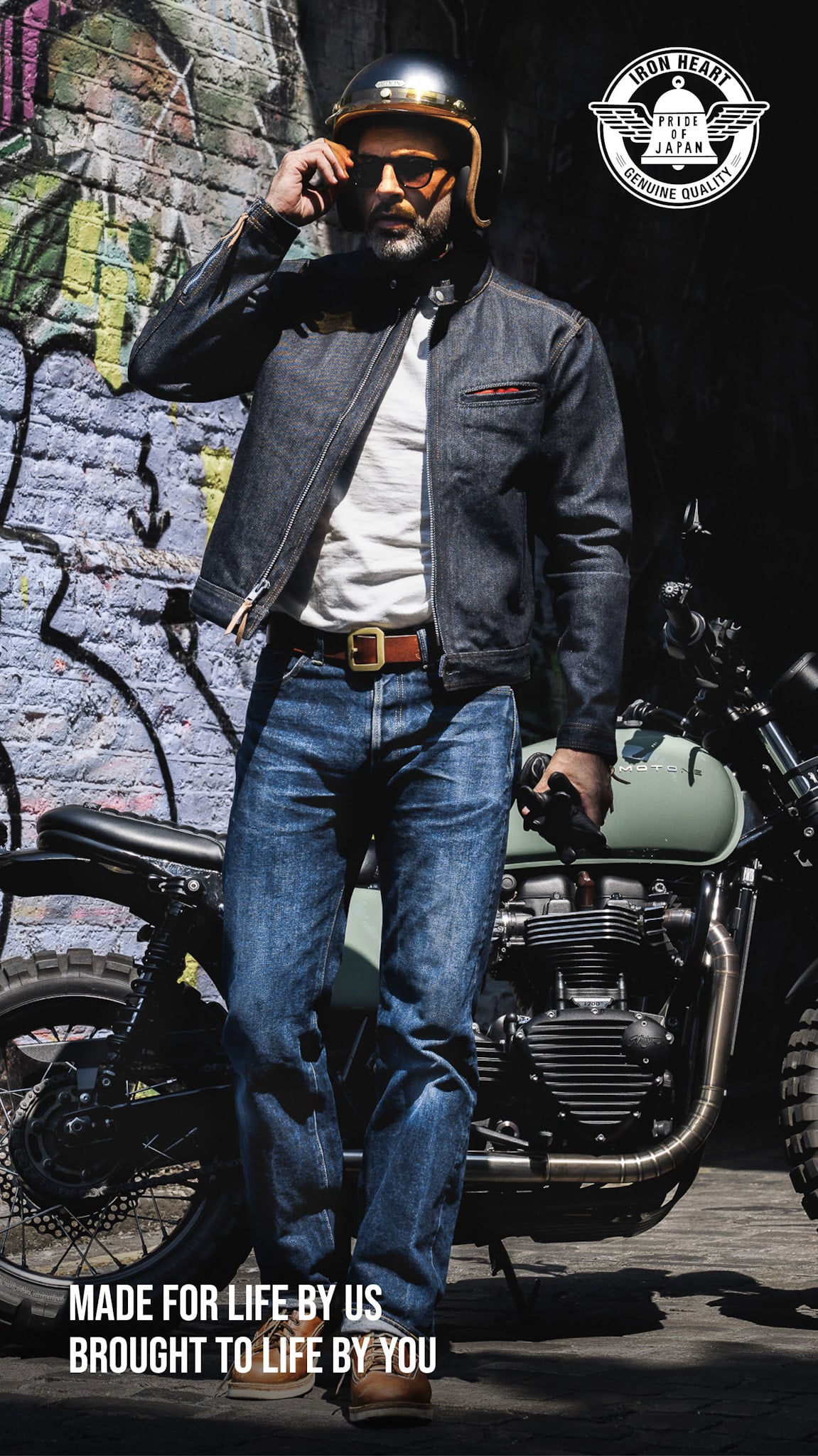
Built for riders, hard workers, and die-hard selvedge enthusiasts, Iron Heart has become the benchmark for heavyweight Japanese denims and razor-sharp cuts.
Their jeans are engineered for endurance—each pair a blend of rugged construction and refined details. Their denims are notoriously stubborn but reward patient and hard-wearing faders.


Samurai Jeans
Built on a philosophy of strength and discipline, this Osaka-based maker treats jeansmaking like it’s a martial art, crafting each pair with precision and purpose.
Every pair is made with fades front of mind. The 19 oz. Kiwami Selvedge produces some of the sharpest, most dramatic fades in the world. A faded pair of Samurais is a true-blue trophy for those willing to put in the work.

Big John
Japan’s first true homegrown denim brand, Big John laid the foundation for everything that followed. From pioneering locally woven selvedge to engineering the first slub yarns, their influence runs through the entire industry.
Decades later, they still embody the spirit of craftsmanship—classic cuts, beautifully balanced fabrics, and a commitment to quality that never wavers.

Warehouse
A truly legendary Japanese denim brand that is adored by vintage fade enthusiasts around the world. The closest thing you can get to true-blue vintage without a time machine.
Warehouse pairs broadcast to the world that you’ve searched high and low for the best pair in its class.

Strike Gold
Strike Gold may fly under the radar, but among dedicated faders, it’s a name spoken with quiet respect.
The brand’s denims are known for rich texture, earthy tones, and remarkable fades that emerge quite quickly, becoming richer with each passing month.

Full Count
Full Count helped define the modern Japanese denim movement by focusing on comfort and authenticity.
Their jeans are made to feel lived-in from day one. Understated but undeniably well-made, they age in ways that express a quiet confidence. Subtly brilliant.

TCB
Rooted in Okayama, this small workshop has built a cult following by recreating classic American denim through a distinctly Japanese lens.
Their unfussy pairs, sewn on vintage sewing machines with period-correct details, pay homage to specific eras. A great choice for those who don’t want to overthink things. Just wear and wash them as you would any other pair.

Momotaro
From their workshop in Kojima, Japan’s denim capital, this label turned the “Made in Japan” mark into a global badge of quality.
Their signature pink selvedge and bold battle stripes (recognised by denim lovers all over the world) symbolise both pride and precision.

Oni Denim
Masao Oishi’s elusive label is wrapped in myth, and that mystery is part of its charm. Best known for their wildly textured “Secret Denim,” Oni captures the raw, organic beauty that only slow shuttle weaving can produce.
The fabrics are irregular, slubby, and full of life—each pair a tactile experience that rewards patience and wear with one-of-a-kind fades.

Pure Blue Japan
Texture is the signature here. Known for their low-tension weaving and slubby, irregular surfaces, Pure Blue Japan turn every pair into a study in depth and detail.
Their denim rewards close attention—the longer you wear it, the more the fabric reveals its character, shifting from deep indigo to soft, luminous blues unique to each wearer.

Our Favourite Well-Made Raw Selvedge Jeans
We are denim lovers, and, believe us, it’s no easy task whittling our list down to the most essential pairs. These are the ones we feel truly stand out—the most essential pairs you can buy.
Iron Heart 634S (21 oz.)
Classics never die, and Iron Heart’s 21 oz. selvedge was born a classic. When the brand introduced the 634S as their flagship denim/cut in 2003, they turned the selvedge scene on its head, creating an arms race among makers to produce the best heavy yet wearable jeans.
From their 14 oz. light middleweight to their 25 oz. super heavyweight, there isn’t a single weak link in the Iron Heart chain, but we’re particularly fond of their iconic 21 oz. selvedge. It simply doesn’t get any more essential than this.
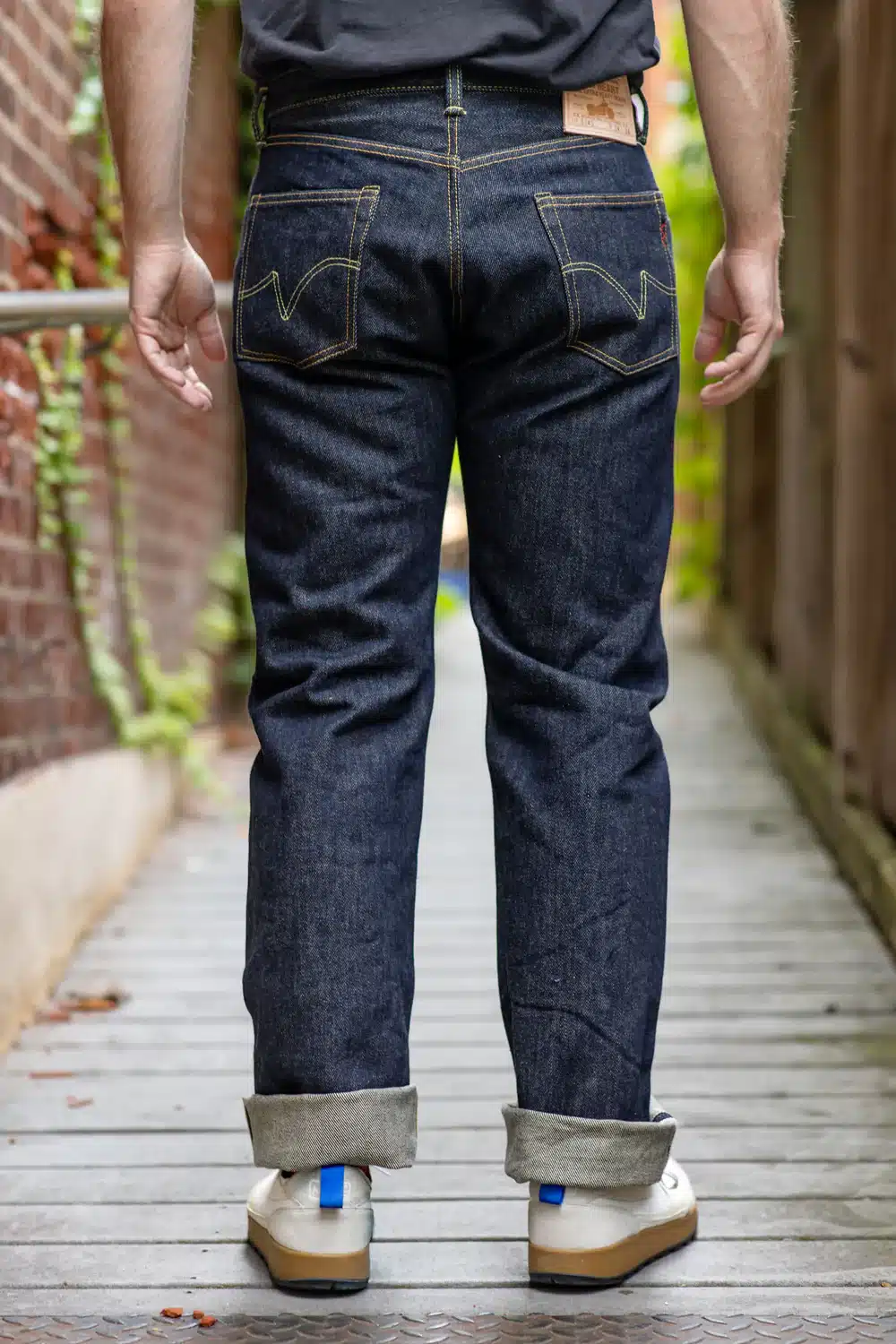
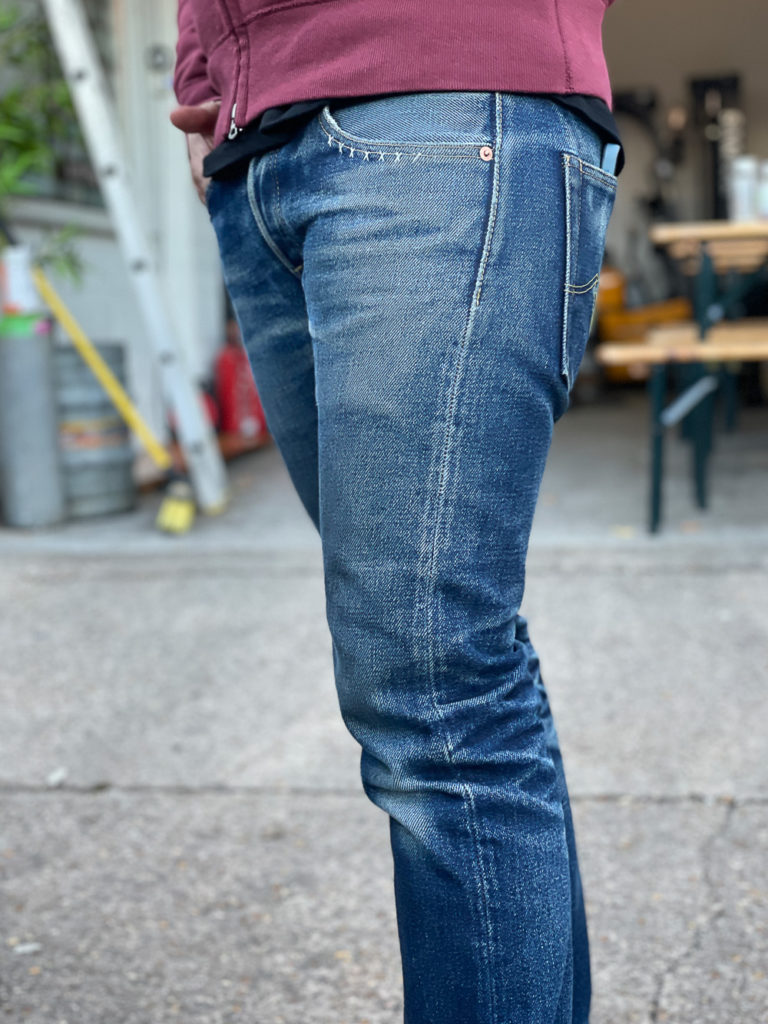
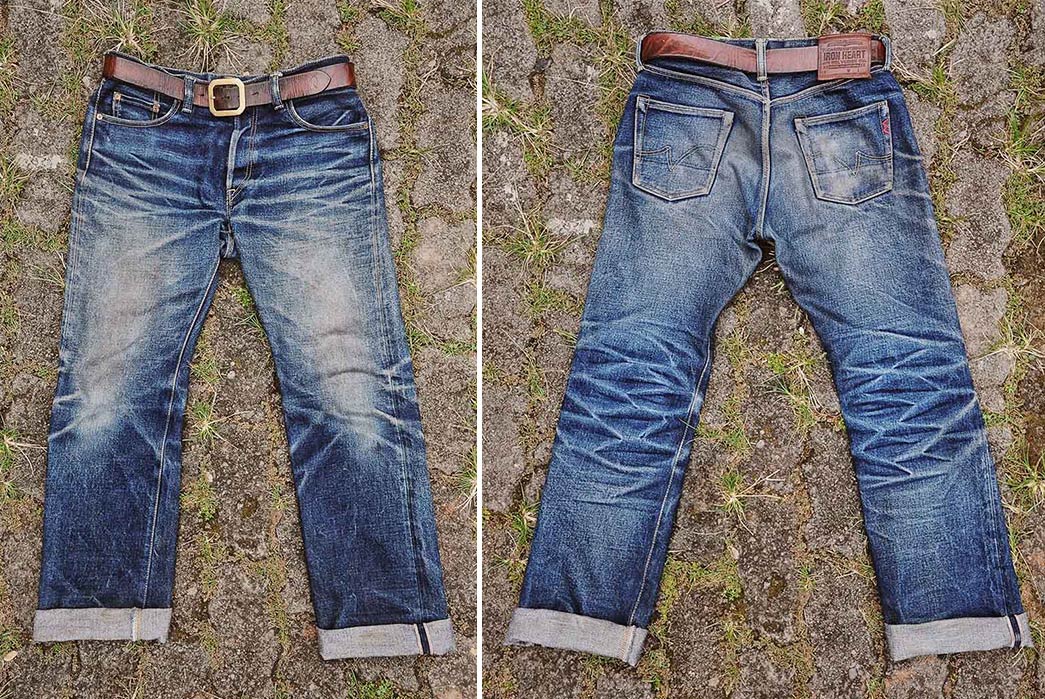
The cut, based on the 1966 501, flatters just about everybody, but that doesn’t mean it’s necessarily the cut for you. We’re also big fans of the 555 (super slim), 666 (straight), 777 (slim tapered), and 888 (high-rise tapered).
For more details, check out our buying guide to Iron Heart jeans or …
Iron Heart is available at: Franklin & Poe (US), Brooklyn Clothing (CA), Iron Shop Provisions (US), Division Road (US), and Iron Heart International (UK).
Samurai S710XX (19 oz.)
Samurai’s most popular pair has been a pillar of the fade scene since its introduction in 2003. Fading is built into the brand’s ethos, with a strong and decades-long focus on the “zen and beauty” of faded indigo.
Their 19 oz. silver-line Kiwami Selvedge enjoys a stellar reputation among denimheads for its ability to produce eye-popping contrast fades. For those looking for fast and sharp fades, Kiwami Selvedge cuts like a katana.
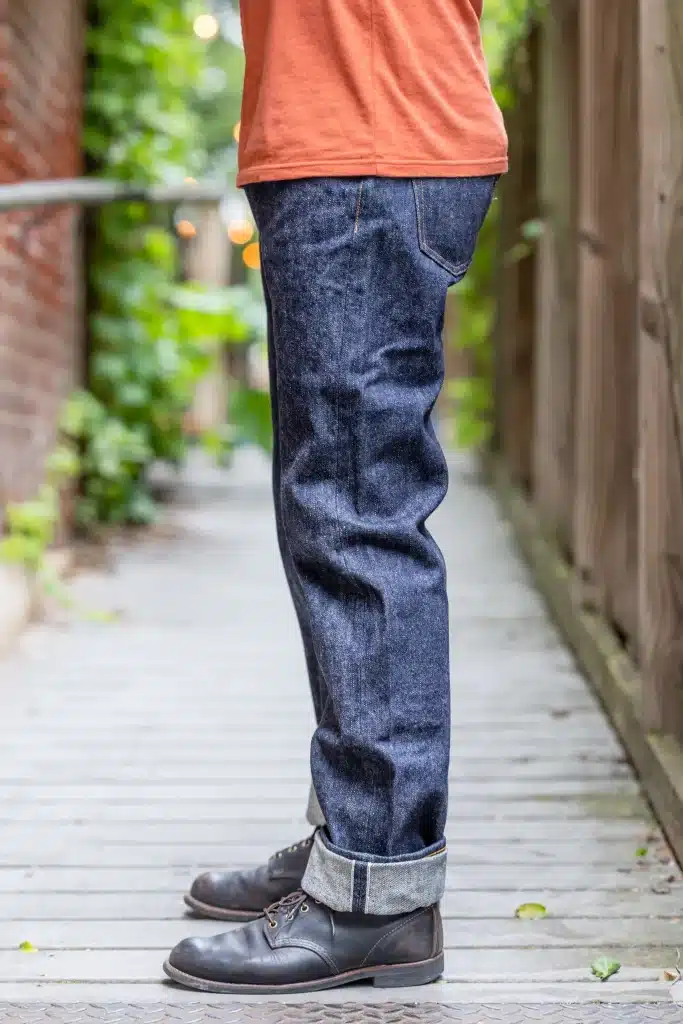
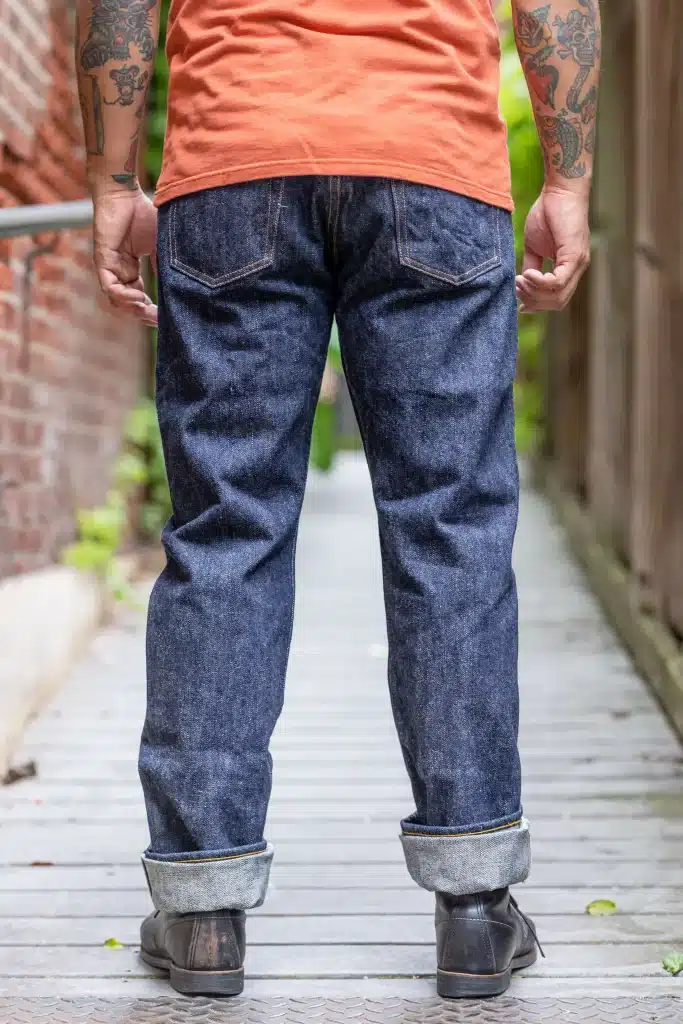
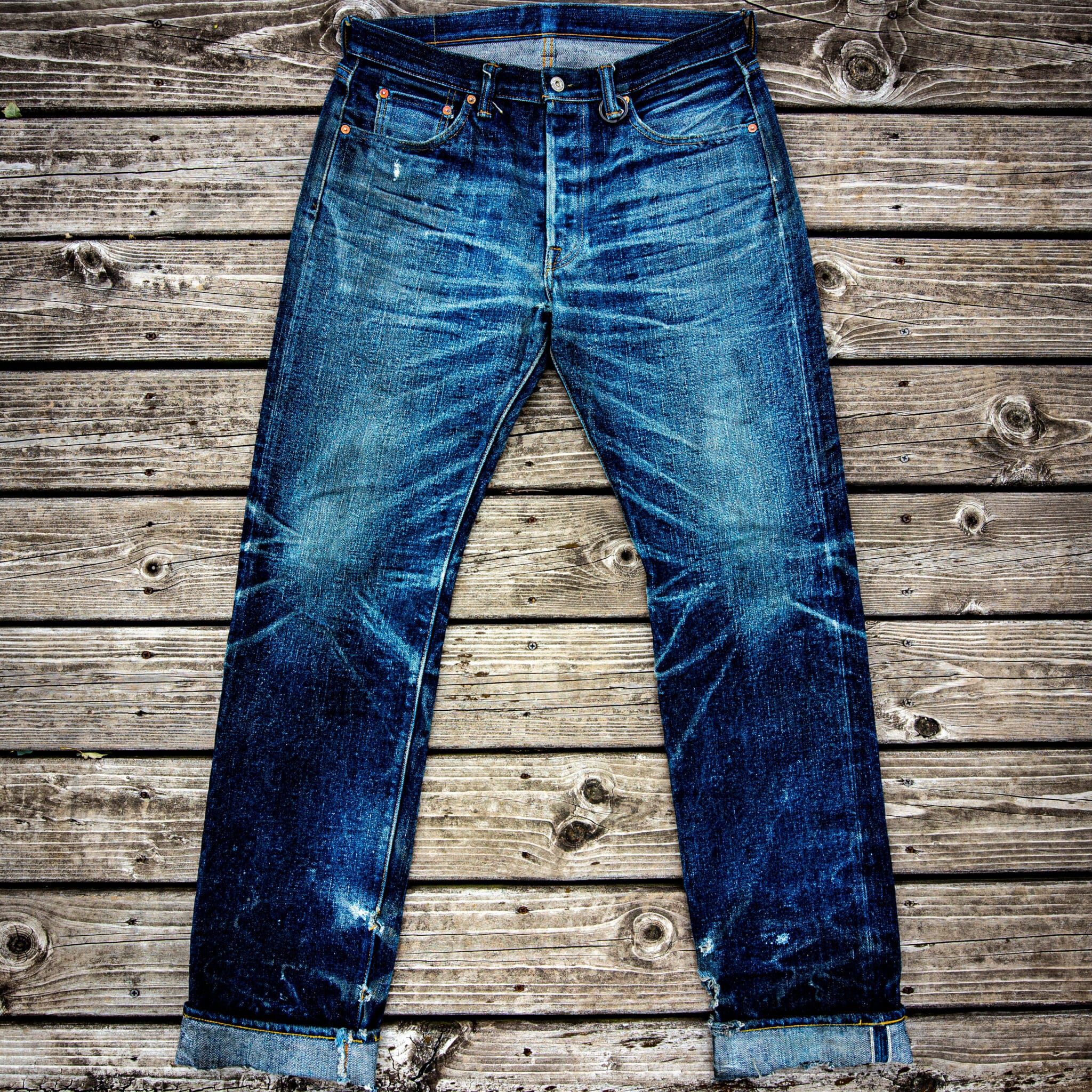
For slimmer Samurais, check out the 511 (slim tapered), the 004 (slim tapered) or the 520 (regular tapered).
You can buy Samurai at: Redcast Heritage (ES), Franklin & Poe (US), Brooklyn Clothing (CA), Blue in Green (US).
Warehouse 1001XX (13.5 oz.)
Warehouse’s careful construction and vintage bona fides have made them legendary in the selvedge scene. When the heads of a number of Japanese selvedge brands were asked to name their favourite brand other than their own, most of them answered without hesitation: Warehouse.
Warehouse’s Banner Denim, made from a mixture of Tennessee, Texas, and Arizona cottons, is based on microscopic examination of ‘30s denim. It is as close as you can get to pre-50s selvedge without a time machine.
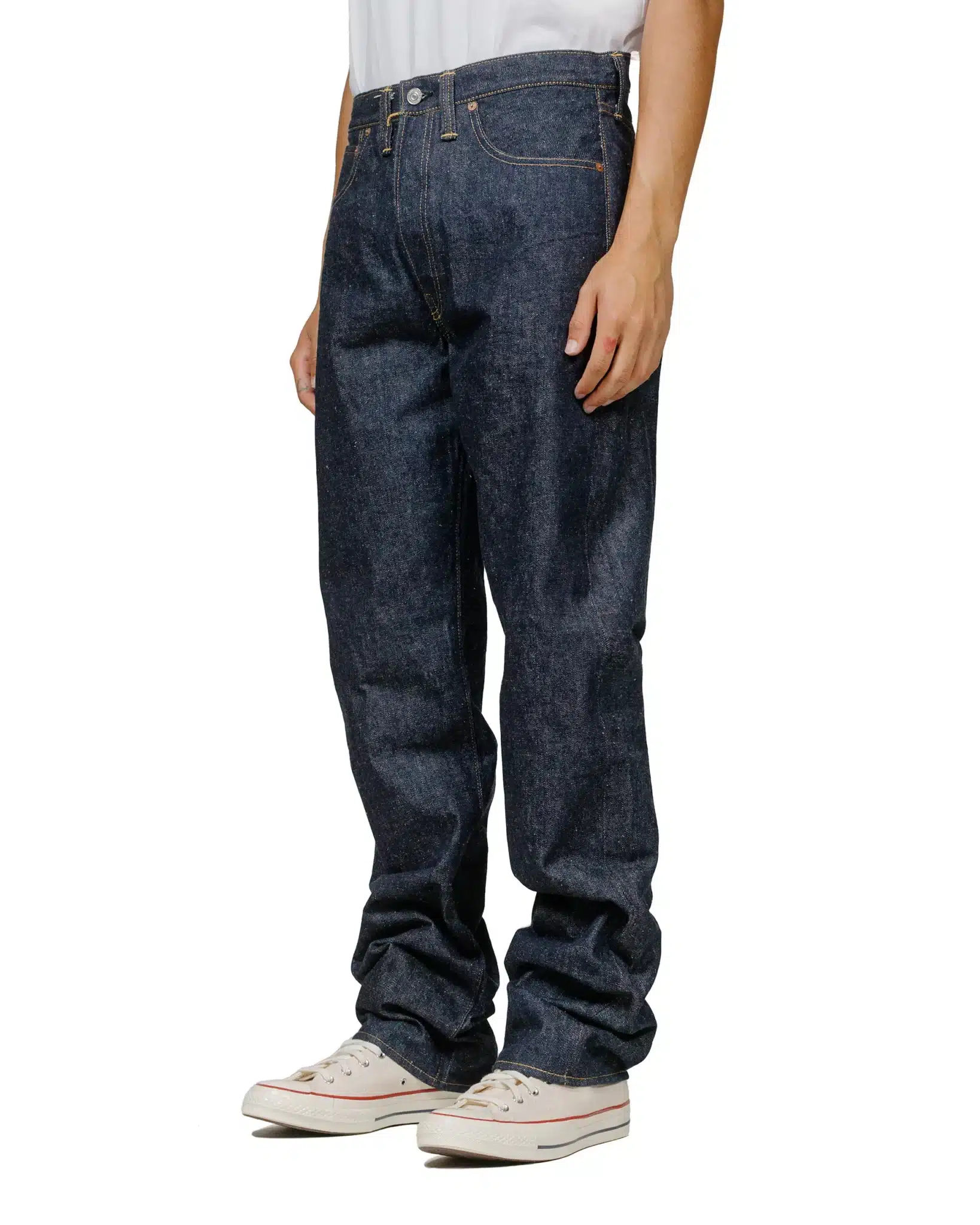
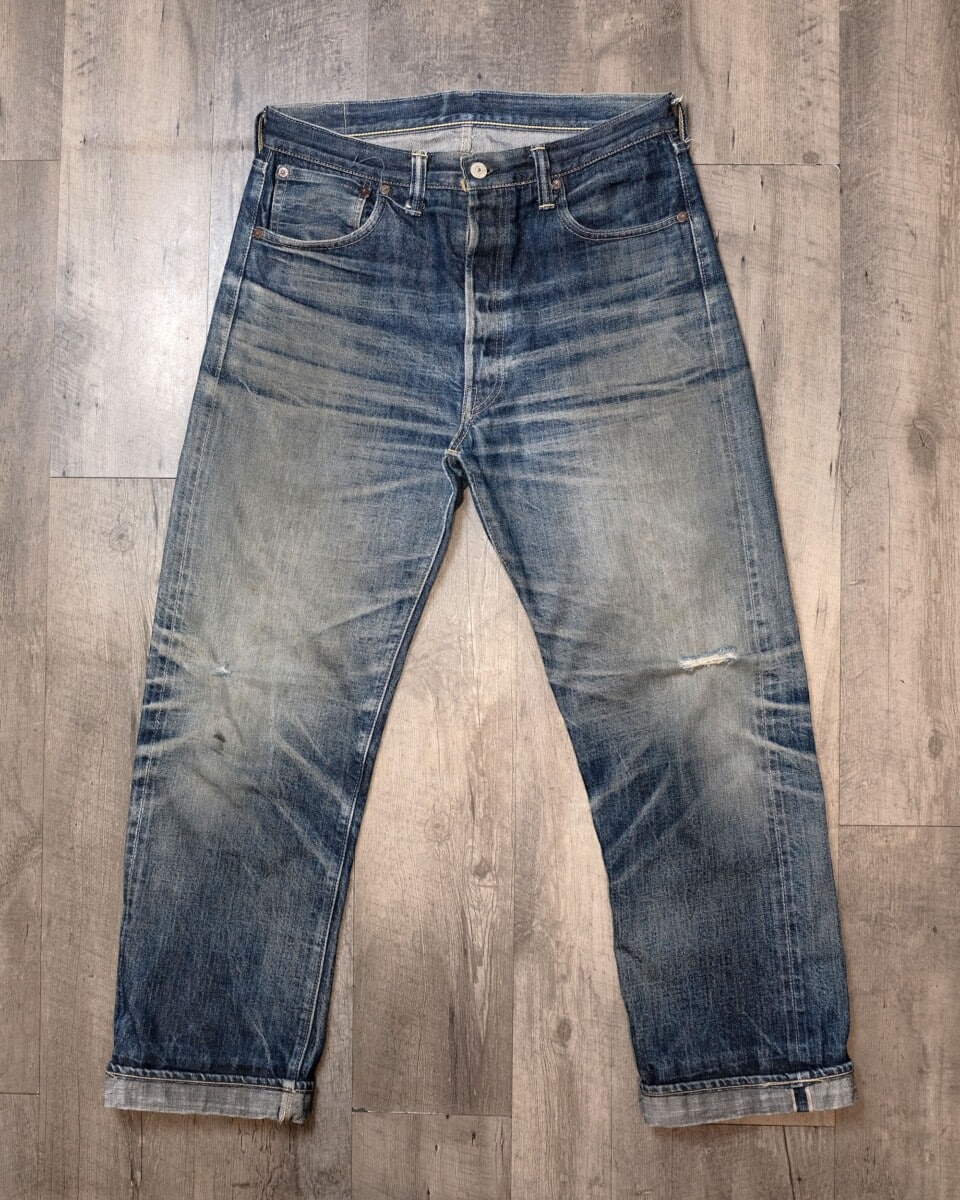
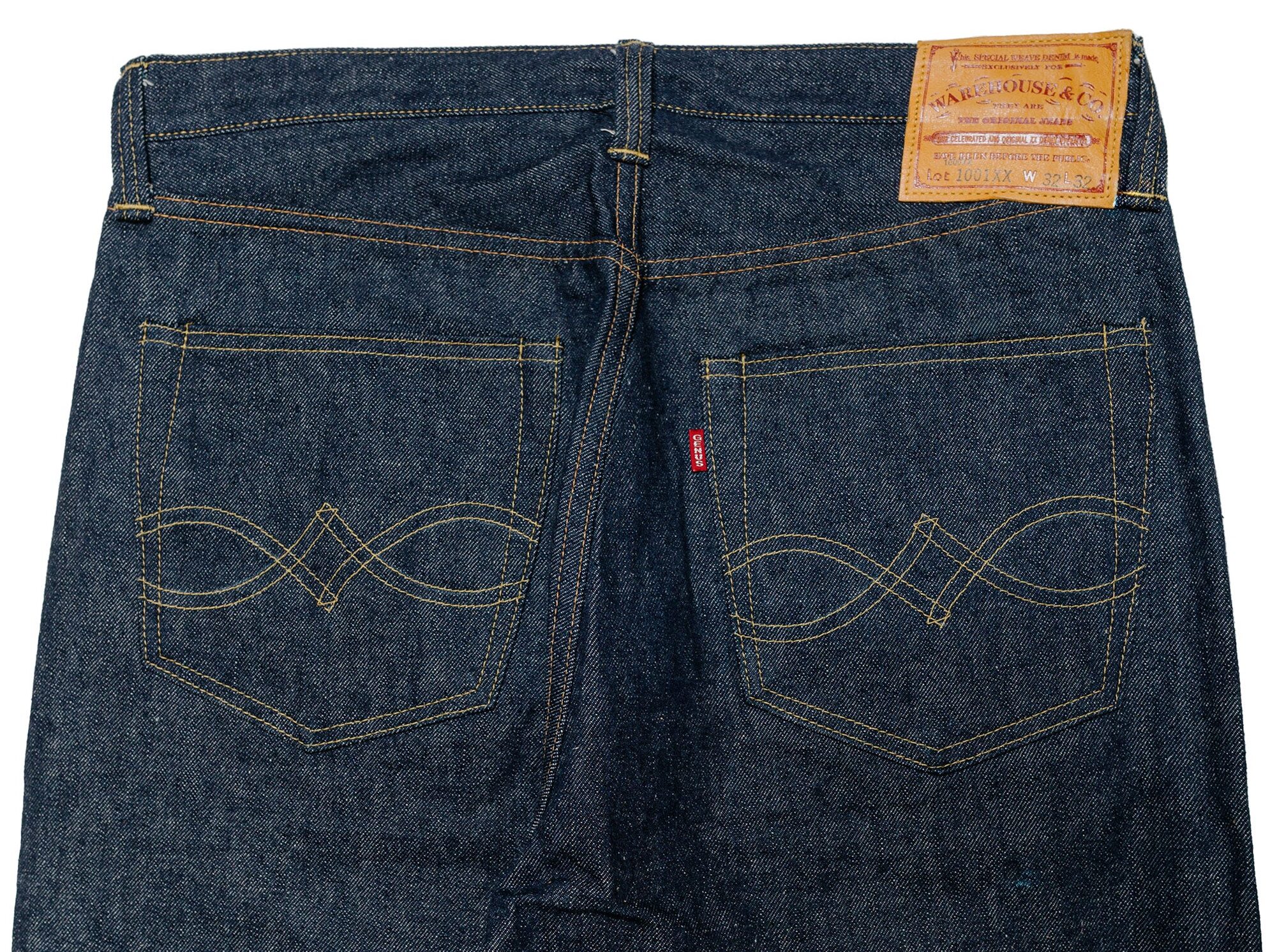
Warehouse pairs (particularly the 1001XX) sell out frequently. Have the retailer email you when they’re back in stock. If you want to try one of Warehouse’s other pairs, try Cultizm. For the closest thing to Warehouse, try Denime, which is now manufactured in the Warehouse factory.
Warehouse is sold at Redcast Heritage (ES), Lost & Found (CA), Cultizm (DE), Hinoya (JP), and Clutch Café (UK).
Oni Secret Denim (20 oz.)
This is one of the only entries on this list that we’re just including a denim and not a particular cut. Oni doesn’t have a bad cut in their line-up, and their legendary Secret Denim is so good that it doesn’t need a particular cut to shine at its brightest.
Secret Denim has spawned dozens of imitators, but nobody has been able to fully recreate the magic of Oni’s flagship selvedge. Its loose weave and mixture of earthy tones means this stuff looks and feels like nothing else on the market.
New versions (slight variations on the always-great original) are introduced with some regularity. When you see one in a cut you like, jump on it. It won’t be around long.
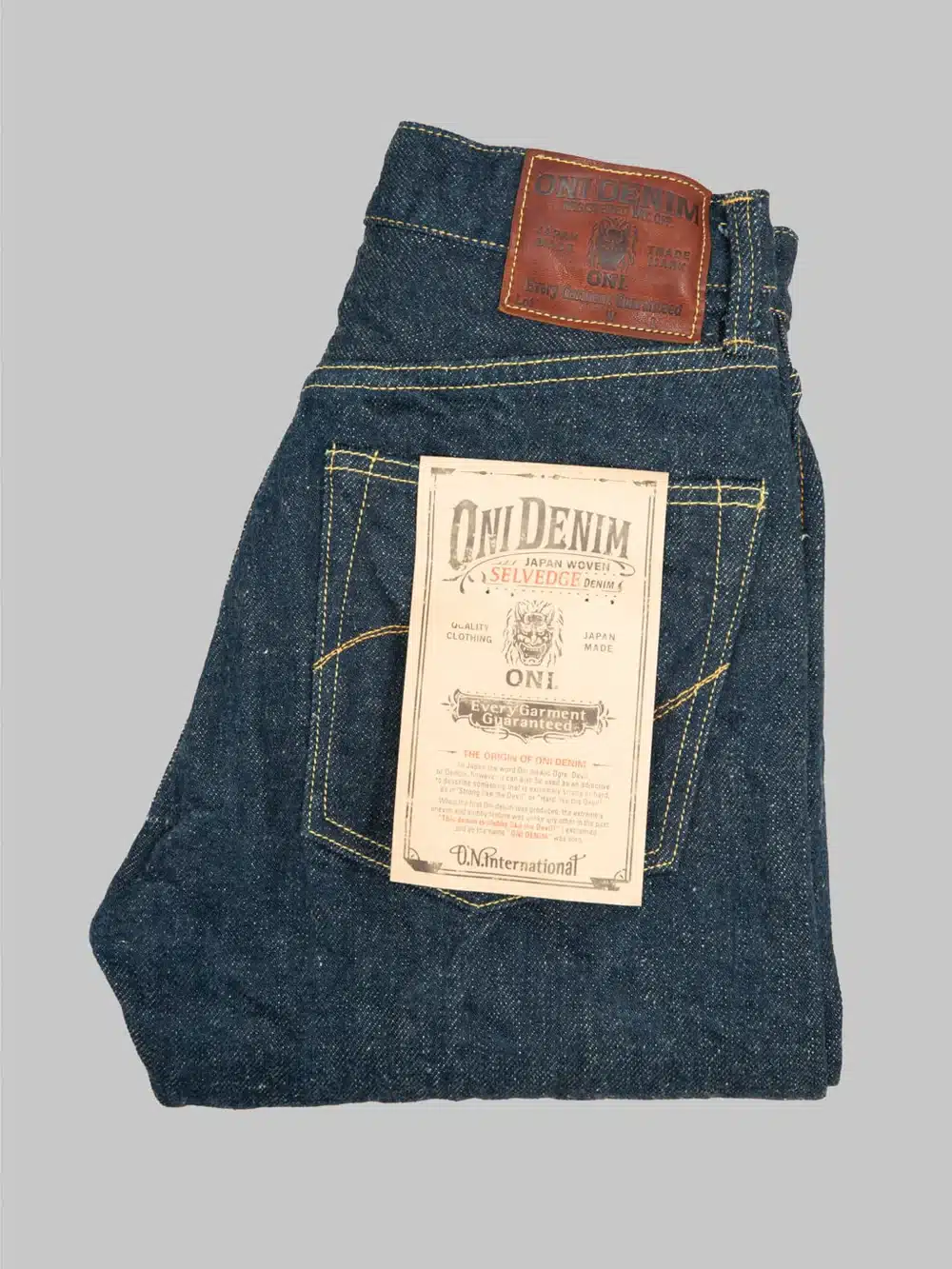
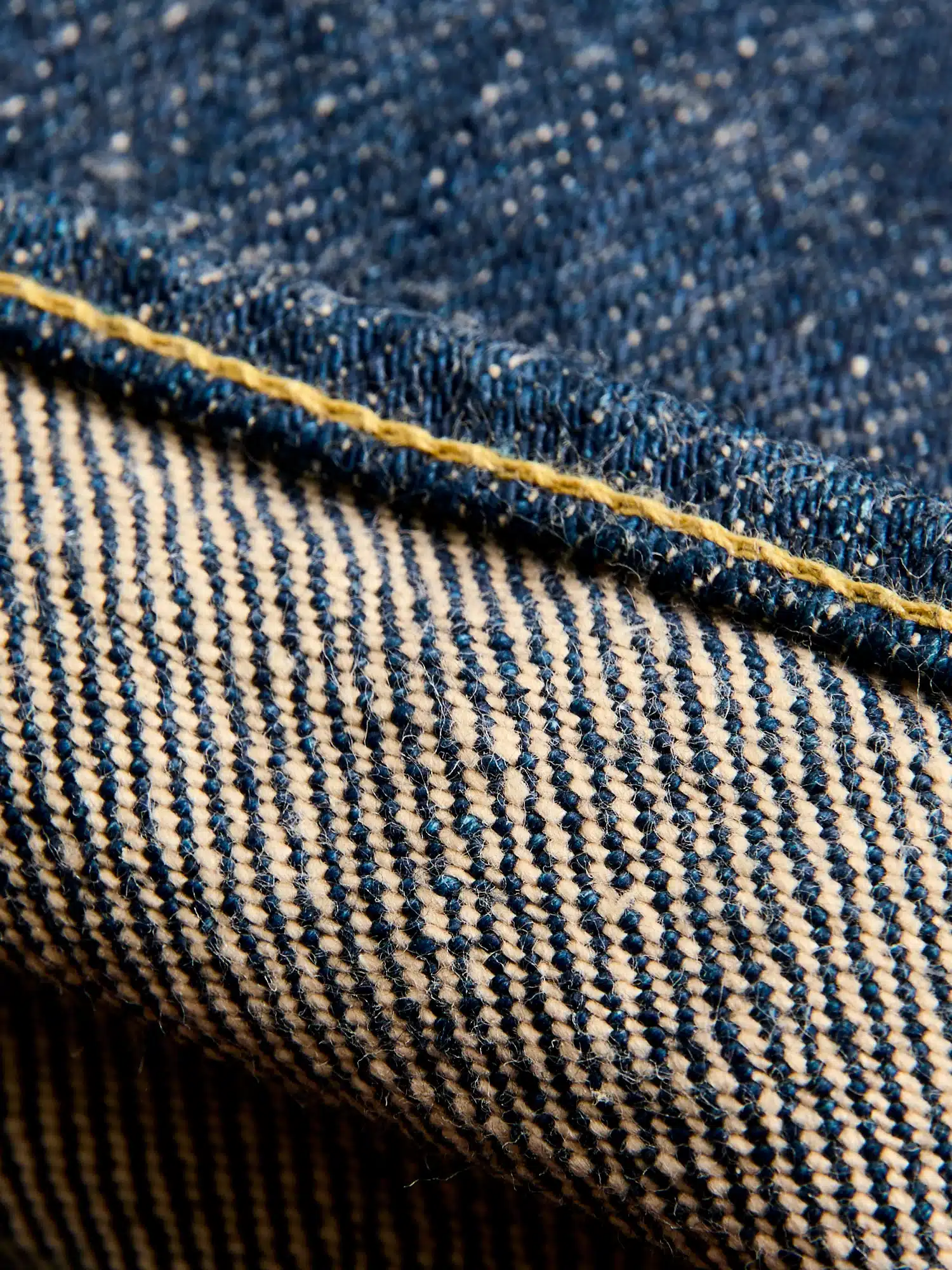
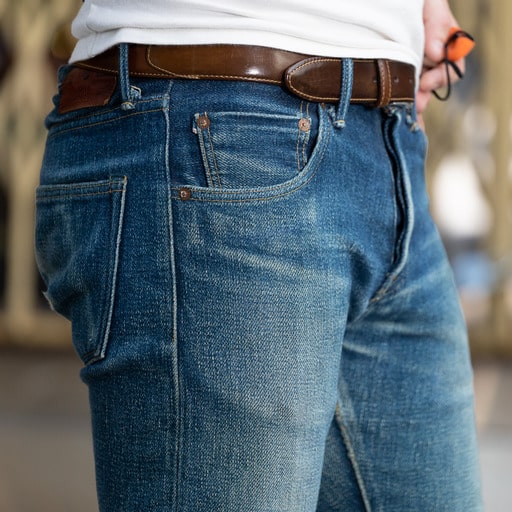
Secret Denim won’t produce the sharpest contrasts, but that’s not what it’s designed to do. This one’s all about the feel of the selvedge. For best results, wear daily and wash regularly. Virtually guaranteed to become the comfiest pair of heavy selvedge you’ll ever own.
Oni is sold at: Redcast Heritage (ES), Cultizm (DE), Franklin & Poe (US), Blue in Green (US), and Hinoya (JP)
Big John Rare (15.5 oz.)
One of the most slept-on brands in the selvedge scene, Big John were the first to import rolls of American selvedge into Japan, the first to mill selvedge in Japan, and the first to engineer slub yarns.
They introduced their RARE selvedge in 1980 and, more than 40 years later, they are still turning heads with this truly exceptional middleweight denim, available in two excellent cuts: a slim straight and a more generous vintage straight. Incredibly fast-fading, RARE selvedge is a fade journey that MUST be experienced by every denimhead at some point.
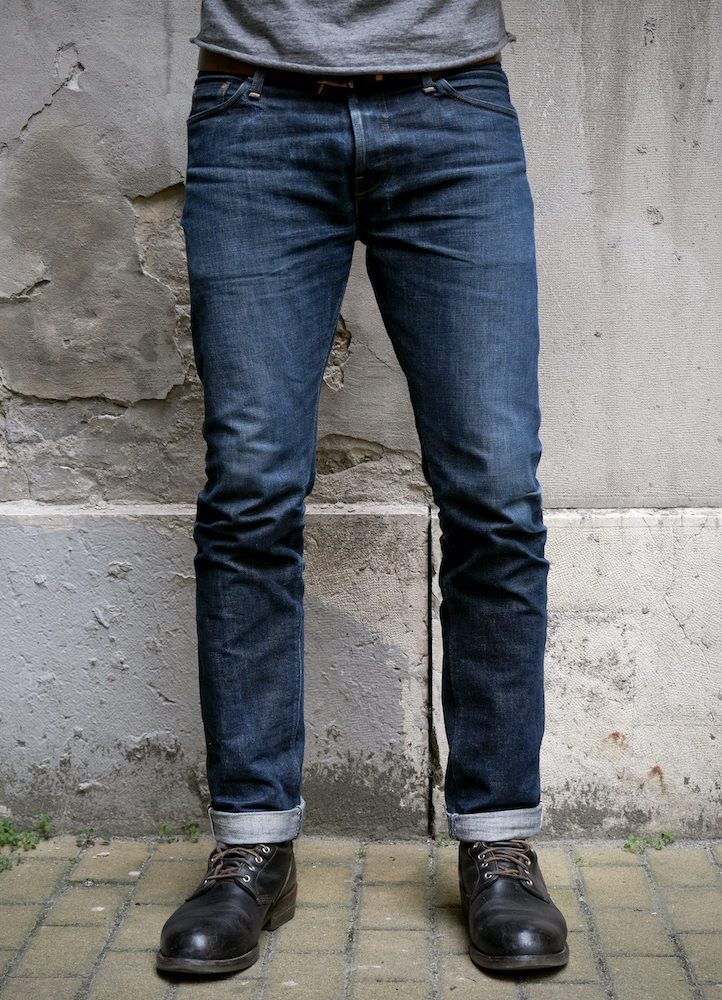
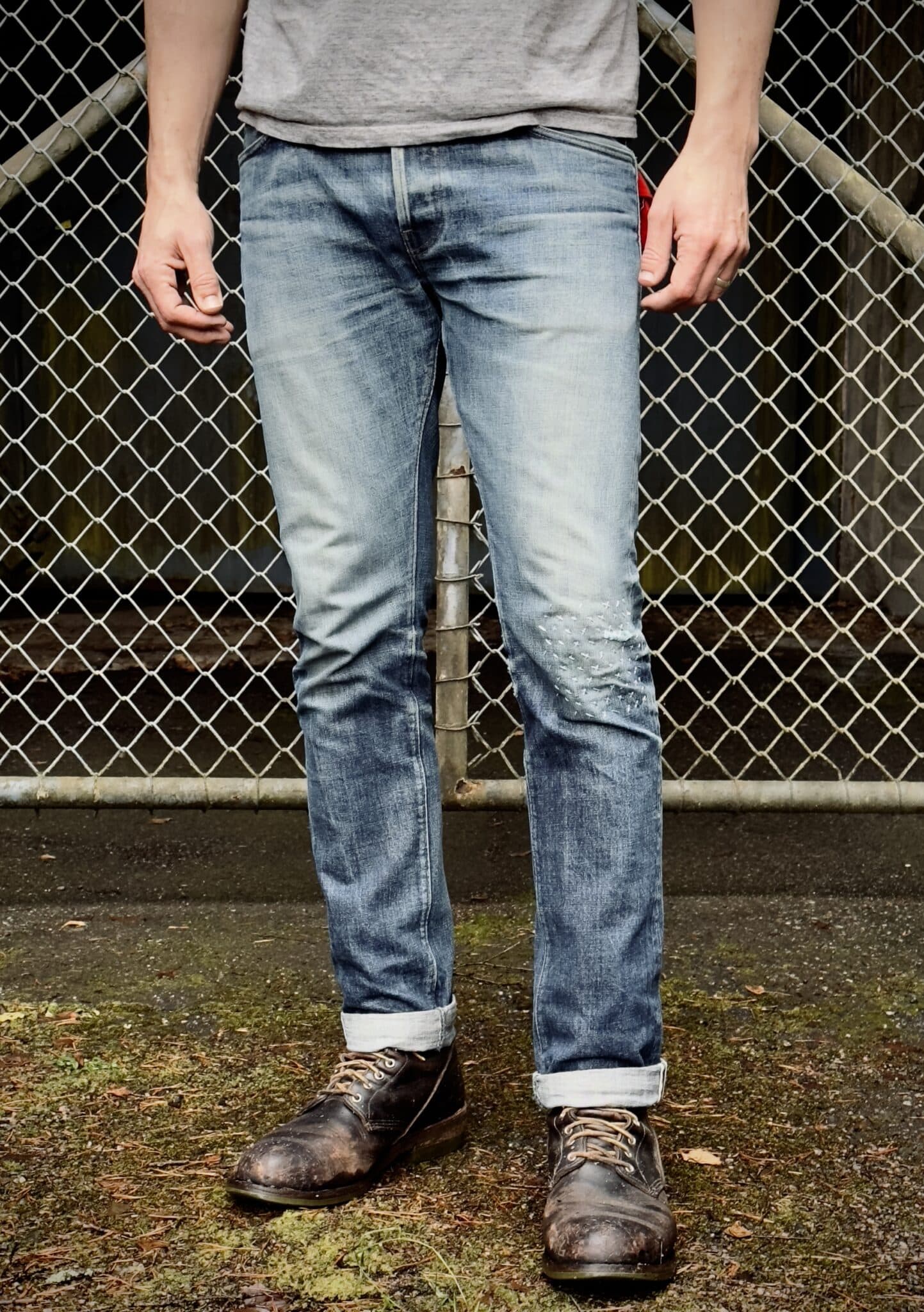

If you want to try something heavy duty, try their 23 oz. Tough Jeans.
Big John is sold at Redcast Heritage (ES), Cultizm (DE), Hinoya (JP), and Franklin & Poe (US)
For more well-made selvedge jeans, visit our Selvedge Masterlist.
Keep Track of What I’m Working On
Hi, I’m Thomas, founder of Denimhunters. If you liked this article, you should check out the DH Weekly. It’s my weekly column and newsletter that I publish every Friday, with new guides, deals, and things worth paying attention to.
