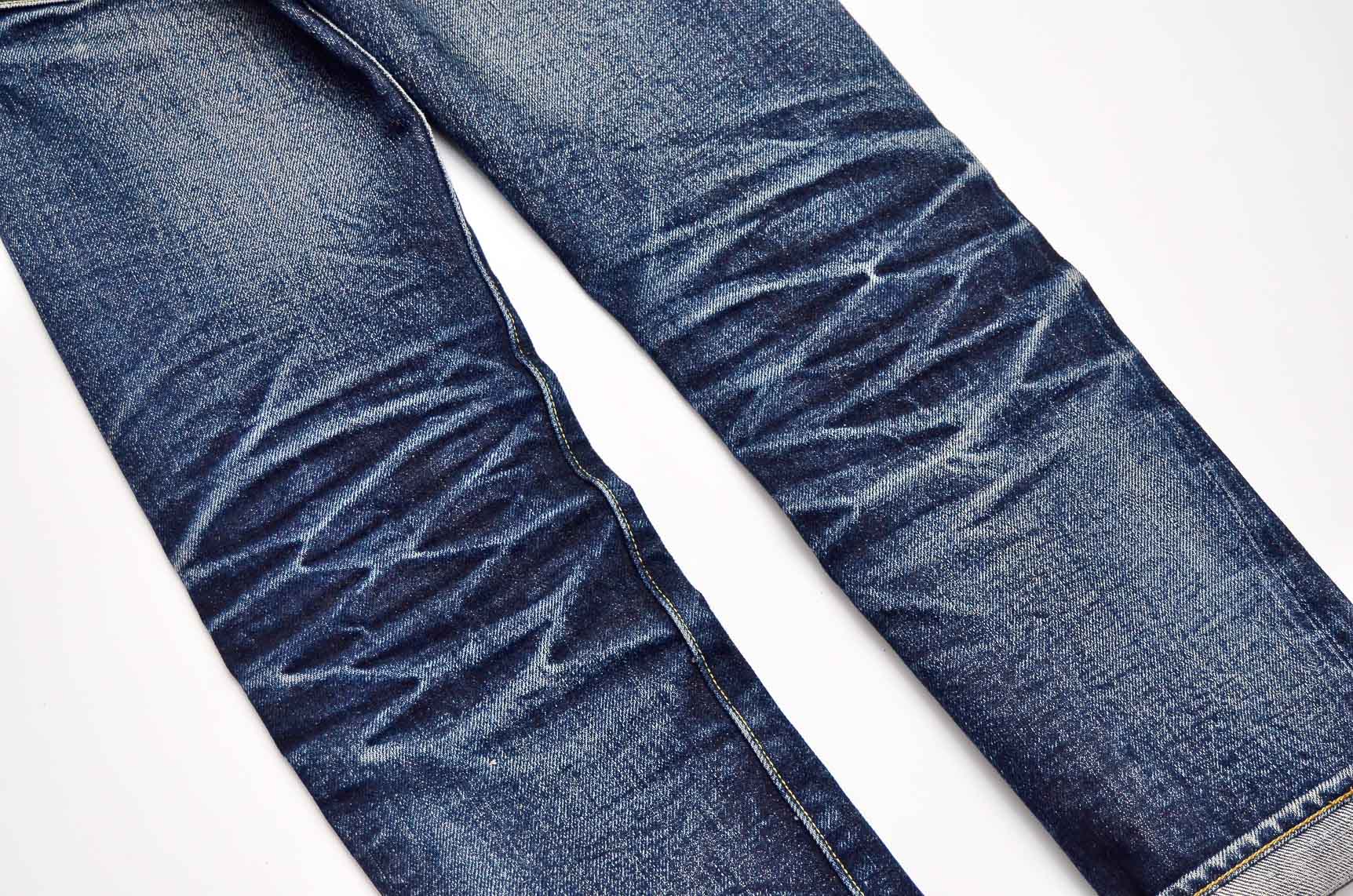
How to Fade Raw Denim: 7 Findings from the Indigo Invitational Year 5’s Top Finishers
Everybody has a theory about how to fade raw denim. Wear it every day. Never wash it. Buy the heaviest denim you can stand. Size down. Go hiking. Sweat through summer. The Indigo Invitational gives all these theories and many more like them a full year to prove themselves.
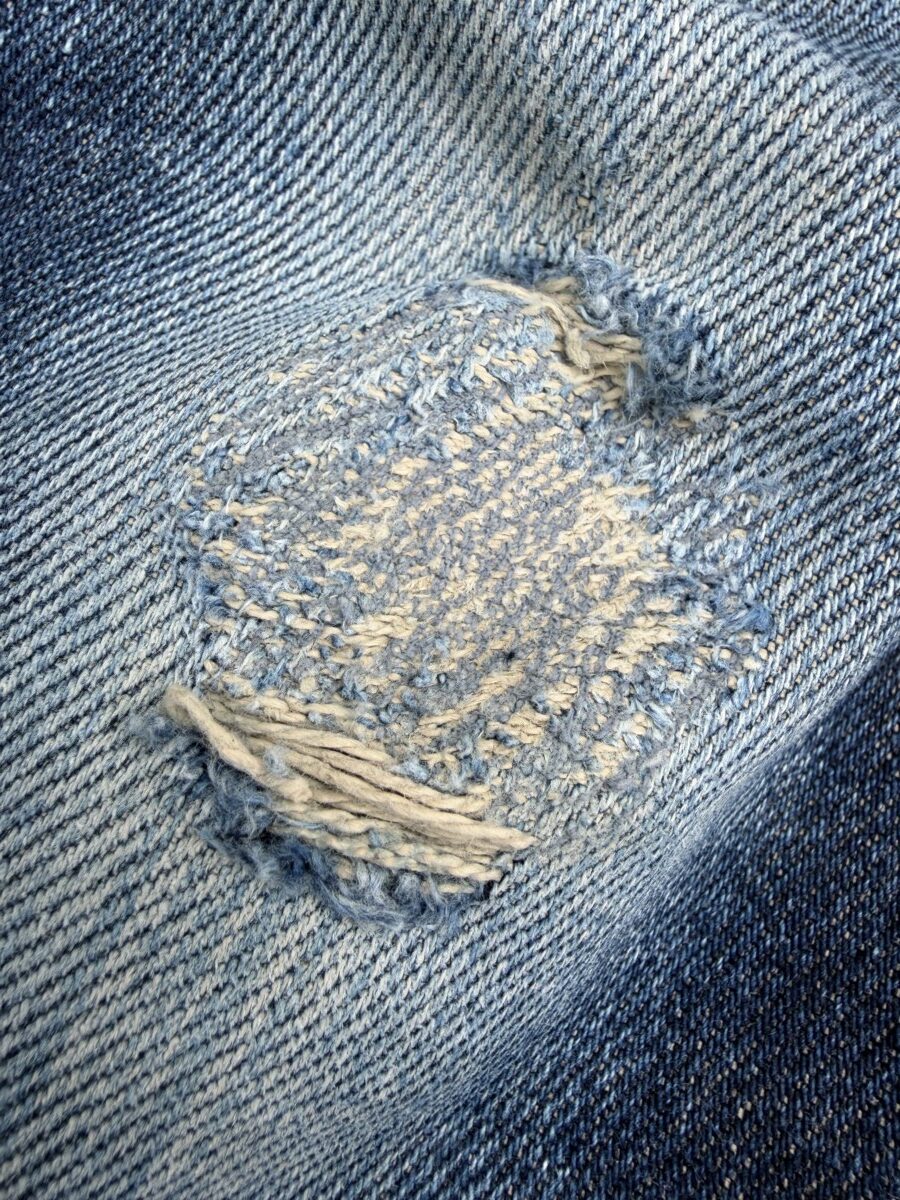
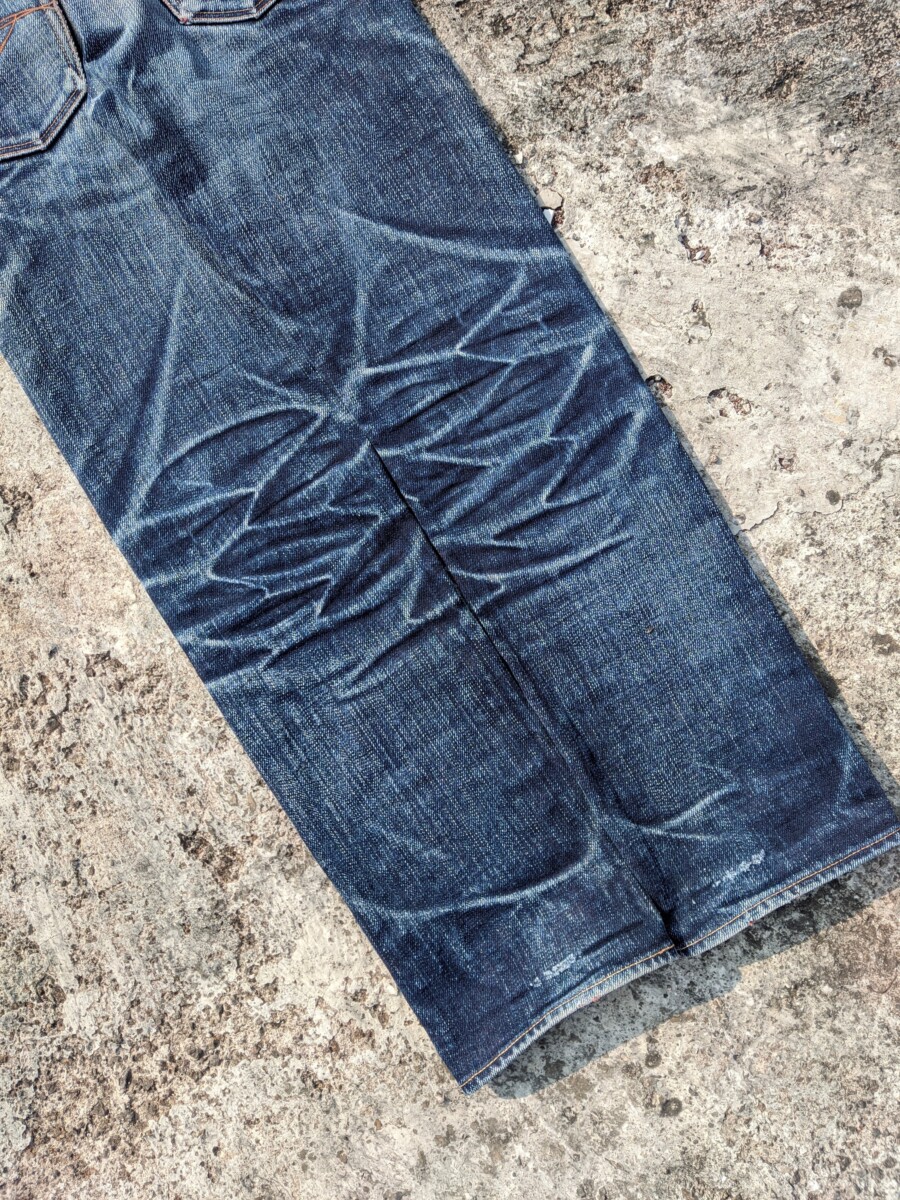
Year 5 saw thousands of experiments running at once. Some crossed the line with completely dry pairs; others washed monthly or weekly. Some wore the world’s heaviest selvedge (40 oz.); others wore pairs that barely tipped the scales at double digits. Some climbed mountains; others stayed home. Some raised children; others raised cattle. Some lived a settled and happy life; others sought the open road and its adventures.

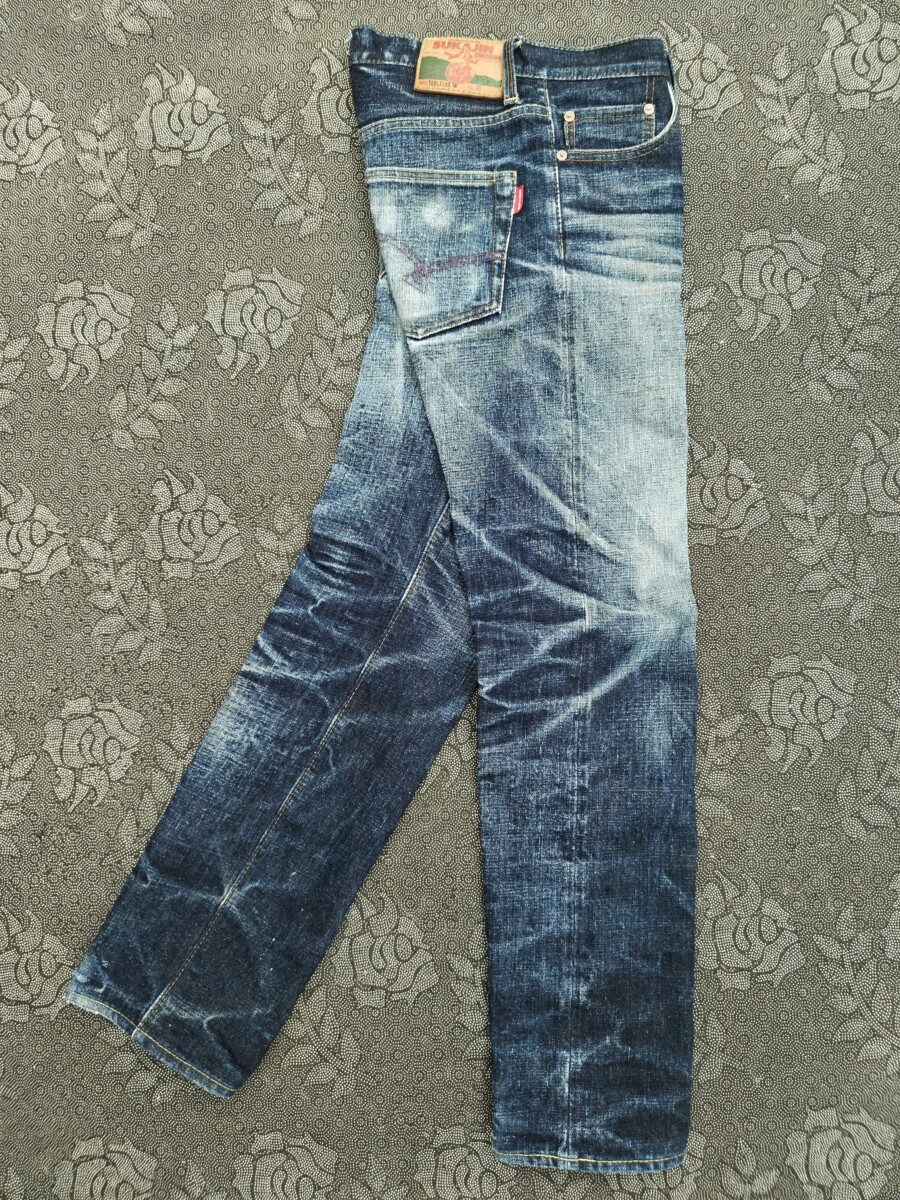
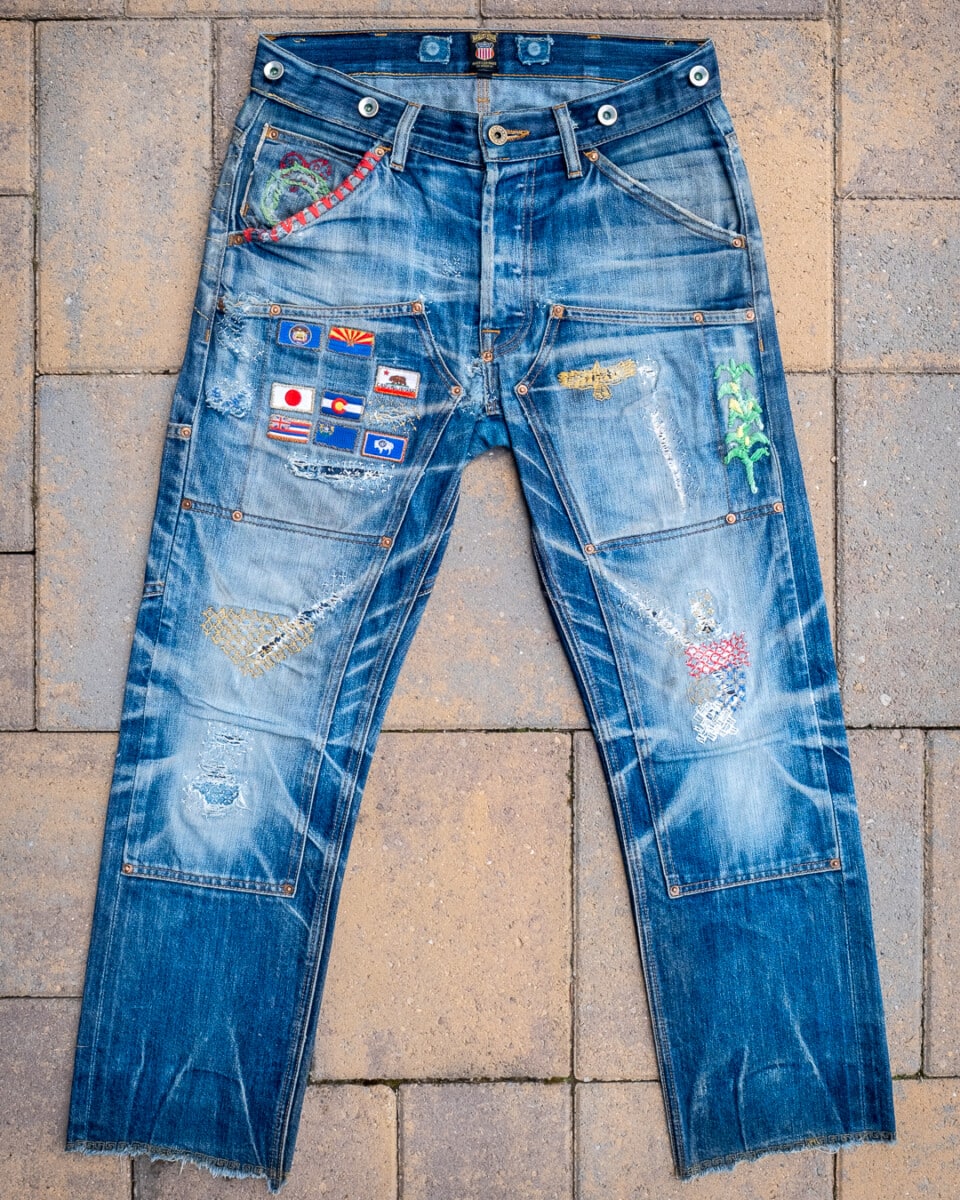
That makes the competition useful far beyond the people trying to win it. We asked leading finishers what they actually did, what surprised them, what went wrong and what they would change next time. Their answers show what helps create striking fades—and what the rest of us can learn when choosing, wearing, washing and repairing raw denim.
TL;DR – How to Get Better Fades From Your Raw Denim
There’s no single formula for great fades, but these seven takeaways show what matters—and what you can apply to your own pair. (Links jump to each finding.)
- Wear consistently – ordinary days add up.
- Start with a workable fit – break-in should improve it, not rescue it.
- Choose the denim, not just the brand – the fabric sets the direction.
- Treat weight as one variable – heavier does not automatically mean harder or better.
- Wash for the result you want – there’s no magic schedule.
- Expect repairs – durability depends on fit, friction, care and construction.
- Buy better next time – one well-worn pair makes the next purchase smarter.
What We Asked the Top 20
The Indigo Invitational is a global fading competition built around a simple idea: choose one pair of raw jeans and wear them for a year, documenting what happens along the way. More than 2,500 people started Year 5. A year later, more than 650 of them crossed the finish line.
For this article, we went beyond what the final photos tell us and asked all Top 20 finishers why they chose their jeans, how the fit and fabric changed, how many days they wore them, how often they washed them, what the points of failure were, what surprised them, and whether they would make the same choice again.
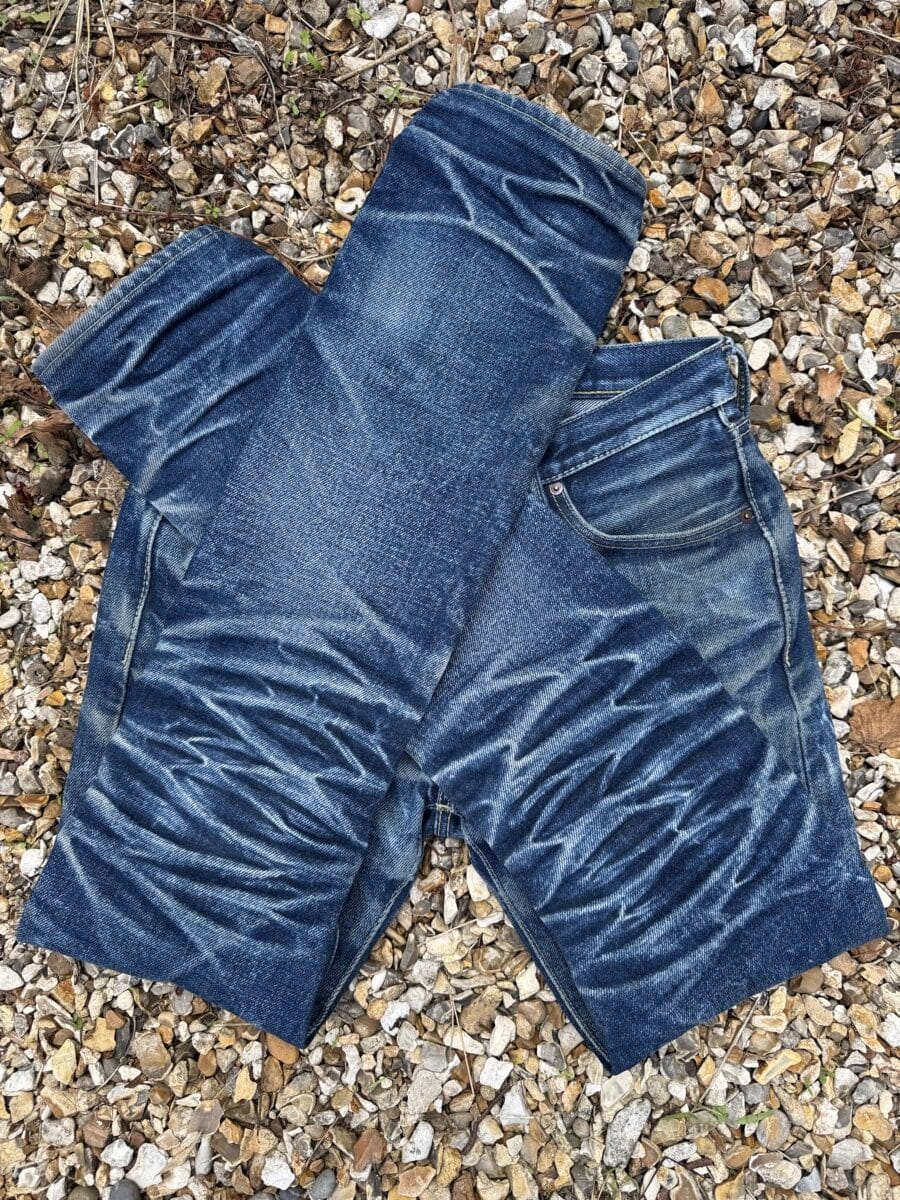
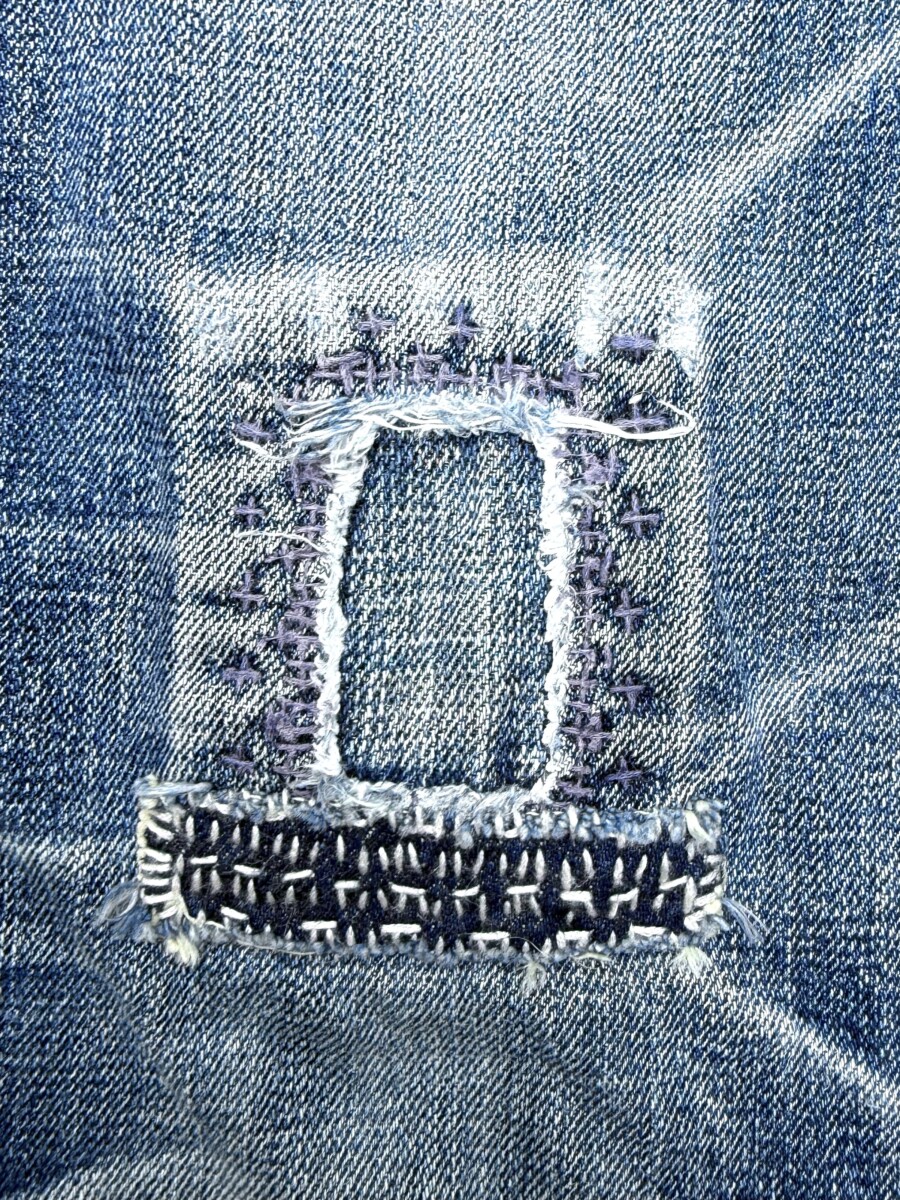
This is not a controlled test. The wearers chose different jeans, lived in different climates and often cared more about fading than the average buyer ever will. The goal, however, was the same. They all wanted to produce striking and beautiful fades, and that’s what makes the answers useful. What can we glean by looking at dozens of routes to the same location?
If you are deciding what to buy rather than how to win a fading contest, start with our raw denim buying guide and our buying FAQs. The sections below do something different: they show what happens when those buying decisions are followed by a deep and lasting commitment.

#1: Consistency Matters More Than Adventure
The easiest story to tell about winning fades is that you need an unusually physical life. There’s some truth to this. Time only matters when you add movement into the equation. Months of friction, strain, and sweat compound to leave dramatic marks on denim. People who move more mark more.
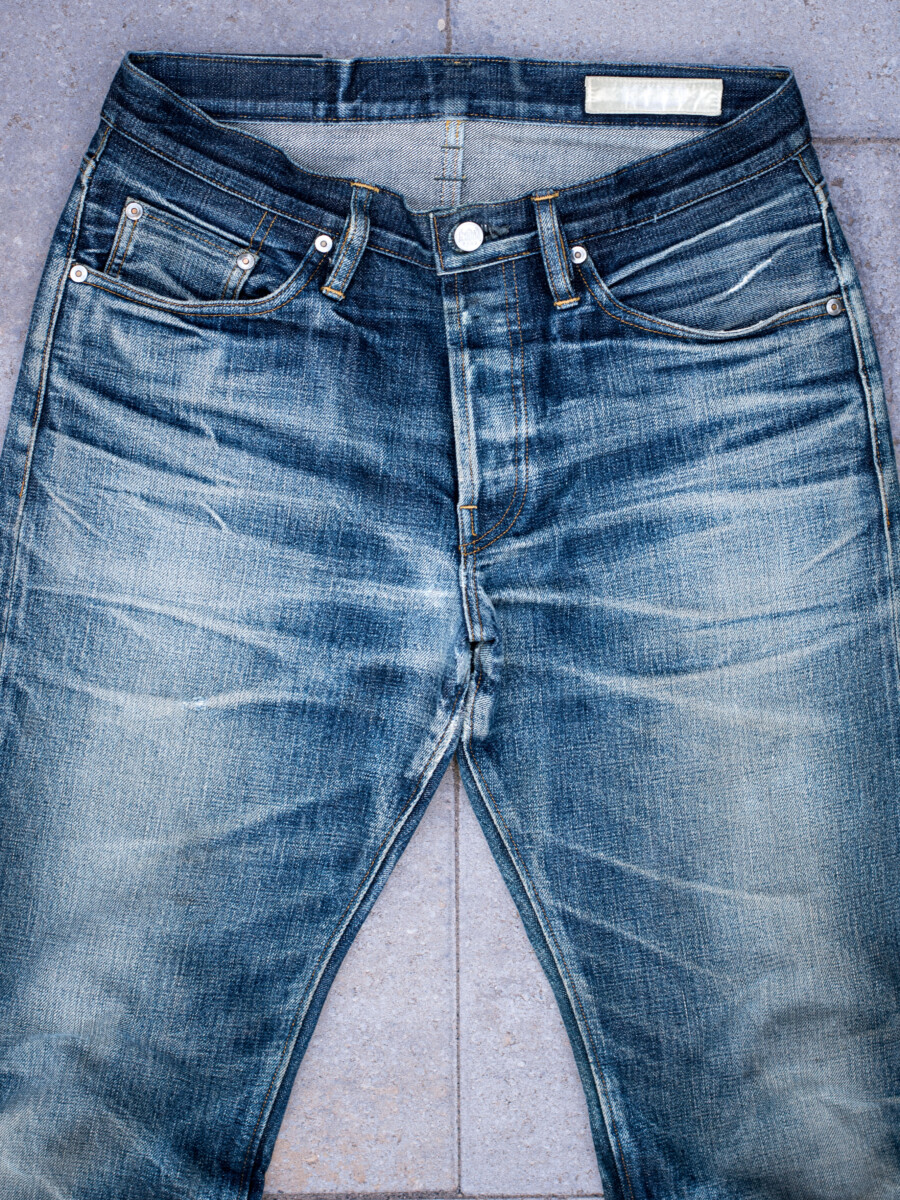
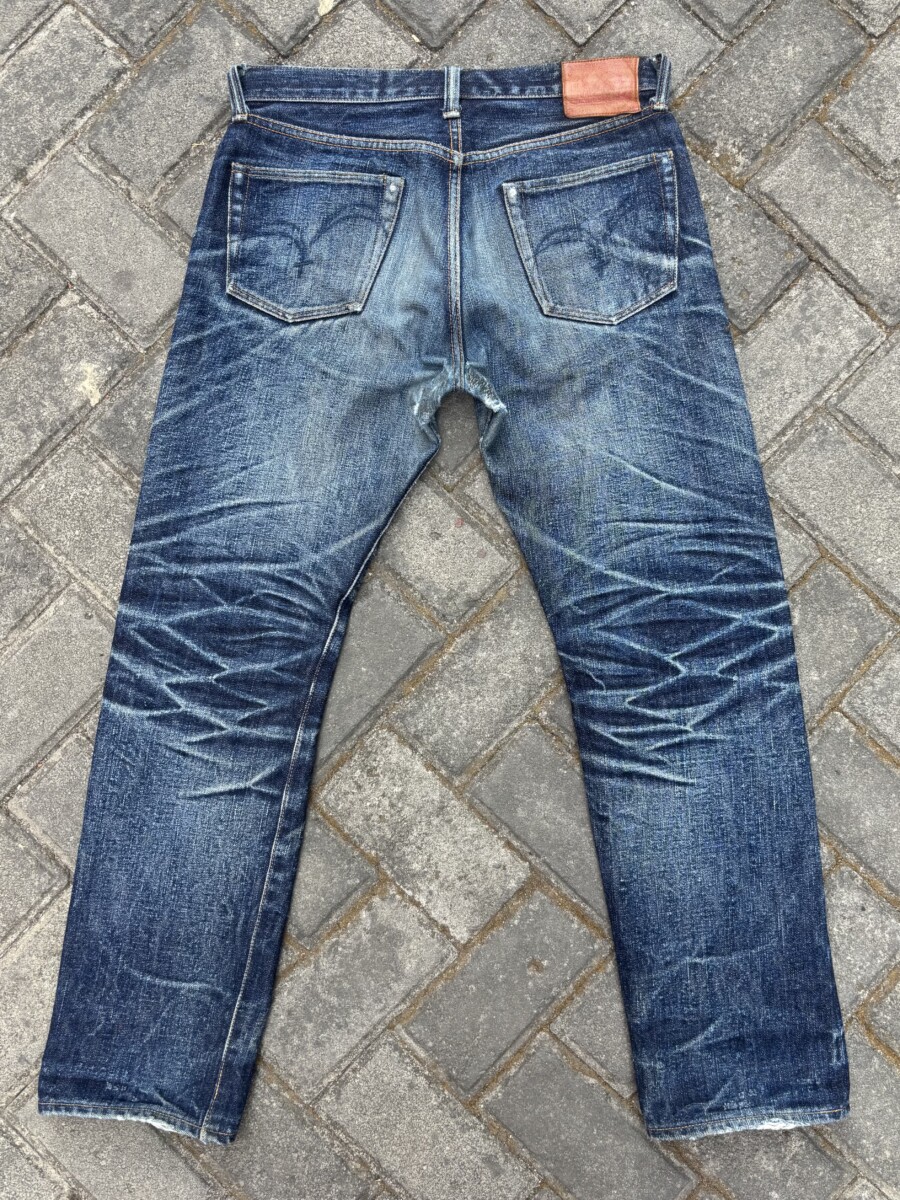
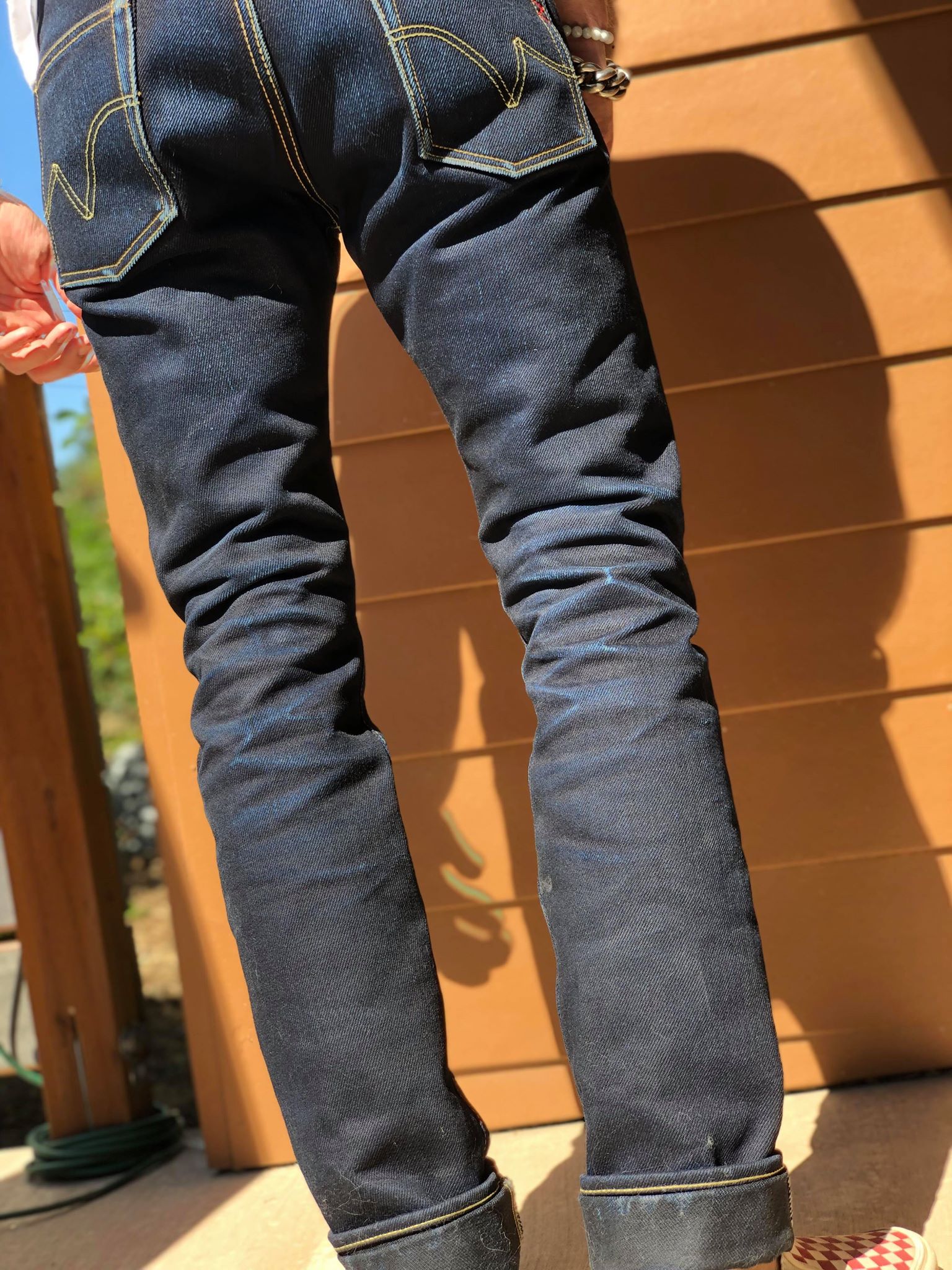
Aaron Kikola is an obvious example. He wore his 15.5 oz. Big John R008 Rares for about 350 days, taking them hiking, camping, rock climbing, and wearing them during renovation projects. Fajrin Karza Juniarzal put his 19 oz. Samurai S710XX II through an 800 km bike tour, a 24 km trek and a trip up Mount Prau.
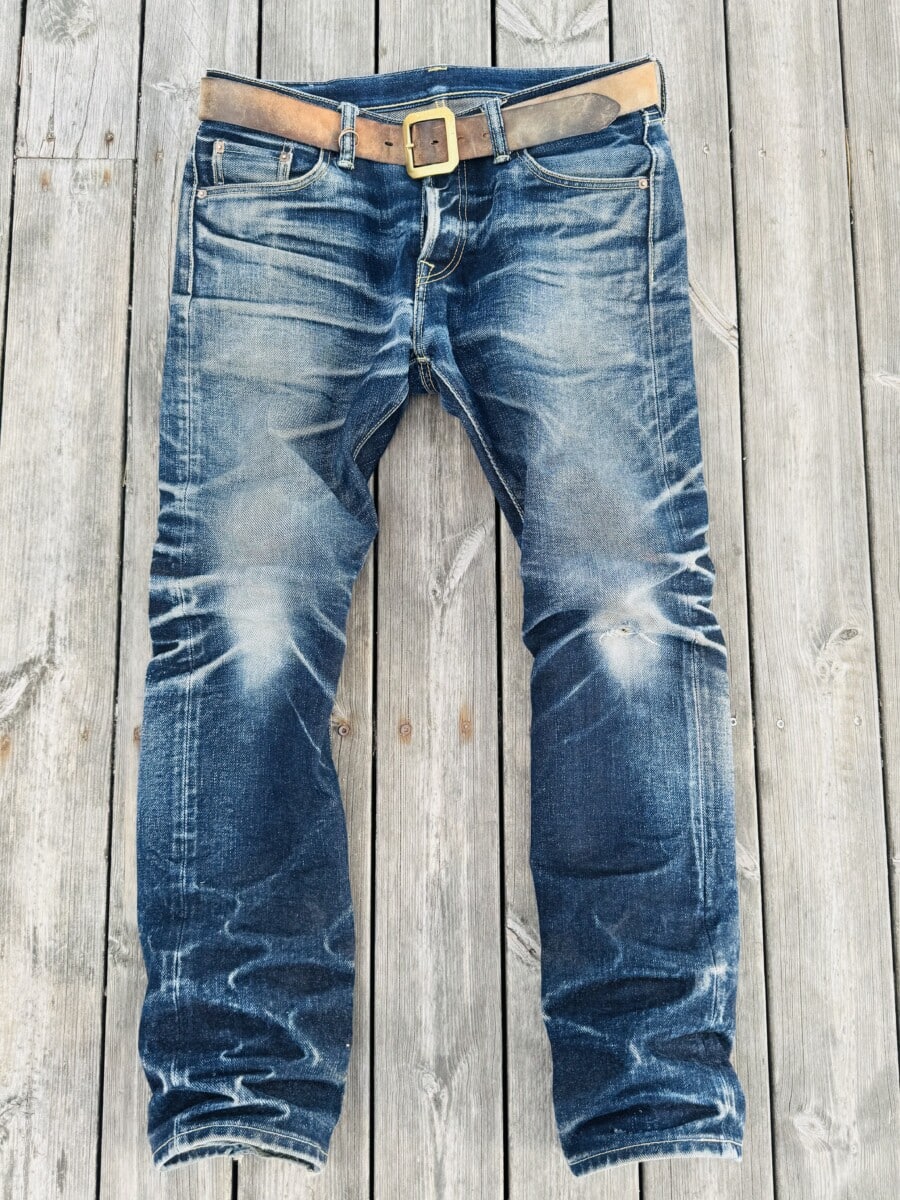
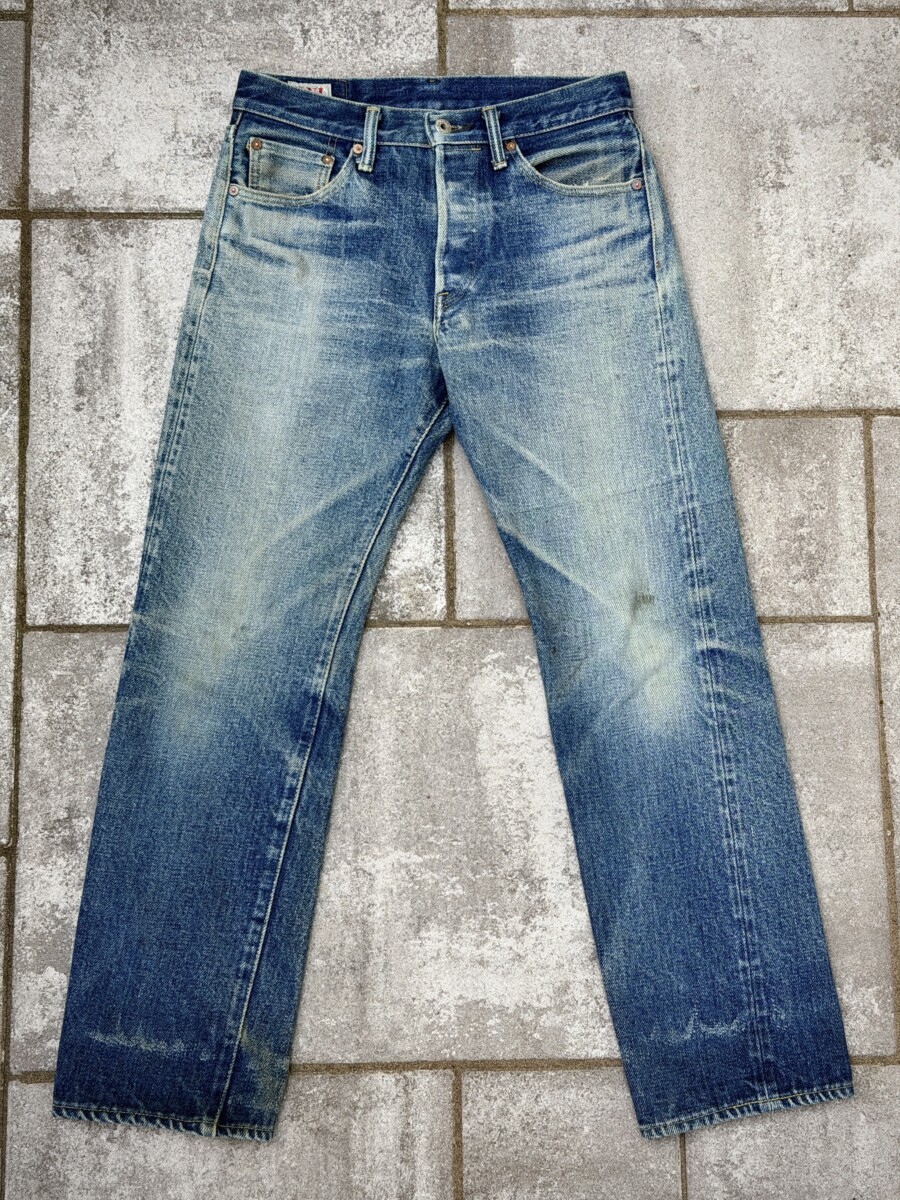
Jørn-Bjørn Fuller-Gee mixed mountain trips, skateboarding, cycling, rehearsals for physically demanding plays and five months of snow into his year in 19 oz. Iron Heart 555Ls. George Cayea took his 20 oz. ONI Secret Denim through weekly hikes through snow and marshes and wore them during industrial repair work.
Those are good stories filled with kinetic energy. They are not, however, the whole story or the only story.
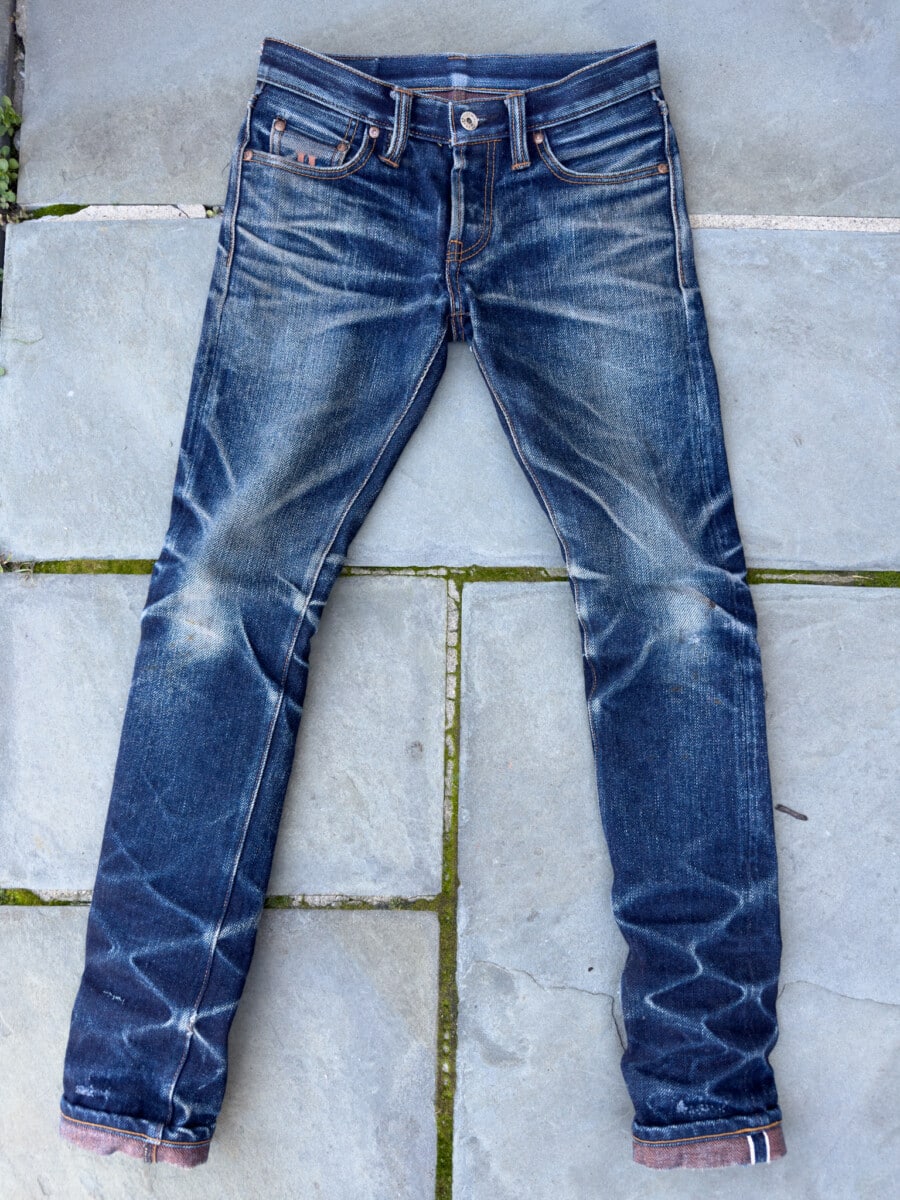
Richie Macc wore his 20 oz. Piger Works F2F20 for roughly 305 days during a year when injury kept him away from the roofing and masonry work that would normally have given the jeans more punishment. The fades still took him deep into the competition.
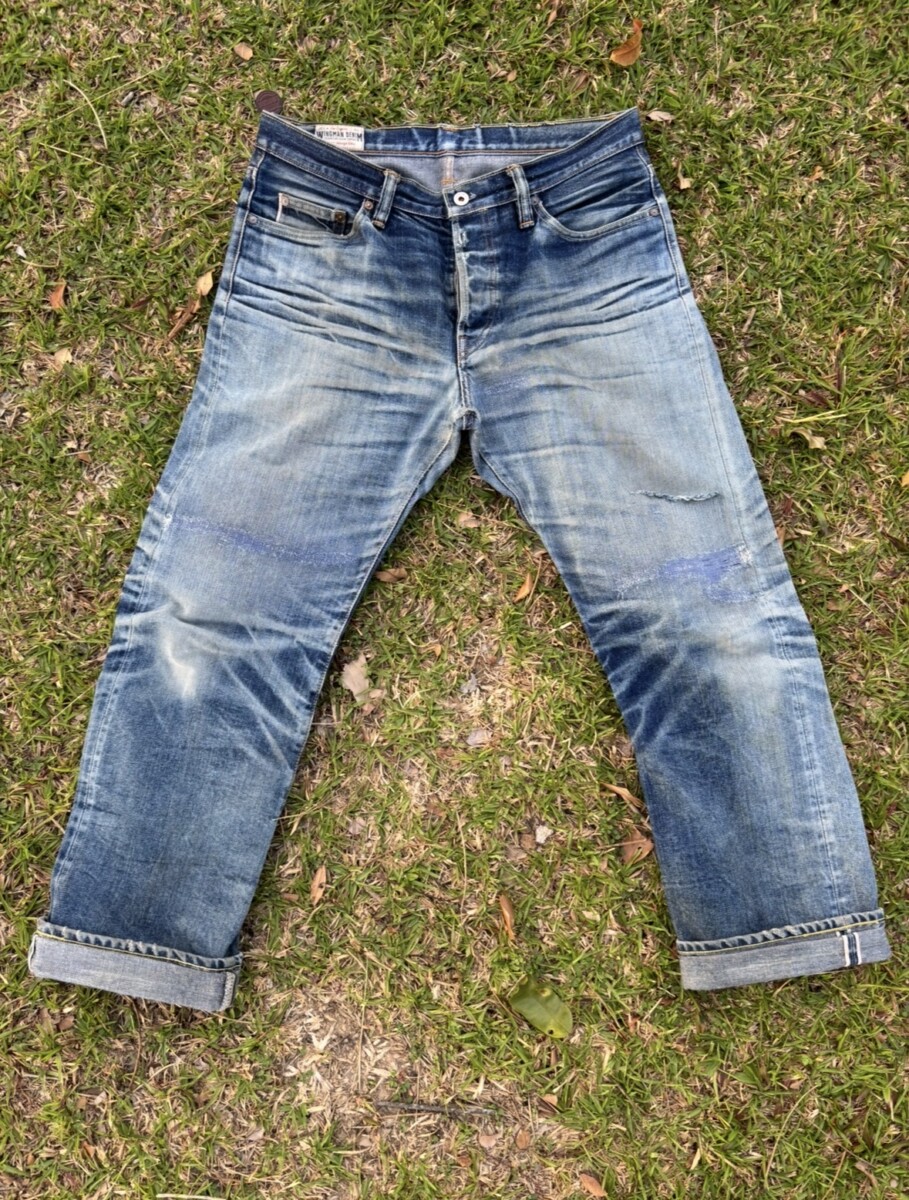
Wan Zulfadli Wan Mohd put around 250 days into his 17 oz. Wingman Spitfires through work as a mechanic, motorcycles and normal routines.
Haziq Syazwan wore his 15 oz. Pure Blue Japan PER-EX-013-ID for 355 days. He cycled most days but otherwise his days were mostly what he describes as aa mundane routine. Nigon Konkhamrat wore his Piger Works F2F20 for 320 days and said he did nothing particularly special at all in them.
Suwit Prasertsung’s physically demanding job was simply his normal day repeated for 280-300 wears. Bima Rosyid wore his 19 oz. Samurai S710XX every day and could think of only one notably bad idea: playing basketball (he only tried this once, vowing never again).
Takeaway #1: Ordinary Days Still Add Up
Strong fades are built on daily wear, but use does not have to become theatre—you shouldn’t stage adventures for the sake of the jeans. An active life can speed things up, but ordinary days count too.
For most buyers, that is the more useful target. Choose a pair that works for the life you already have well enough that you keep reaching for it. Consistency beats owning the perfect fading jean and leaving it in the wardrobe whenever real life gets in the way.
#2: Pain Is Not Part of the Formula
Raw denim moulds to the most comfortable fit you’ll ever wear. This simple fact has helped create one of the most stubborn ideas in the scene: new raw jeans should be uncomfortably tight; the struggle will eventually reward you with a better fit and sharper fades.
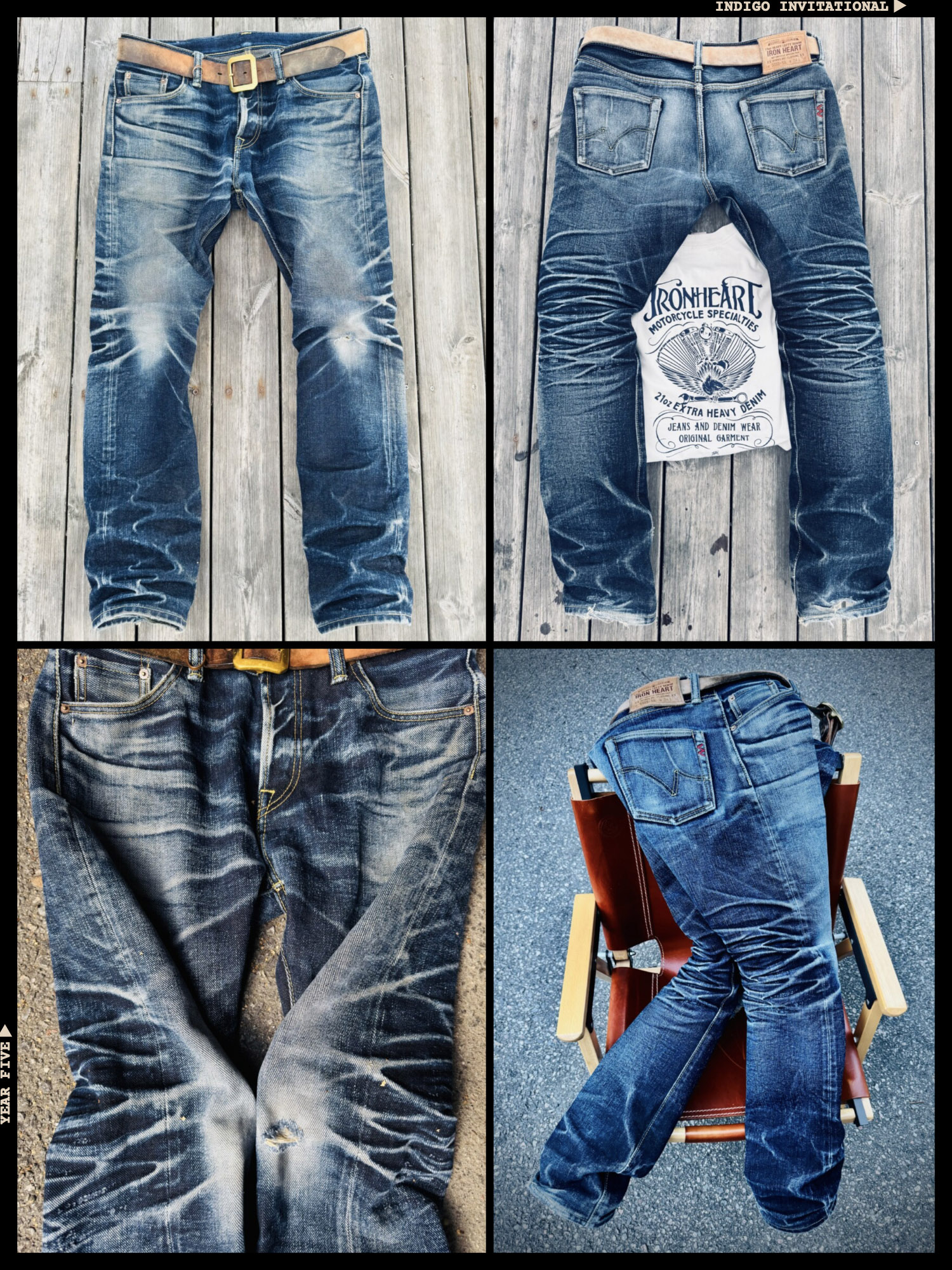
Jørn’s experience with his Iron Heart 555Ls is a useful warning. He bought his usual size because he wanted the dramatic Left Hand Twill fades he had seen on other pairs. The denim hardly budged.
This meant that his pair was never particularly comfortable. He joked that, when sitting or crouching, he felt like he was losing circulation to his legs. He still loved the jeans (and he placed first in the ROW Conference), but he says that, with his next pair, he’ll size up in search of a more comfortable cut.
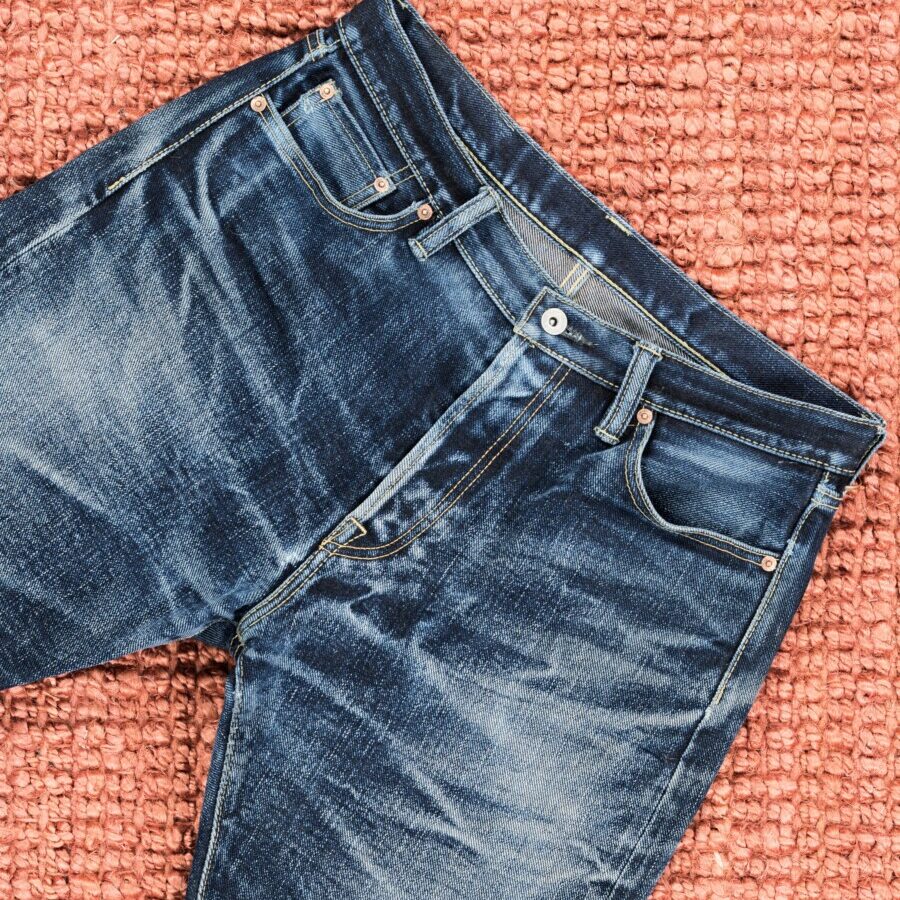
John Brandon chose the same fabric, but he had a very different year. He wore the roomier Iron Heart 888S-19L in the same 19 oz. Left Hand Twill for all 365 days. His pair softened, draped better and just got more comfortable as the year progressed. He says he would happily choose that fit and size again. It’s a difference of inches and half inches.
The 25 oz. XHS gives us the same comparison. Tom Singleton’s first weeks in the 555 XHS involved sore knees and buttons stiff enough to fight back. The jeans eventually relaxed, but the break-in was arduous work.
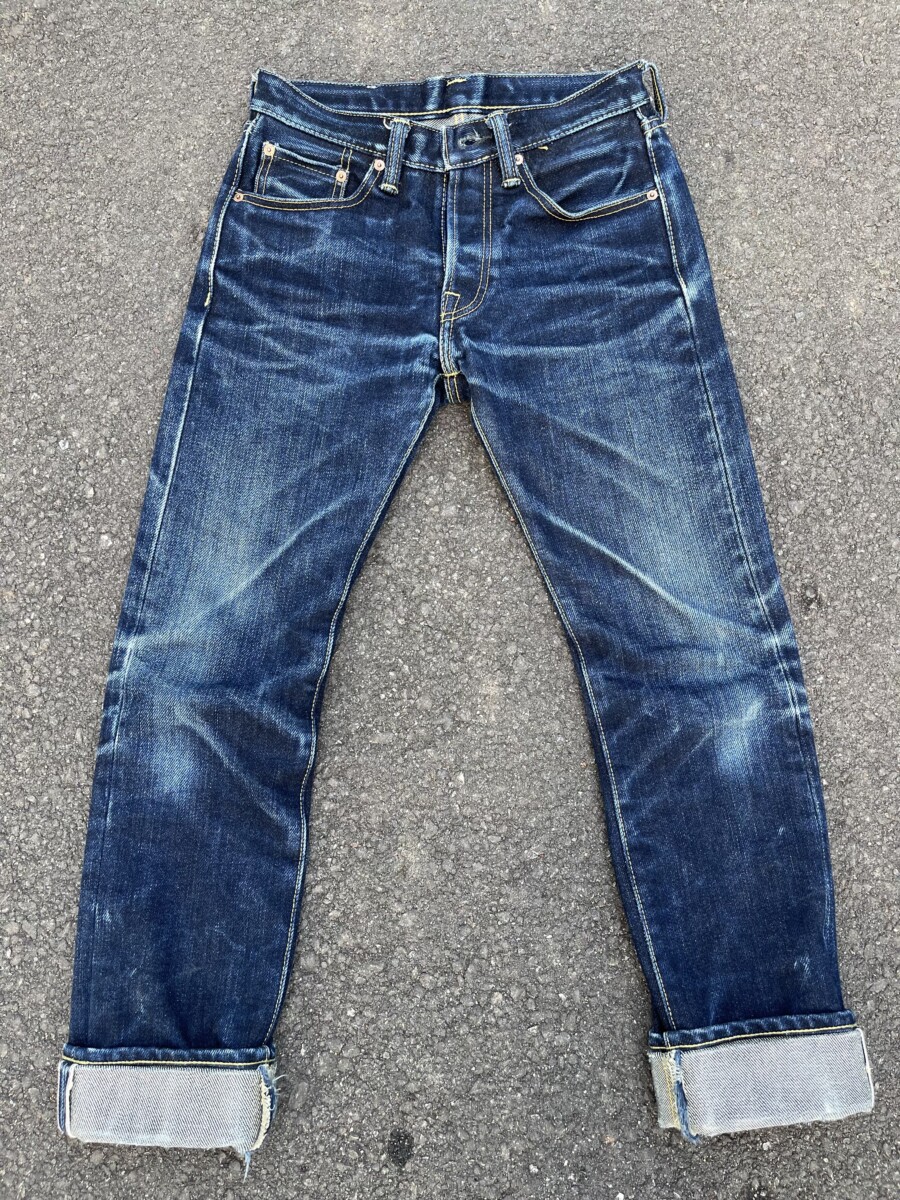
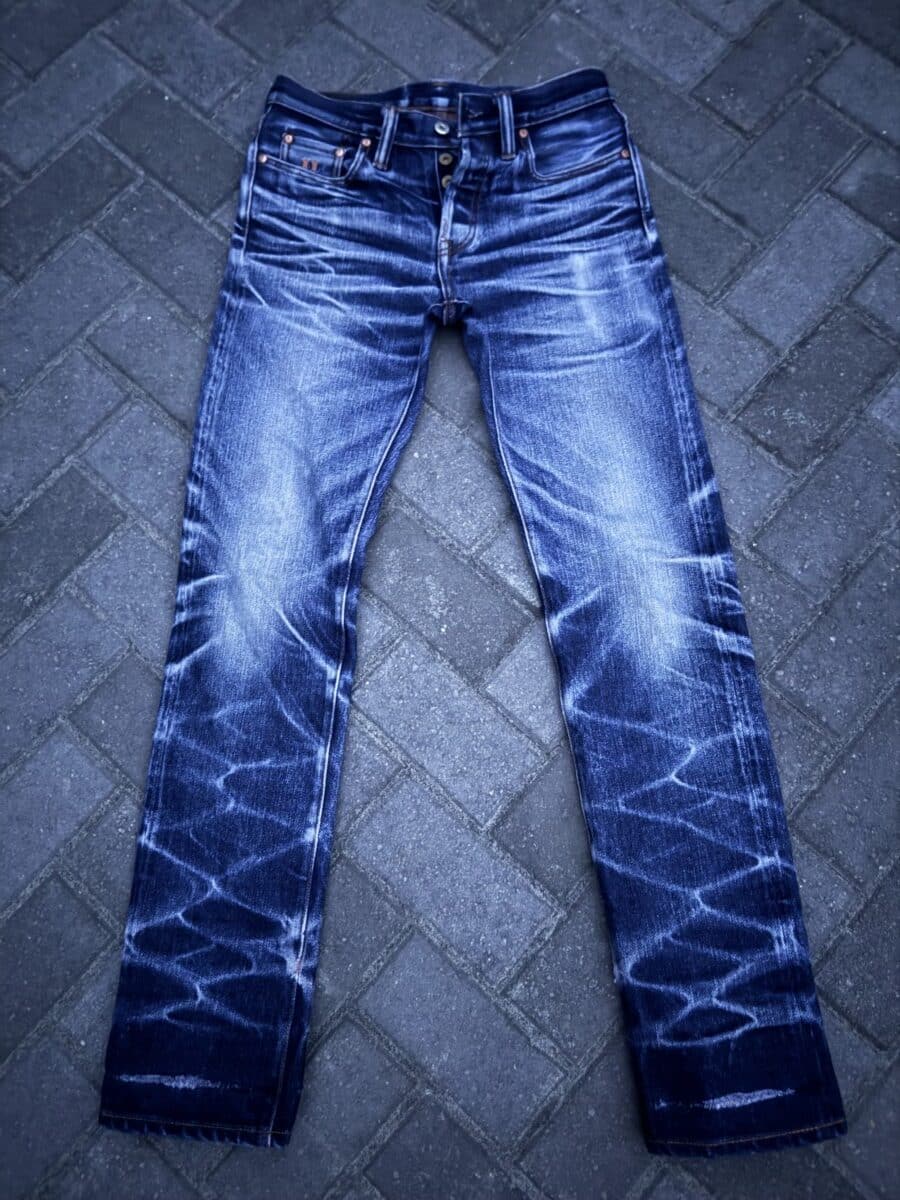
Faez Hakim Khalid started with a fit that already worked and spent the year watching the same 25 oz. denim mould to him. The fit was comfortable but snug. The denim stretched just enough to make it even more comfortable. He didn’t count on the stretch to make the fit bearable.
Dustin Trychta found another limit with his slim Piger Works F2F20. The fit worked until winter base layers had to go underneath it. Once the extra layers disappeared, the jeans made sense again.
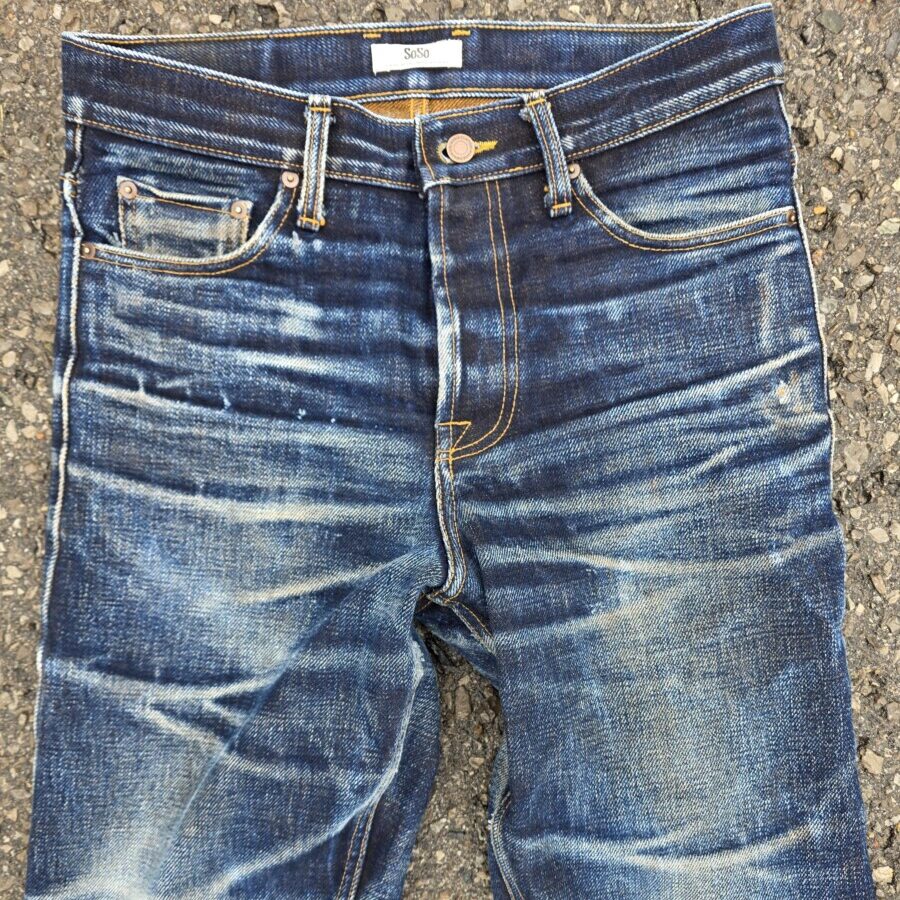
Other entrants removed more of the guesswork at the start. Richie had Piger Works adjust his measurements. Derek Lamarche chose a custom fit for his 22 oz. SOSOBROTHERS Copper Weft and said the fit improved as the denim moulded to his hips and thighs. Aaron found a perfect fit by following Big John’s shrink-to-fit guidance before starting his year.
Of course, it’s not just the denim that changes. Bodies also change. Fajrin lost around 10 kg during Year 5, taking his Samurai from tight to well fitted and, eventually, to loose. If your weight yo-yos, it’s better to fit for your larger size if you want to pair to remain wearable all year.
Takeaway #2: Break-In Will Improve the Fit, Not Rescue It
A good break-in year starts with a fit you can already live in from day one. Denim can soften, stretch and mould around the body, but it cannot redesign the cut. A low rise stays low. A narrow thigh stays narrow. Winter layers still need space.
Yes, a slimmer-fitting cut strains the denim in ways that create more dramatic contrasts, but a painfully tight pair becomes a more difficult choice to make with each passing day. If discomfort makes you wear the jeans less—or makes you resent putting them on—the supposed fading advantage has already worked against you.
#3: The Fabric Decides More Than the Brand
If the goal is a particular kind of fade, the patch on the waistband tells you far less than the denim itself. Year 5 made that obvious. Some brands appeared again and again, but these results were driven more by denims than by brand names.
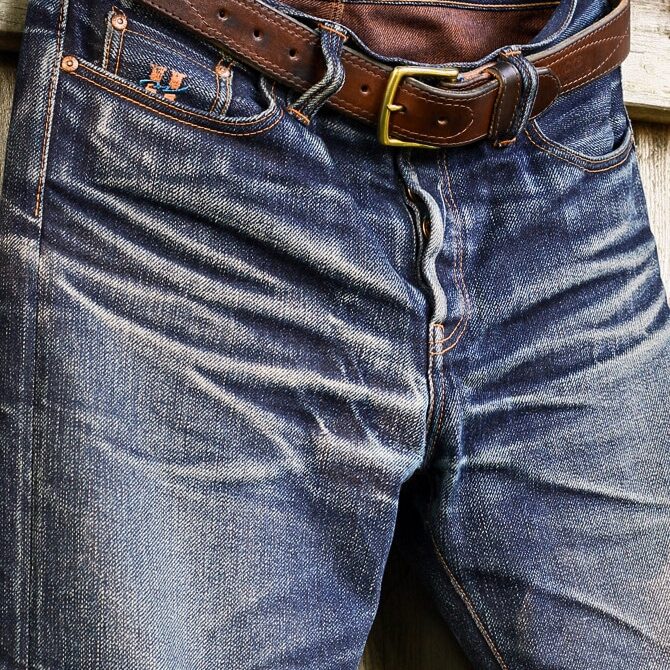
Piger Works is the clearest example. David Thorn called Piger’s 20 oz. F2F20 the fastest-fading denim he had worn. Richie saw electric blue appear early with this same denim, and Eddie Garcia got intense development from the F2F20 by keeping his pair dry for the full 365 days.
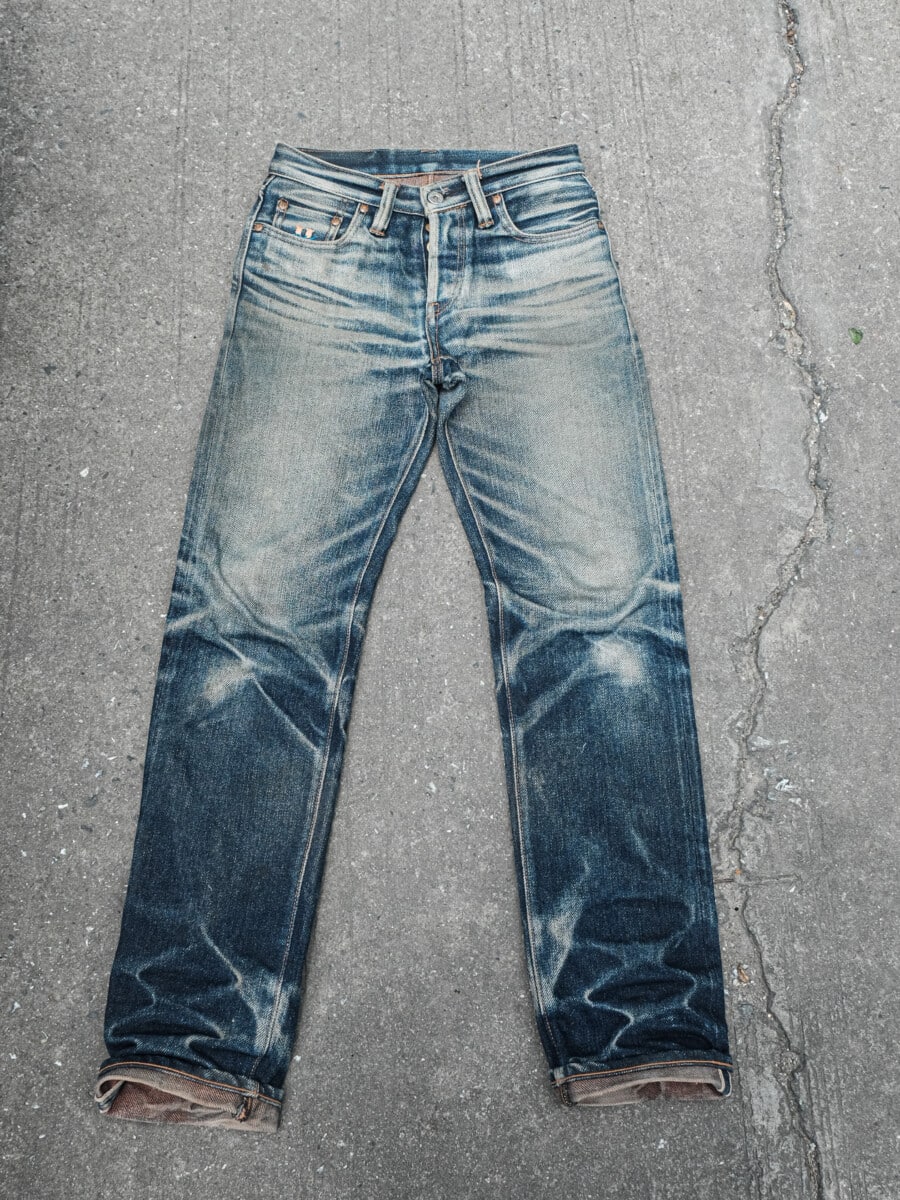
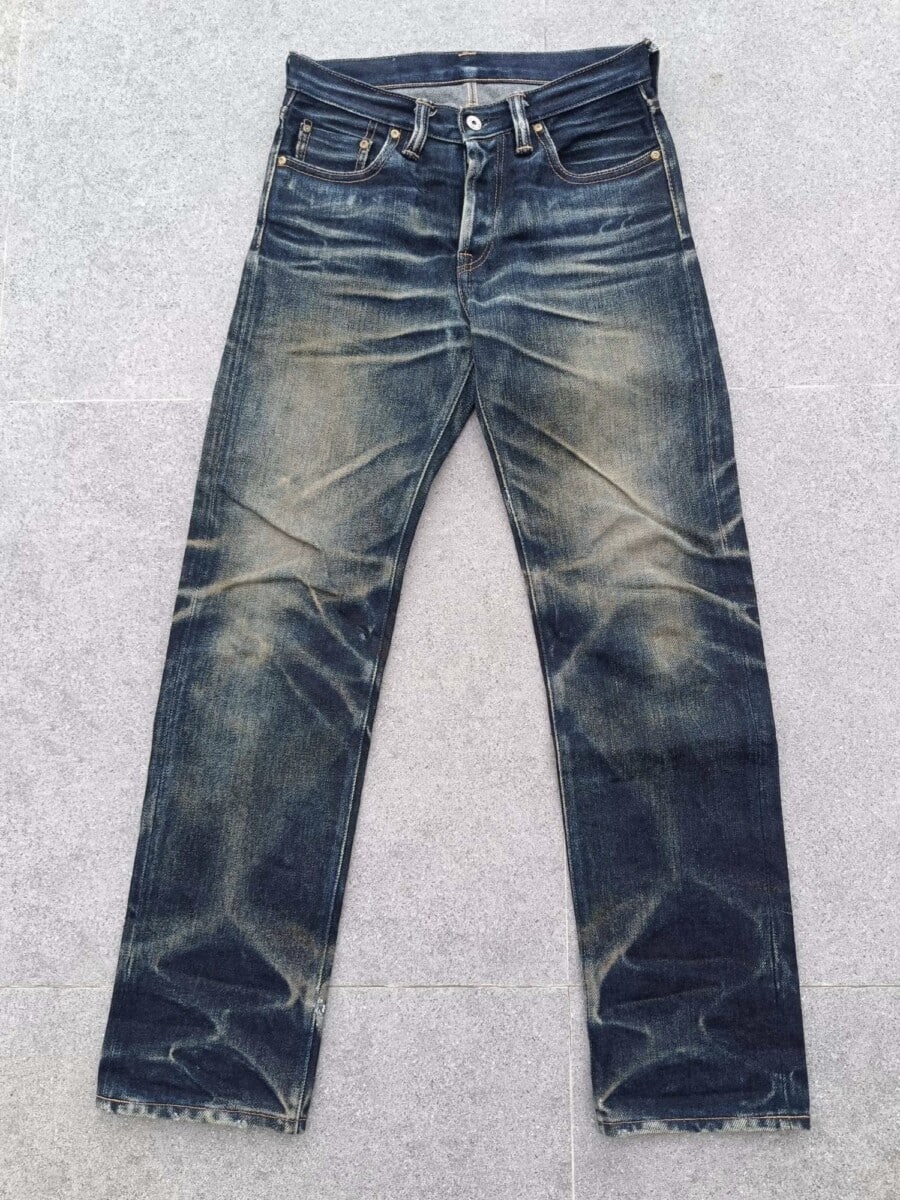
Suwit liked the deep indigo left in low-wear areas against the sharper fades, with the dyed weft adding a warmer undertone.
Pathorn Wongmaen’s 20 oz. Piger Works 20MF behaved differently. After roughly 300 days, two soaks and one wash, what surprised him most was how dark the unfaded areas remained, helping showcase his contrasts with striking highs and lows.
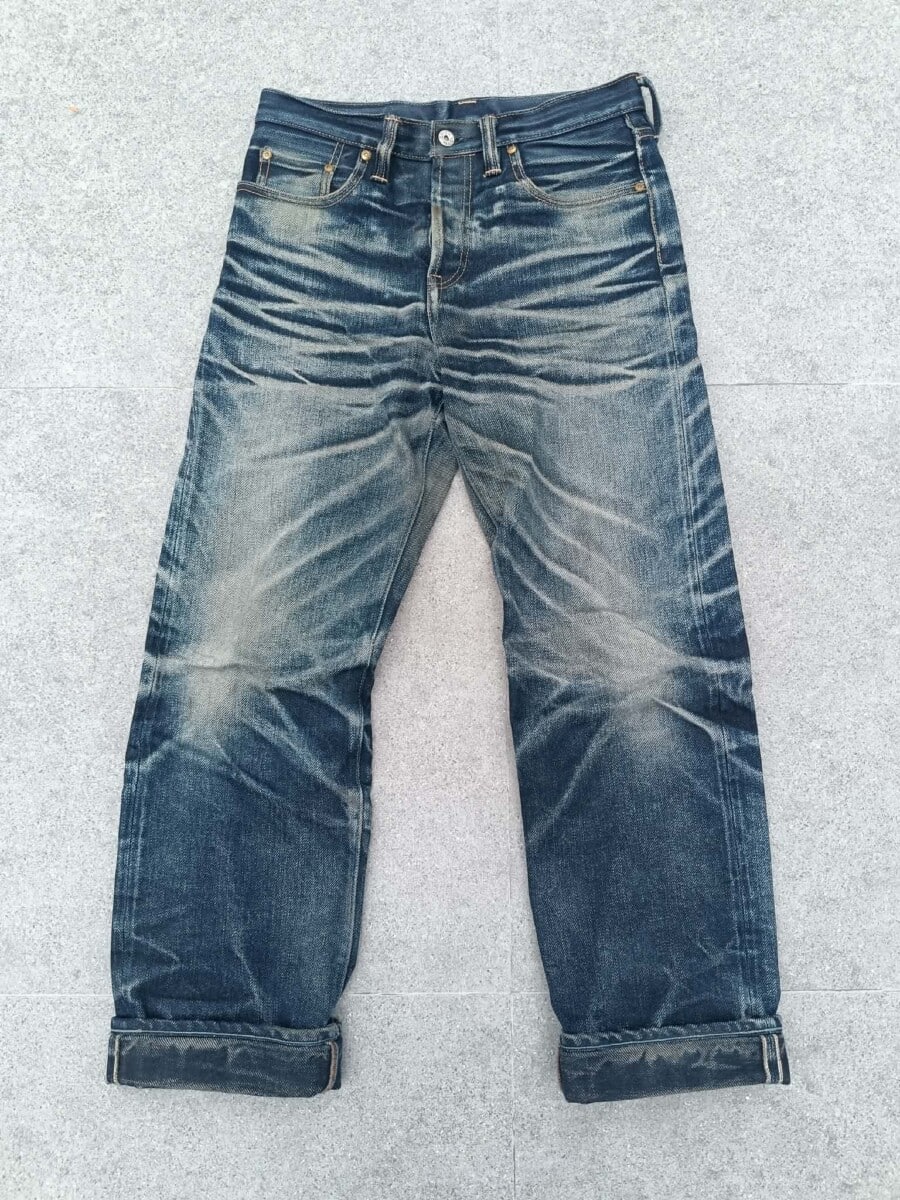
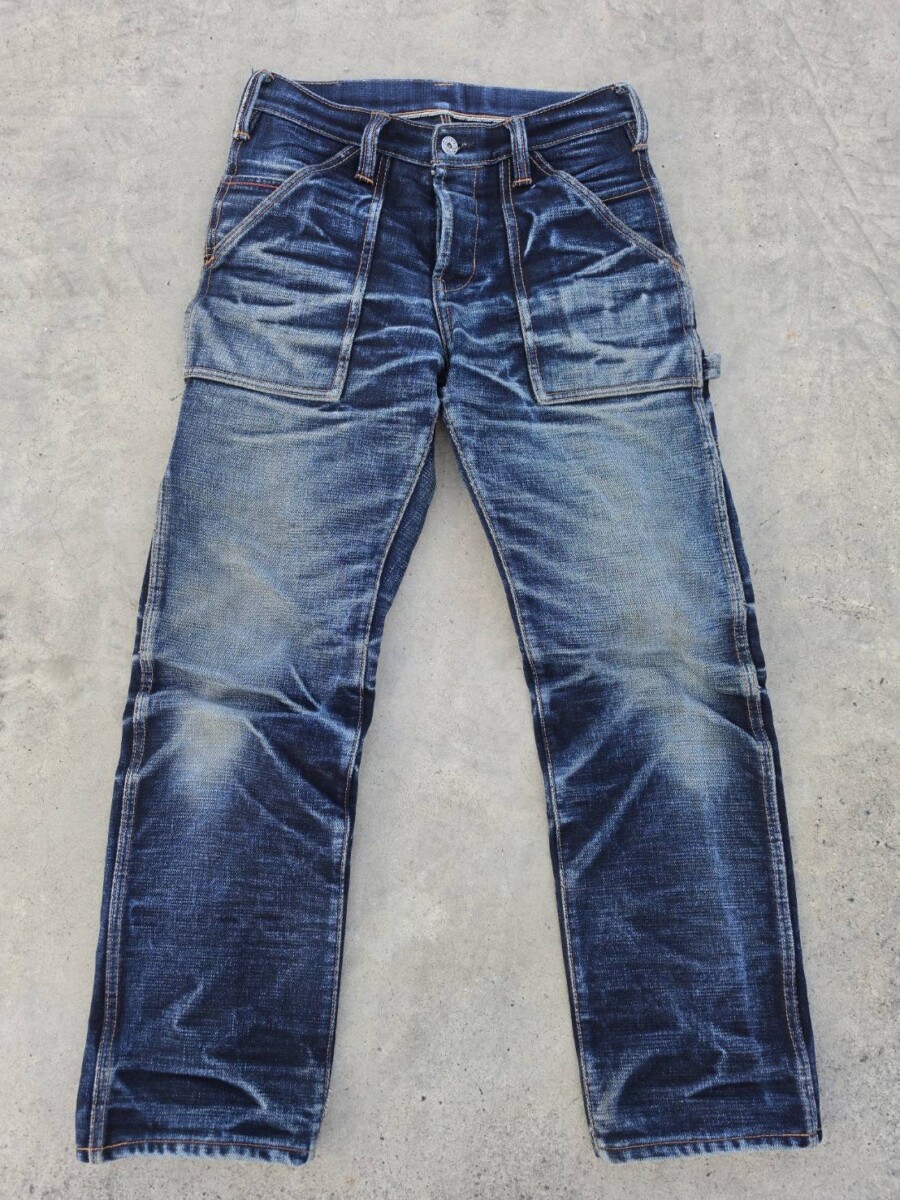
Prawit Pooyam chose the 20MFSI (featuring the same warp yarns as the F2F20) partly for its very dark indigo and waited until the very end of the competition to wash his pair.
Teerapol and Cade Schmutz both chose the 21BSU, drawn to the fabric by its broken twill weave and its characteristic scratchy texture. Teerapol cracked the Top 10, and Cade was tied for 11th. The results speak for themselves.
The Japanese pairs tell the same story. Hiroki Tanaka chose the 15.7 oz. Momotaro 0205SP for its texture and tate-ochi potential; he got the vertically textured fades he wanted and then some.
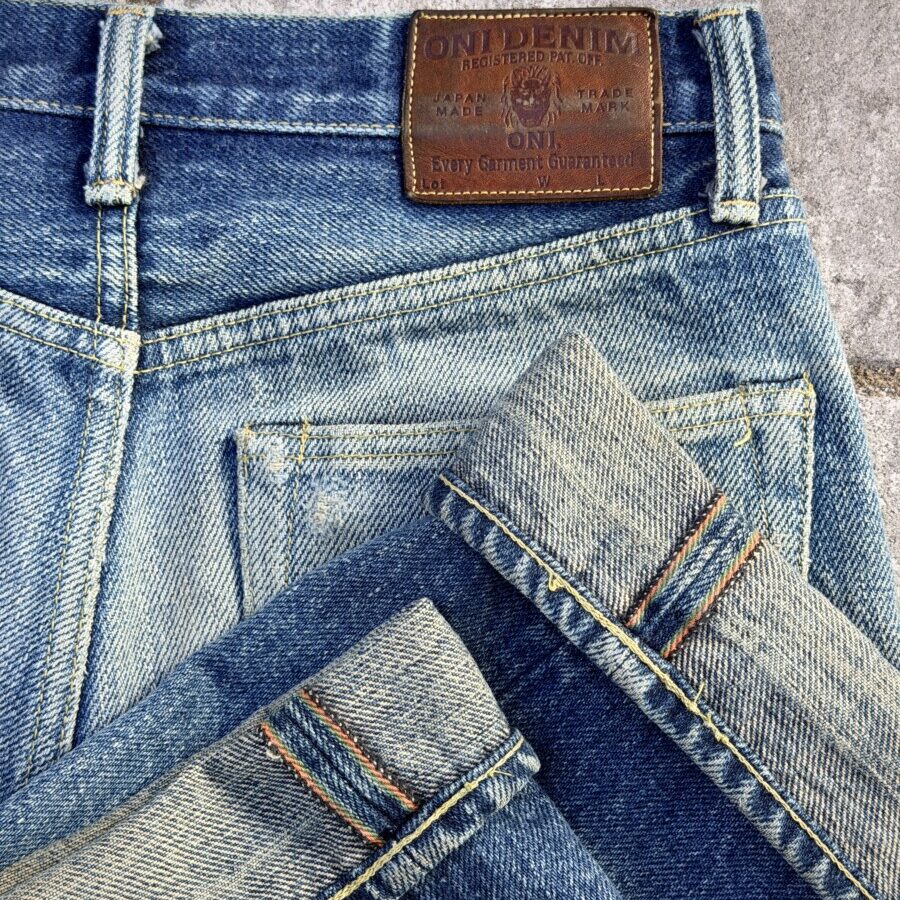
George picked ONI Secret Denim because he liked its low-tension texture and green cast. The denim has a reputation for incredible softness and overall fades, and he demonstrated its potential with nearly monthly washes separated by periods of hard wear. The judges loved his pair, which perfectly balanced vintage fades and contrasts.
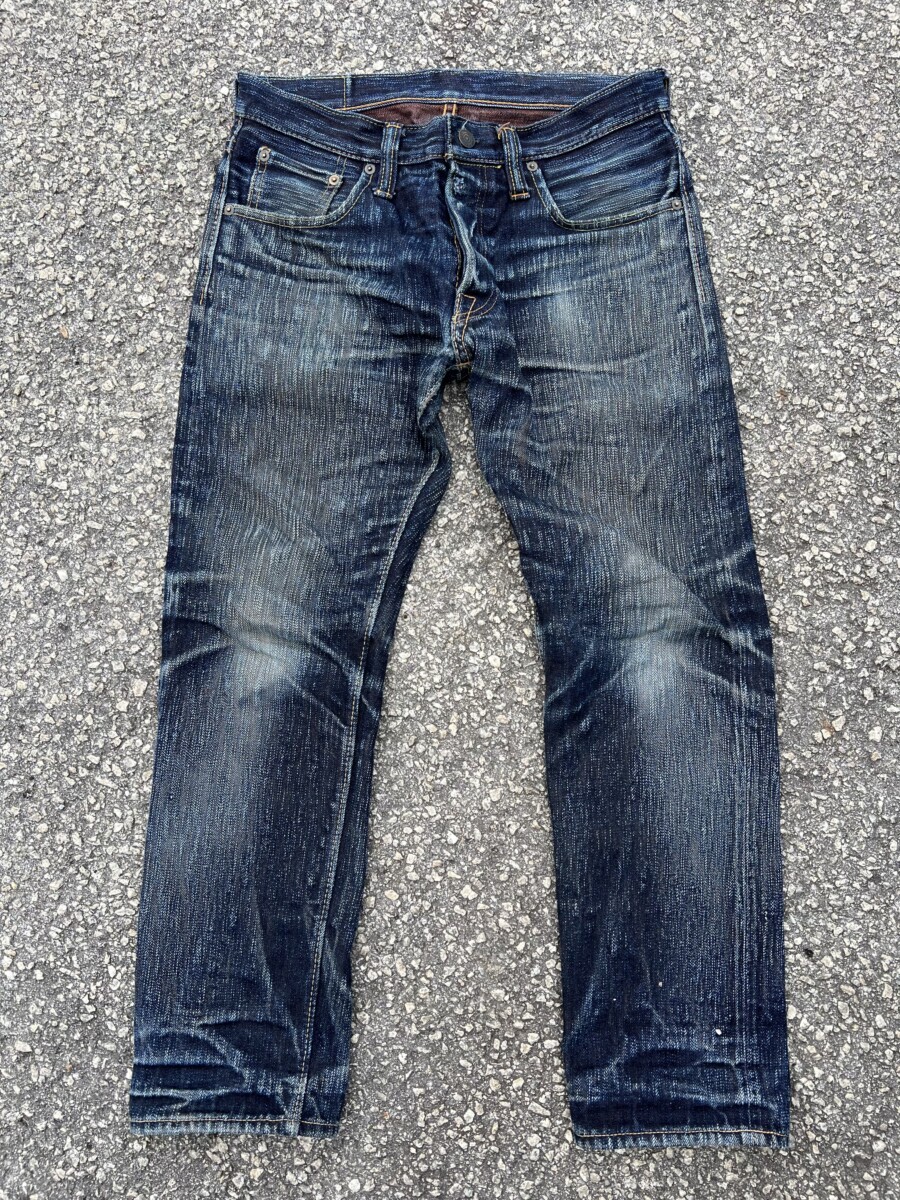
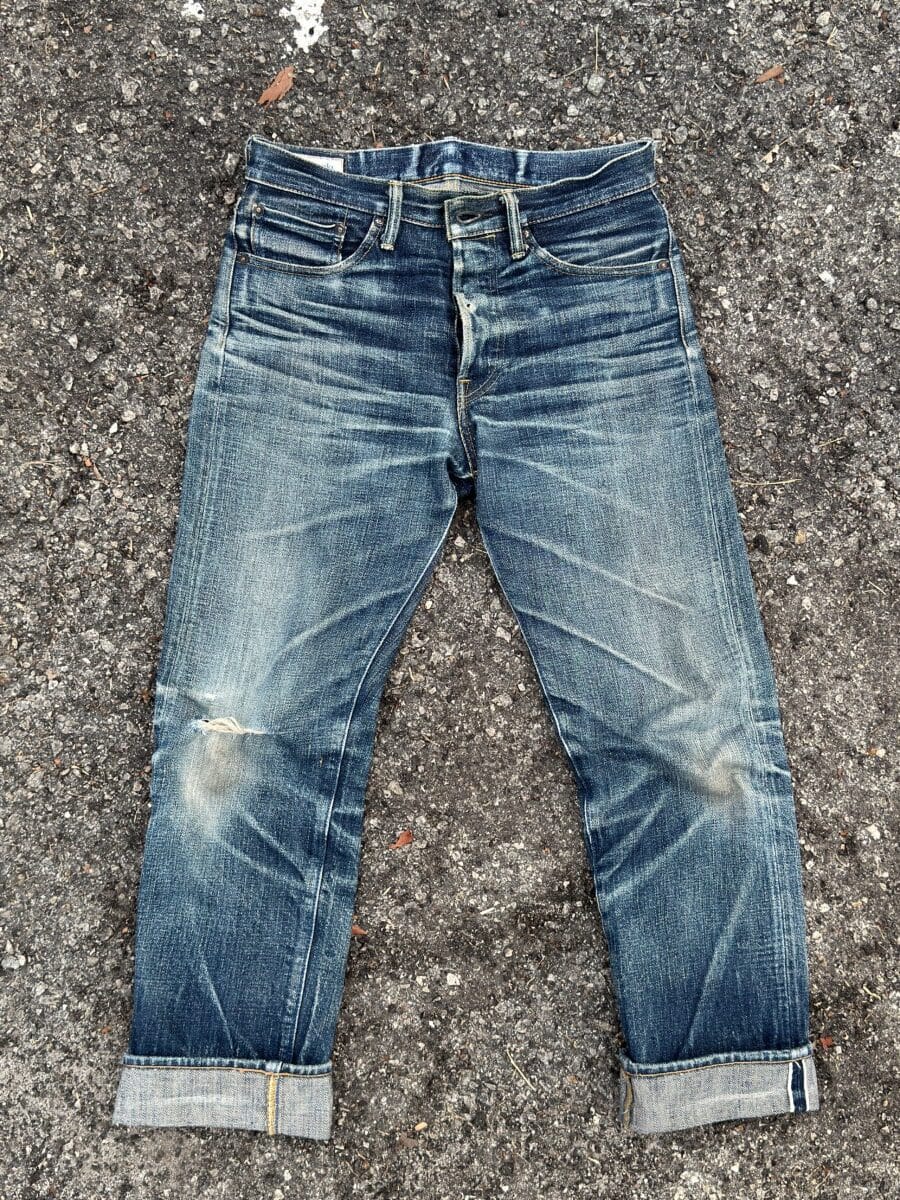
Haziq went to Pure Blue Japan for the artful combination of indigo, kakishibu and slub. Alex Chong chose Tanuki’s 18 oz. Earth Denim because he wanted a green hue, natural texture and a balance between contrast and vintage-style colour.
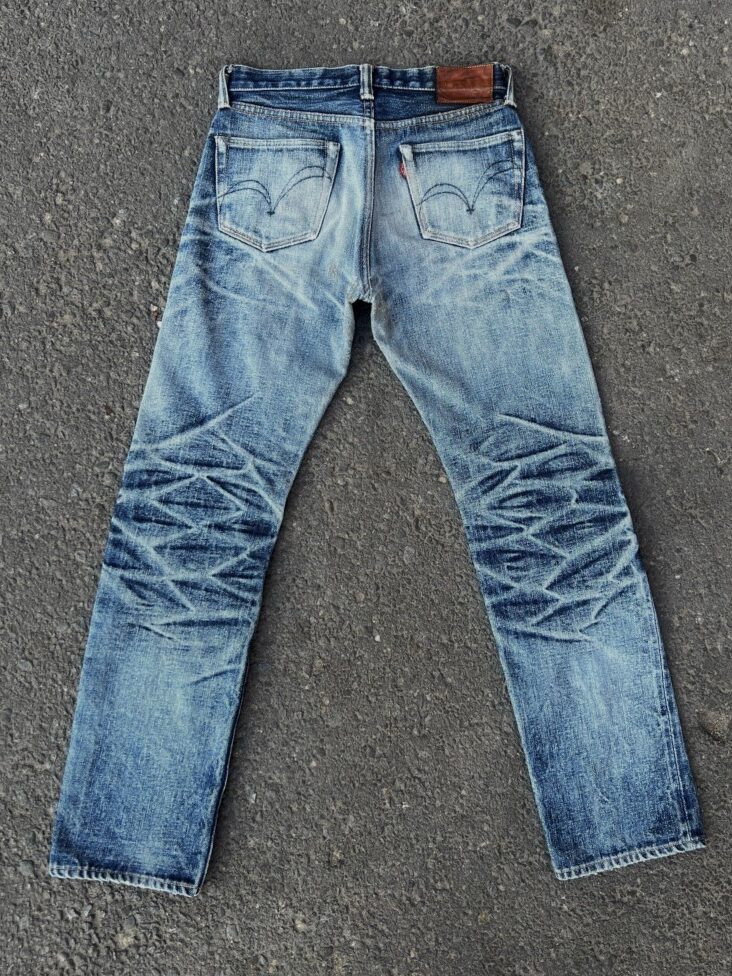
Samurai (this year’s Maker’s Cup winner) adds another useful spread. Fajrin, who finished the year deep in the Top 10 in his 19 oz Kiwami Selvedge, wants to go deeper with Samurai. His next competition pair will likely be one of the brand’s ZERO or ZERO+ pairs.
The Y5 champion Bima saw his S710XX (another Kiwami pair) develop contrast quickly. Bronze medalist Darren Middleton was drawn to the slubbier 21 oz. “Zero Model” S5000VX. The heavy selvedge has a ton of character that his hard work helped bring to the surface.
Even within Iron Heart, the 19 oz. Left Hand Twill and 25 oz. XHS were popular choices among contenders this year. We’ve seen their 21 oz. flagship denim take home first place in the competition, but their XHS denims have a well-earned reputation for producing remarkable contrasts when pushed.
Again and again, we see that denims make more of a difference than brands. The brand gives you the build quality and cut, but it’s the denims that are at the root of the fades. If one of the examples above look like exactly the kind of fades you want to produce, keep this in mind.
Takeaway #3: Buy the Fade Before You Try to Create It
If fading is the main reasons you are buying raw denim, start with the fabric and look at faded examples of it. Weight, yarn character, weave, dye, weft colour and finishing all give you clues about the colour and texture the jeans can develop.
You cannot order an exact future fade from a spec sheet, and a competition result is not a quality ranking. But choosing the right denim puts you on the right road. Your wear makes the result yours; the starting point still matters more than the patch.
#4: Ounces Are Not a Difficulty Setting
Denim weight looks wonderfully objective. Twenty-five is more than twenty, which is more than fifteen. It’s easy to turn that into a ranking of how hot, stiff, durable or difficult a pair will be.
The Year 5 Top 20 faders showed that this simple formula leaves much to be desired.
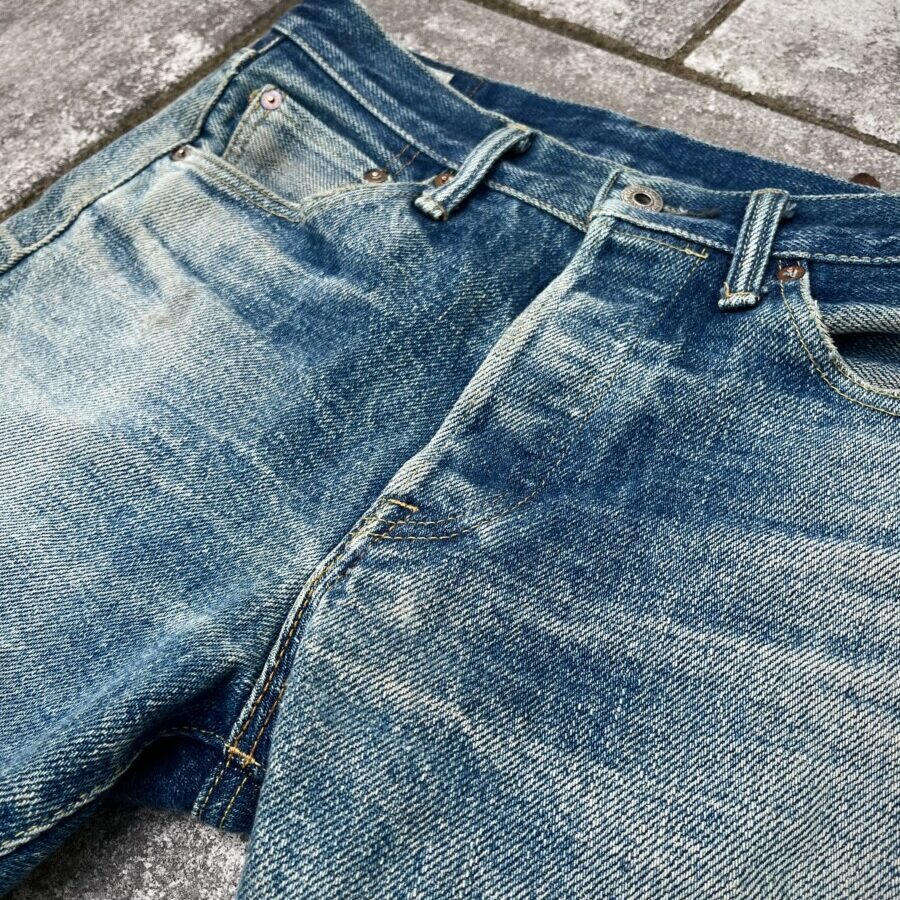
George wore his 20 oz. ONI Secret Denim for 364 days. The loose weave stretched far more than he expected, but it was breathable enough to wear every day. He only really wanted something lighter while working on days when the temperature climbed to above 100°F.
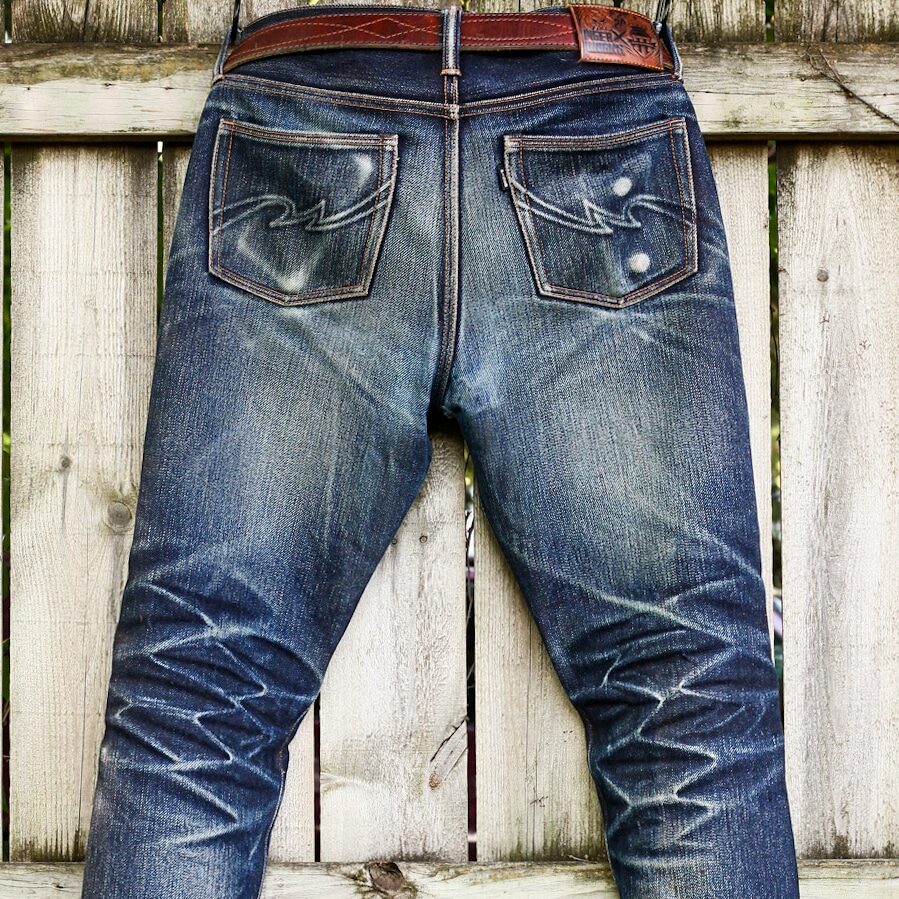
David described the 20 oz. Piger Works F2F20 as surprisingly soft from the start. Eddie wore the same fabric through South Texas heat and found it grew even more supple and breathable as it broke in and broke down.
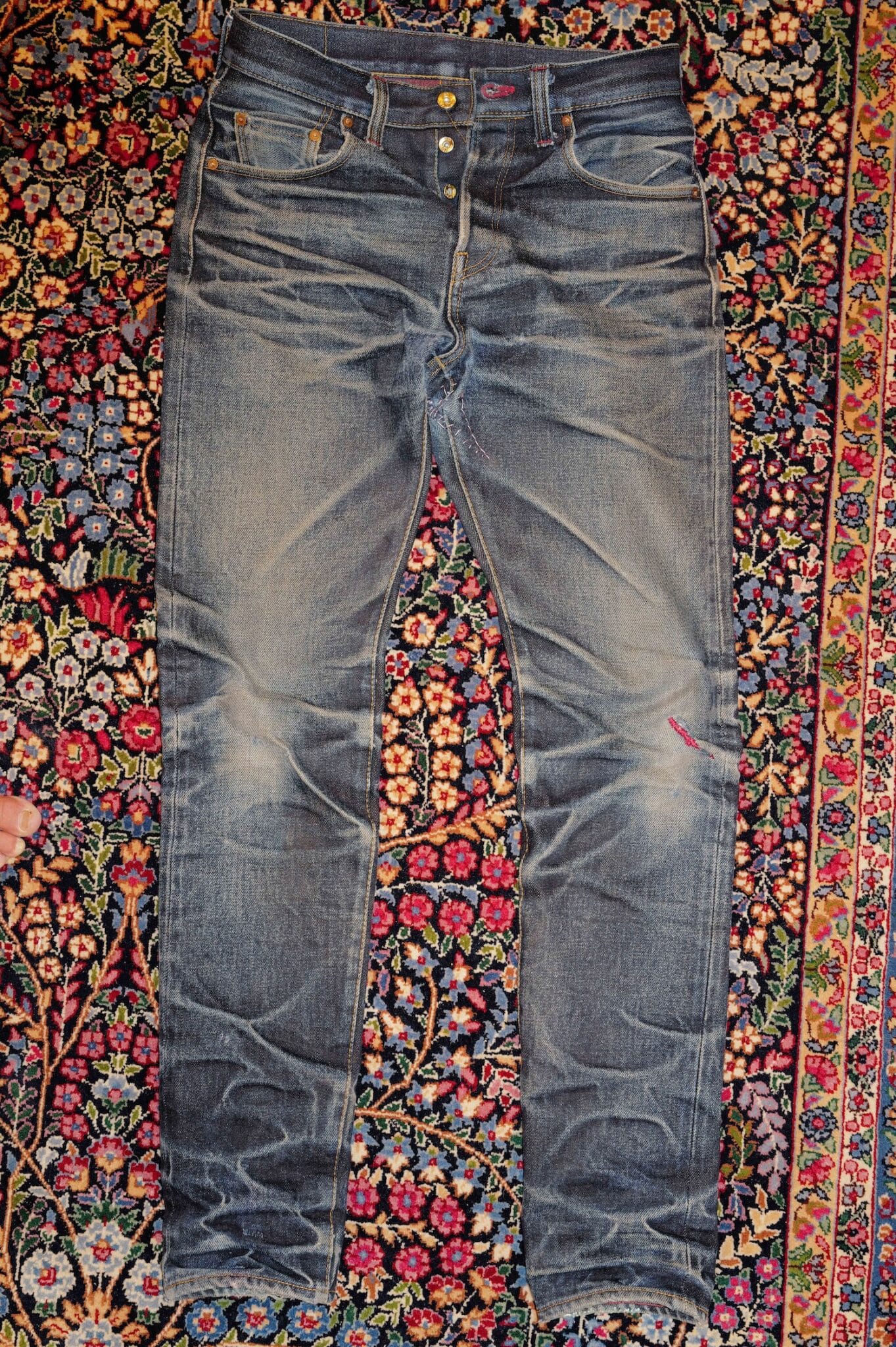
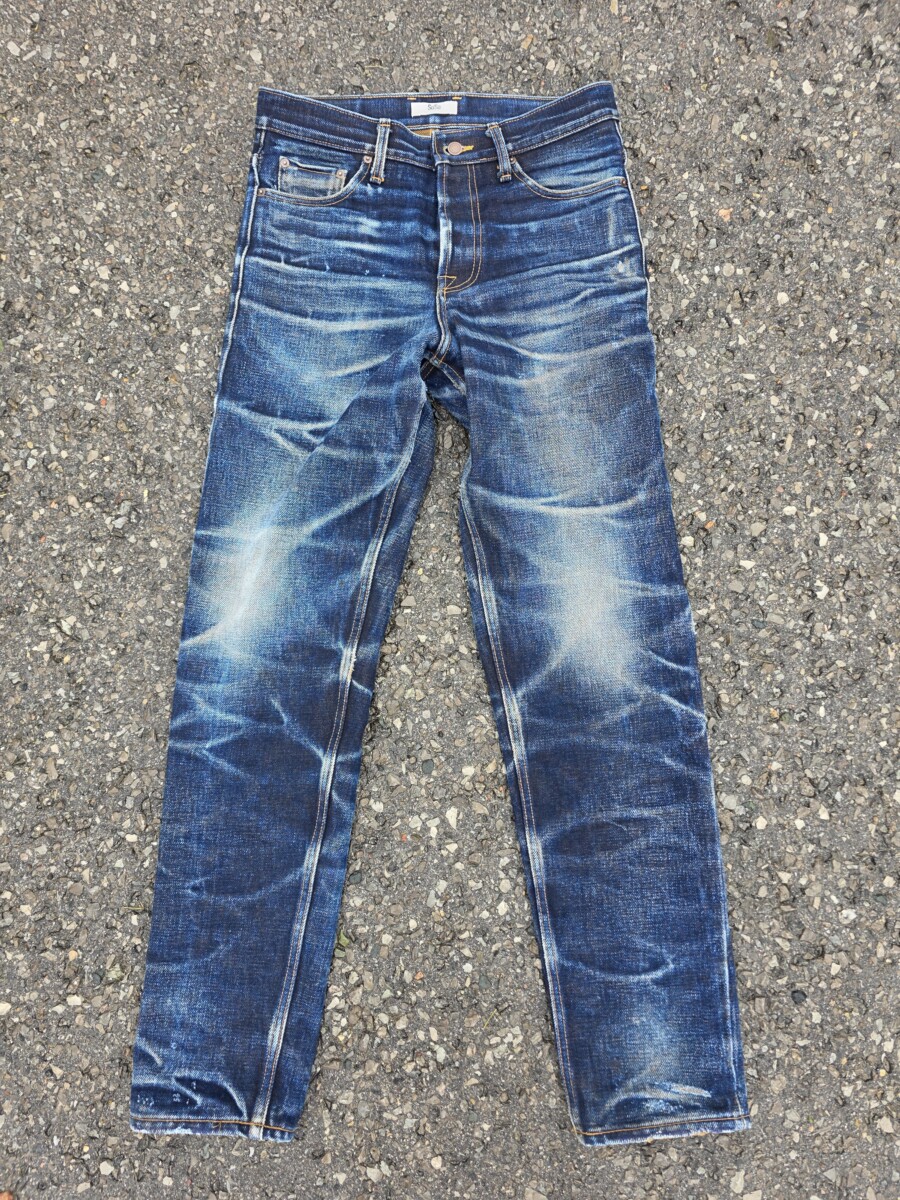
Raby Plank expected his 25 oz. Samurai x Corlection Last Samurai to be a punishing fabric in the heat, but he found them remarkably breathable and cool in the summer heat.
Derek’s 22 oz. SOSOBROTHERS was stiff and uncomfortable for the first month or so, but the custom fit worked its magic, turning the stiff pair into a supple and forgiving one once he had eased the denim through its break-in period.
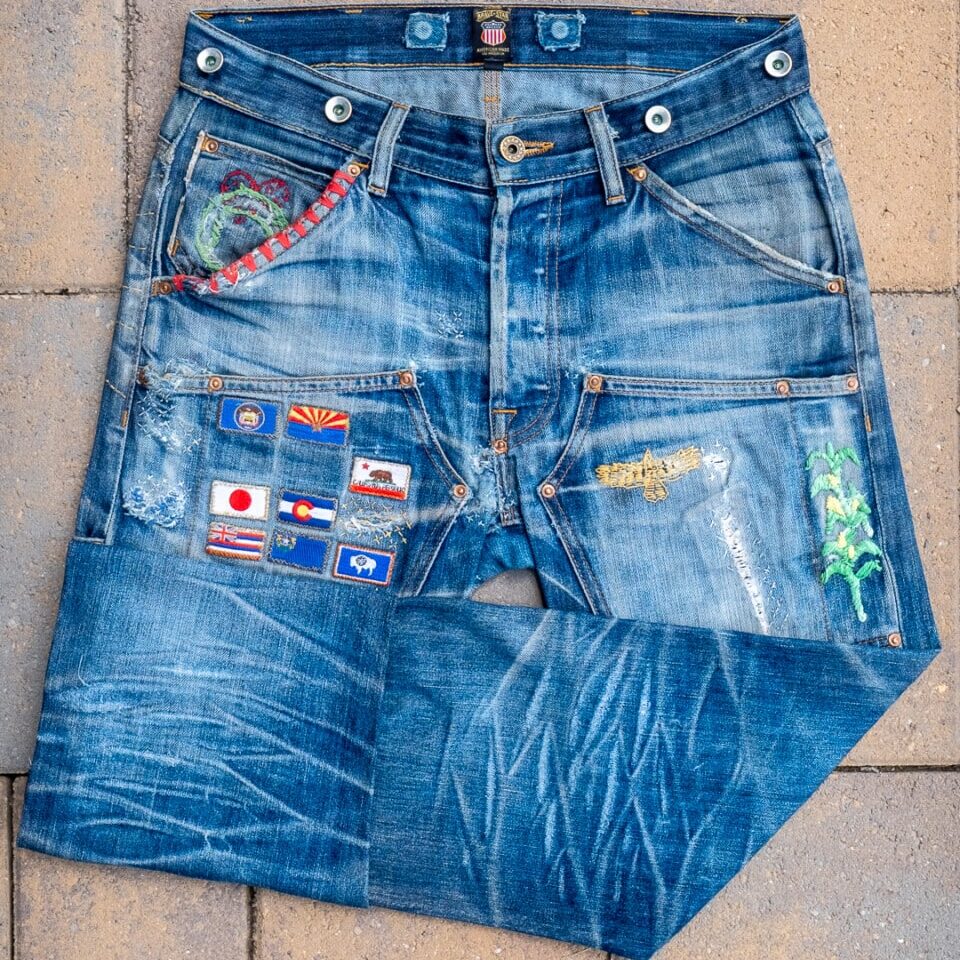
At the other end, Ethan Eisenbarth spent almost the entire year in 12 oz. Brave Star Die Hard Double Knees. They were comfortable across seasons and easy enough to use outdoors with his family.
He found his way into the Top 10 thanks to the story he told with his pair and his fades. Patches and embellishments added layers and rich details to his pair and the story behind them.
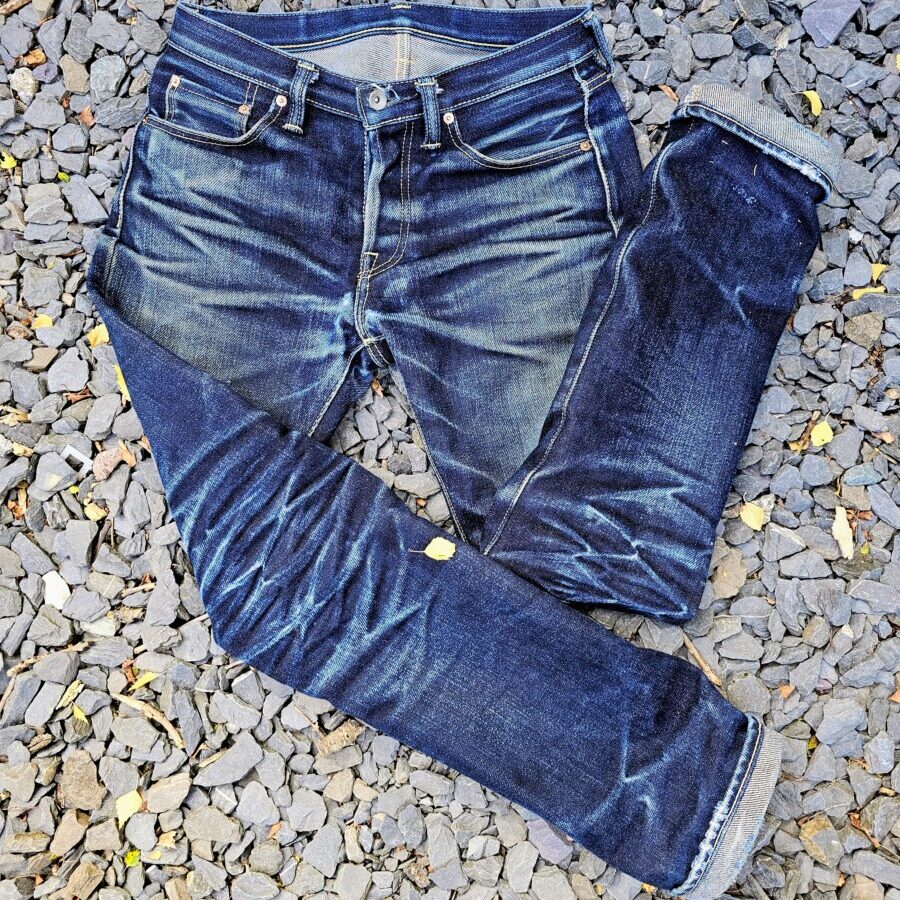
While some of our faders found super heavyweight selvedge surprisingly comfortable, others noted that it became unwearable in hotter temperaturs. Tom’s XHS pair was exceptionally difficult to break in, and they were, he said, simply too hot for a week in Spain, and Bryan reported the same thing with his 20 oz. Pigers when he visited the south of France for a week.
Heavy denim can absolutely produce dramatic contrasts when pushed hard enough, and you might find the journey more pleasant and easy-going than you think, but there’s no getting around the fact that you’re wearing heavy denim. When the temperatures climb or when your try to push it to its limits, it’ll push back hard.
Takeaway #4: Treat Weight as One Variable
Weight tells you how much the fabric weighs. It does not tell you, by itself, how breathable the weave is, how much room the cut gives you, how quickly the denim softens or how your climate will change the experience.
If you want to wear one pair often enough to produce serious fades, comfort is part of the strategy. Start with fit, fabric structure, climate and intended use, then use the ounce count to refine the choice.
#5: There Is No Winning Wash Schedule
Most faders delayed the first proper wash for a long time. But this is where the top finishers stop looking like a single school of thought.
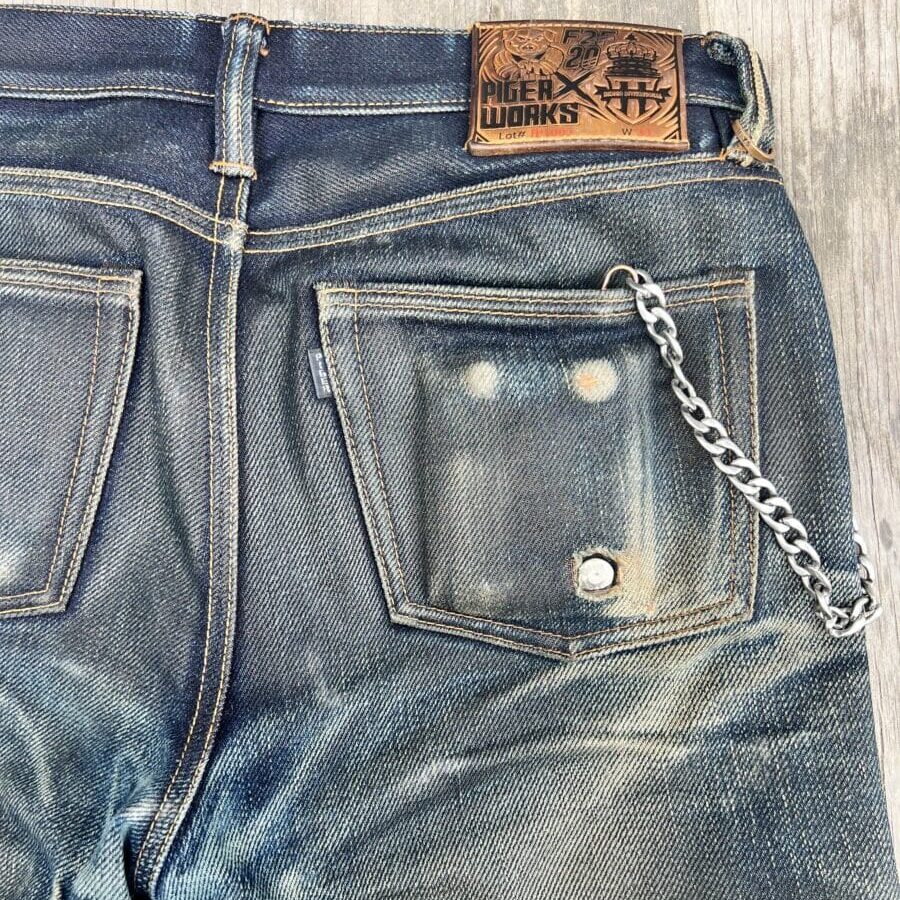
Eddie went through the entire competition year without a wash or soak. Derek waited about ten months before his first soak and wash. Hiroki kept his Momotaro dry for ten months, then washed every two to three weeks near the finish.
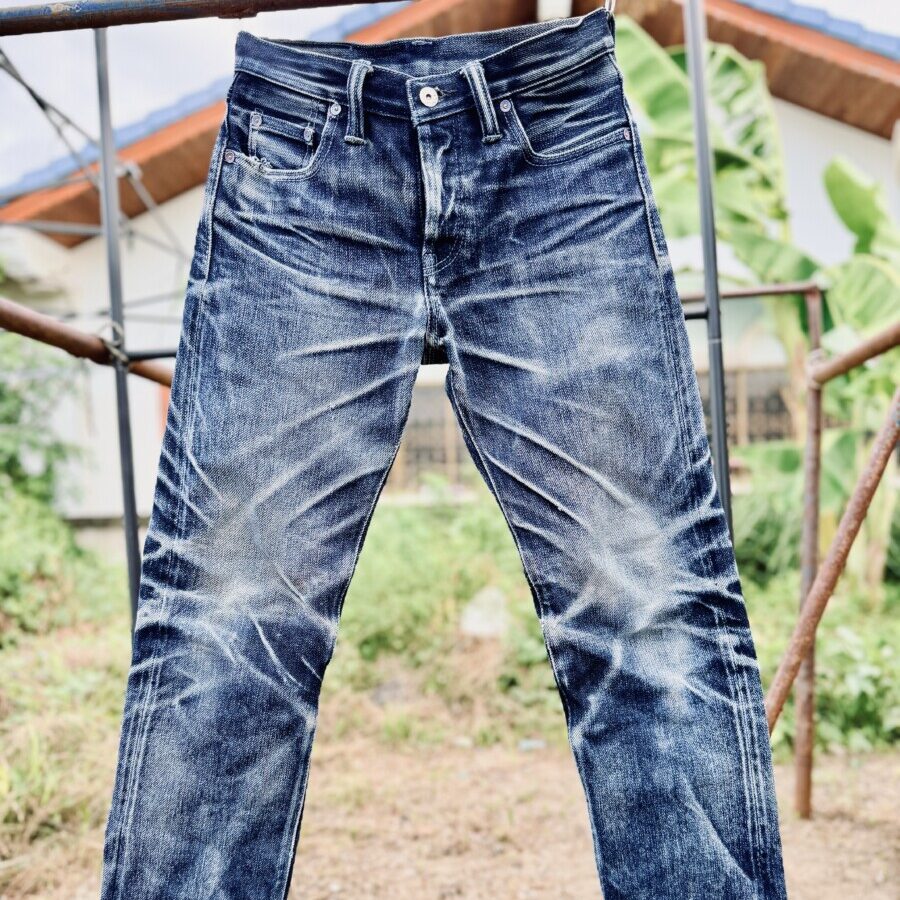
Prawit soaked his Piger Works at the start and did not wash it until month twelve. Pathorn gave his 20MF two soaks and one wash. Khomsan Koedsap soaked his 20MF four times and washed it once in the final month. Suwit logged four soaks and one wash over roughly 280-300 wears.
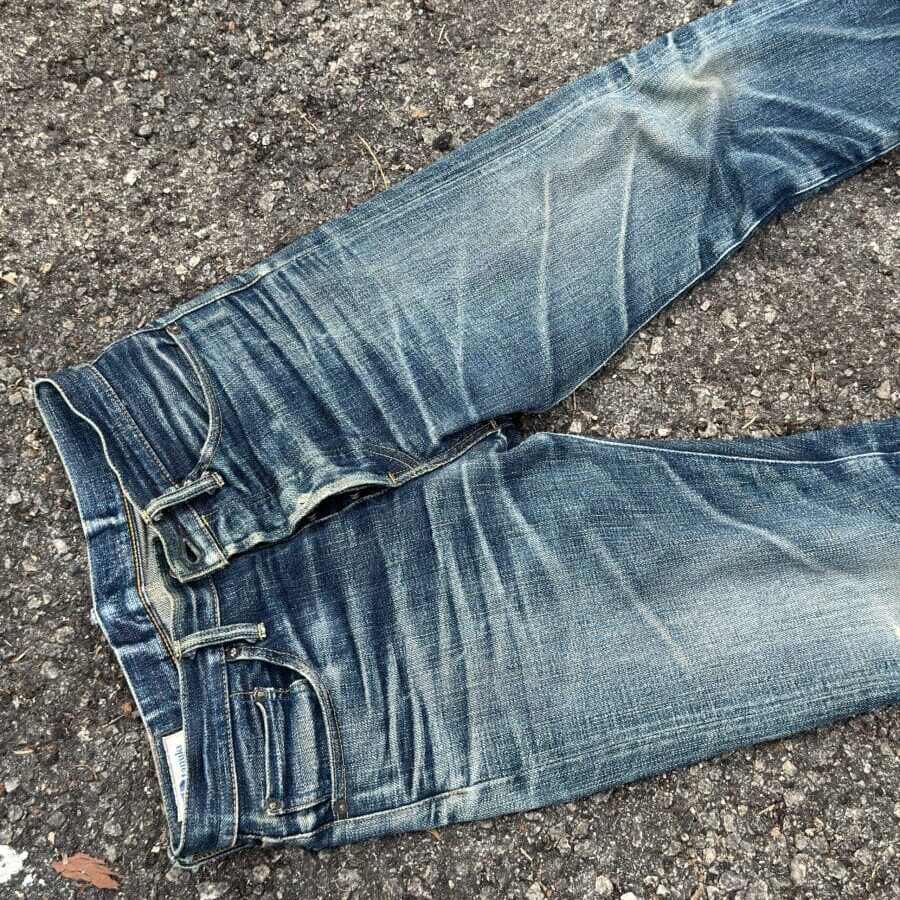
Then there’s the other end of the spectrum. George waited about three months, then hand-washed his ONI every one to two weeks because his work got the jeans dirty. Alex started washing his Tanuki around month five, then rinsed whenever it felt sticky and estimated the total at more than 15 washes, possibly 20.
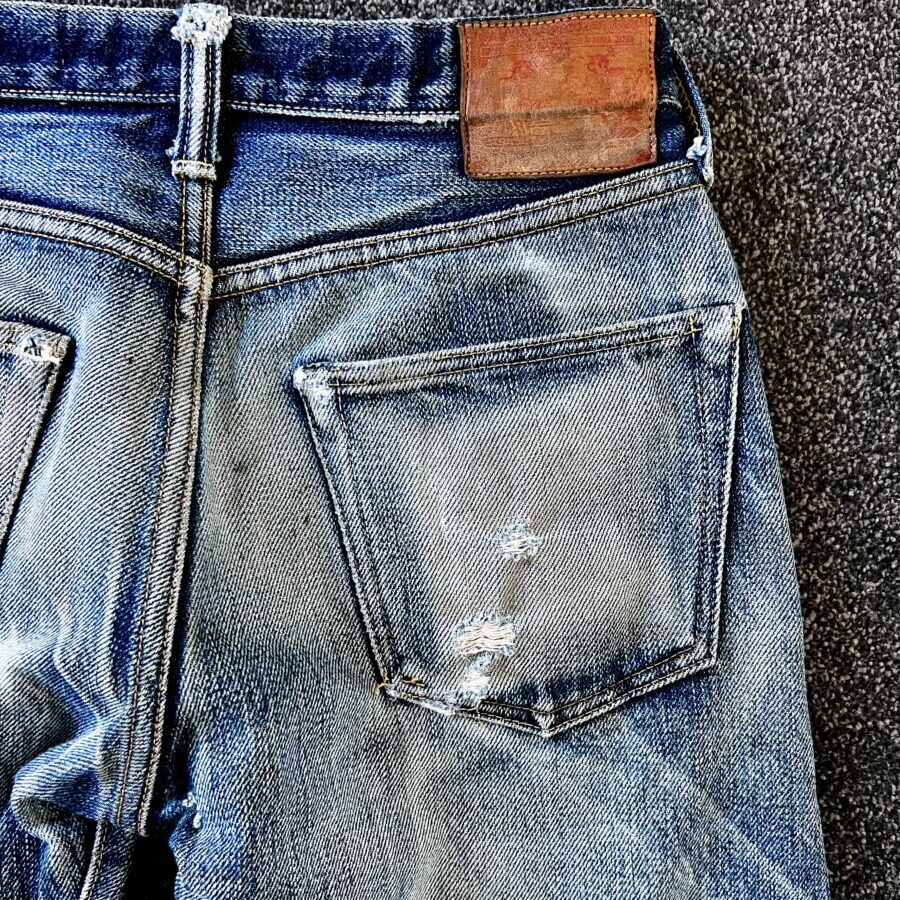
Dustin washed his Piger Works nine times. Haziq machine-washed his PBJs six times. Darren washed his 21 oz. Samurai six times after a first wash around month five. Aaron washed his Big Johns four times after waiting 150 wear days. Faez washed his 25 oz. Iron Hearts five times, and John washed his 19 oz. pair five times.
The Big Question: When to Wash First?
These are all winning washing routines—all of the wash schedules listed above resulted in Top 10 finishes. What connects them is the first dry stretch. If you’re shooting for contrasts, wait for these sharp fade lines to emerge before you put them in the wash for the first time (200+ wears is a good number to shoot for).
But Year 5 also did show that excellent fades can survive much more frequent washing once that initial development is under way.
But here’s the thing: You can’t wash your way to contrasts; you can only wear your way to them. Washing your pair does not reveal your fades. It just cleans the denim and removes some of that indigo. If the fades you’re hoping for haven’t emerged yet, freshen them up with some fresh air and get back to fading.
For that all-important first wash, wait until you feel it’s absolutely necessary. Sharp fades are a result of the battle between you and your denim. After that first wash, the hardest work is behind you, and you can wash the pair more regularly then. The contrasts will be softened but not lost.
At the end of the day, there’s no magic number for that first wash or for every wash after that. As we explain in our fading and washing guide, washing is always a trade-off. Less washing preserves darker areas and creates sharper contrast, while more frequent washing removes sweat, dirt and body oils and can produce a more even fade.
Takeaway #5: Wait to Wash, then Wash Away
If you’re trying to produce eye-catching high-contrast fades, the best wash routine starts with a long stretch of uninterrupted wear. How long is up to you, but most of our top faders hold off at least 150 days before washing for the first time.
After the first wash, washes can become more frequent. The longer you push your pair between washes, the sharper your contrasts will remain. If you want a more balanced or vintage fade, more regular washing can produce beautiful results.
If contrasts aren’t important to you, there’s no need to push yourself to extremes. Wash them whenever you feel like they need it.
#6: Fades and Repairs Go Together
Heavy denim gets sold through the language of toughness, and the top finishers certainly put that claim to the test. But Year 5’s top finishers demonstrated something crucial about selvedge denim: weight and durability are not synonymous.
Quite the opposite: the heavier the denim, the greater the strain at the major points of stress. This is especially true at the tip of the crotch, where strain and abrasion make blowouts a common issue for hard-wearing faders.
These blowouts should be seen as a part of the raw denim experience, not as a failure of any kind on the part of the manufacturers. They’re not a result of inferior denim but, rather, of how your pair fits and how hard you’re pushing it between washes.
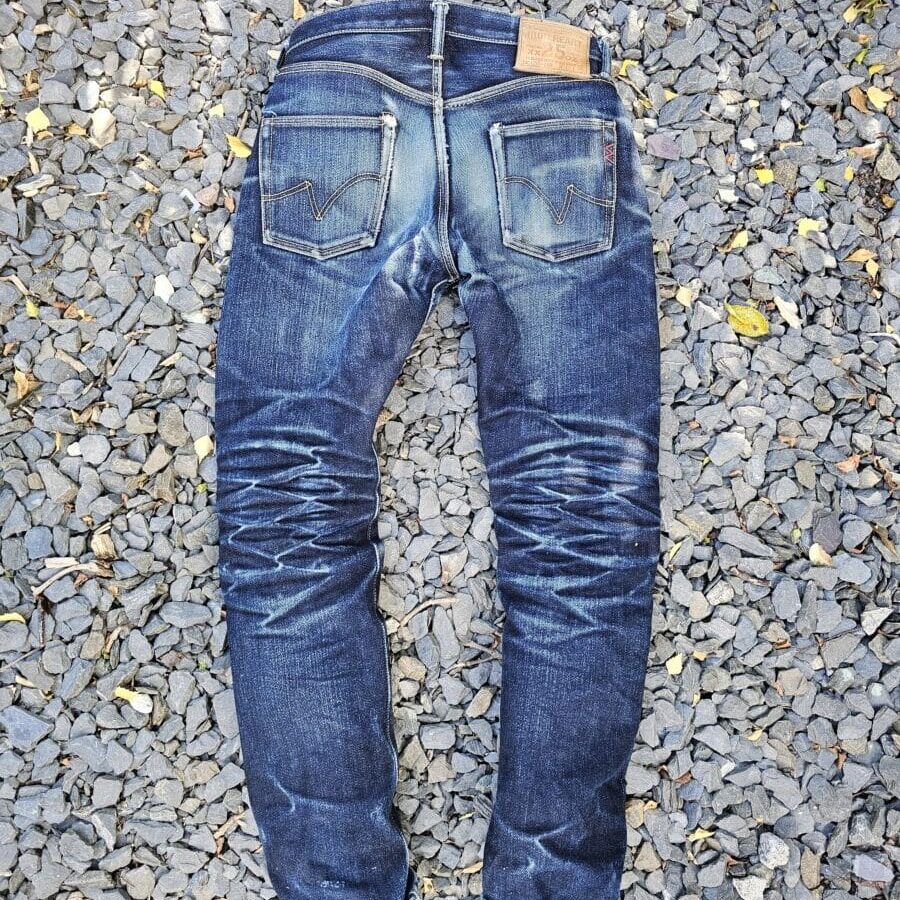
Raby’s 25 oz. Samurais needed multiple home repairs, and the front pocket bags gave up the ghost before the year was up. Tom’s 25 oz. Iron Hearts needed a rear-crotch repair around month eight. Fajrin and Bima both put holes through the crotch of their 19 oz. Samurais.
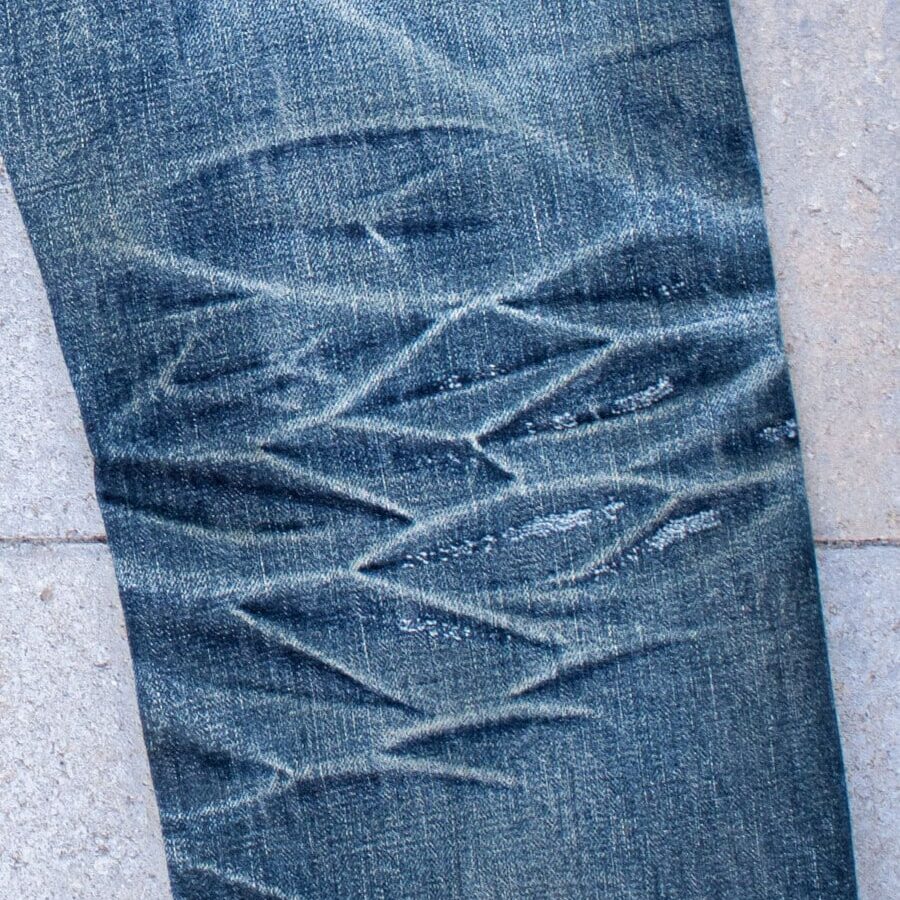
Derek reinforced the wallet pocket, crotch and hem of his 22 oz. SOSOBROTHERS. Wan’s 17 oz. Wingmans needed knee and crotch work around month ten. Aaron’s Big John Rares needed darning on the crotch, repairs on the back pockets and cuffs, and he had to reinforce blow-out buttonholes.
Bryan repaired the crotch on his pair multiple times, leading to overlapping repairs in places. He also patched and mended the cuffs. He usually gets blowouts on the side of the knees, but his pair made it across the line with the knees completely intact.
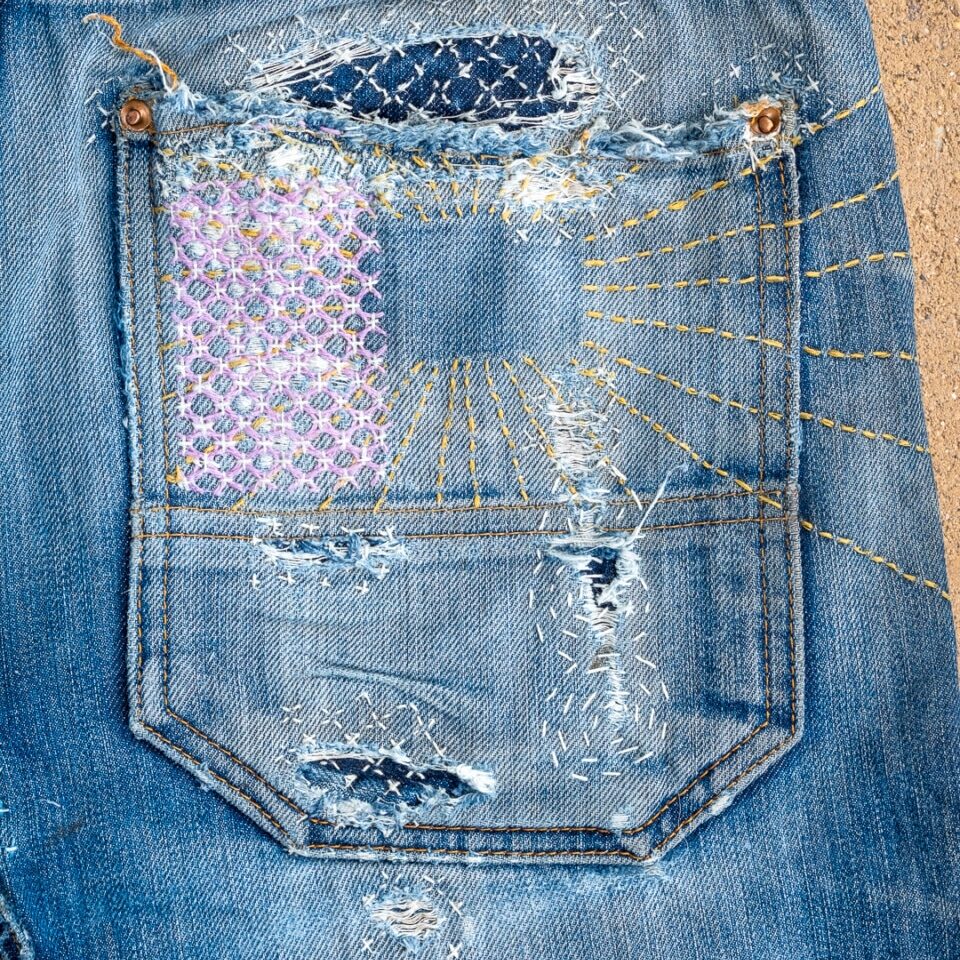
Ethan’s 12 oz. Brave Stars became an ongoing repair project shared with his wife, Katie. The repairs became part of the character of the pair, giving him all the more reason to keep wearing them day after day as they added new layers of patches and mending.
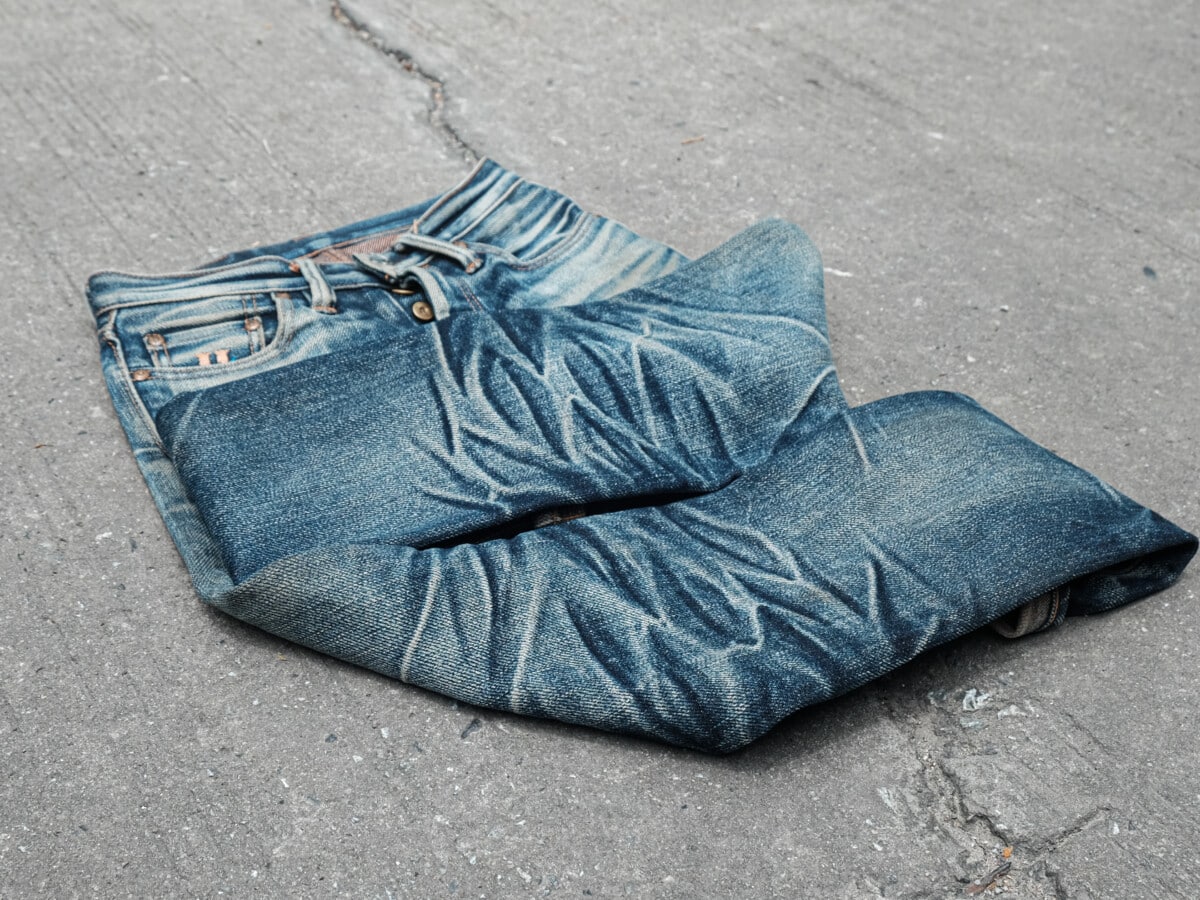
Plenty of jeans also made it through with little or nothing to fix. Pathorn’s and Suwit’s Piger Works pairs (both 20 oz.) made it across the finish line without any repairs. George’s ONIs finished without the denim needing repairs, though the pocket bags were starting to pull away.
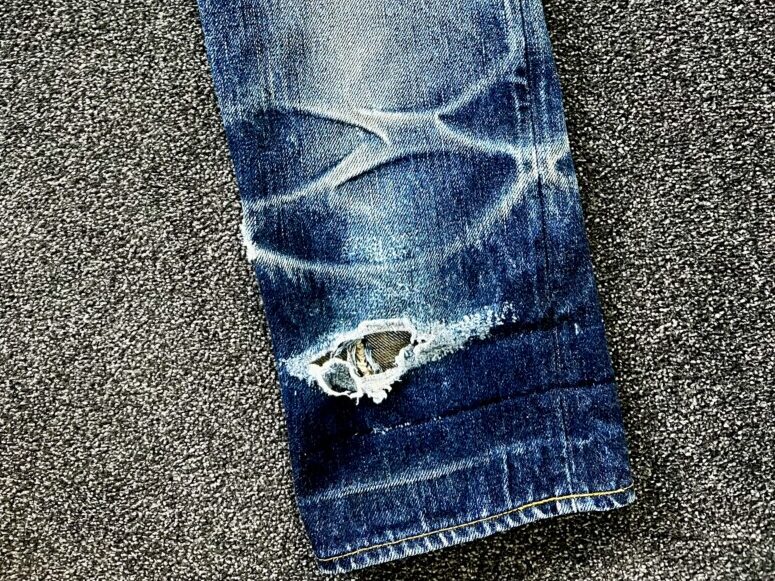
Faez’s 25 oz. Iron Hearts needed nothing significant. John only began wearing through the crotch in the final month, and Darren’s 21 oz. Samurai went roughly 360 days without a repair, though they were worn through in a number of places.
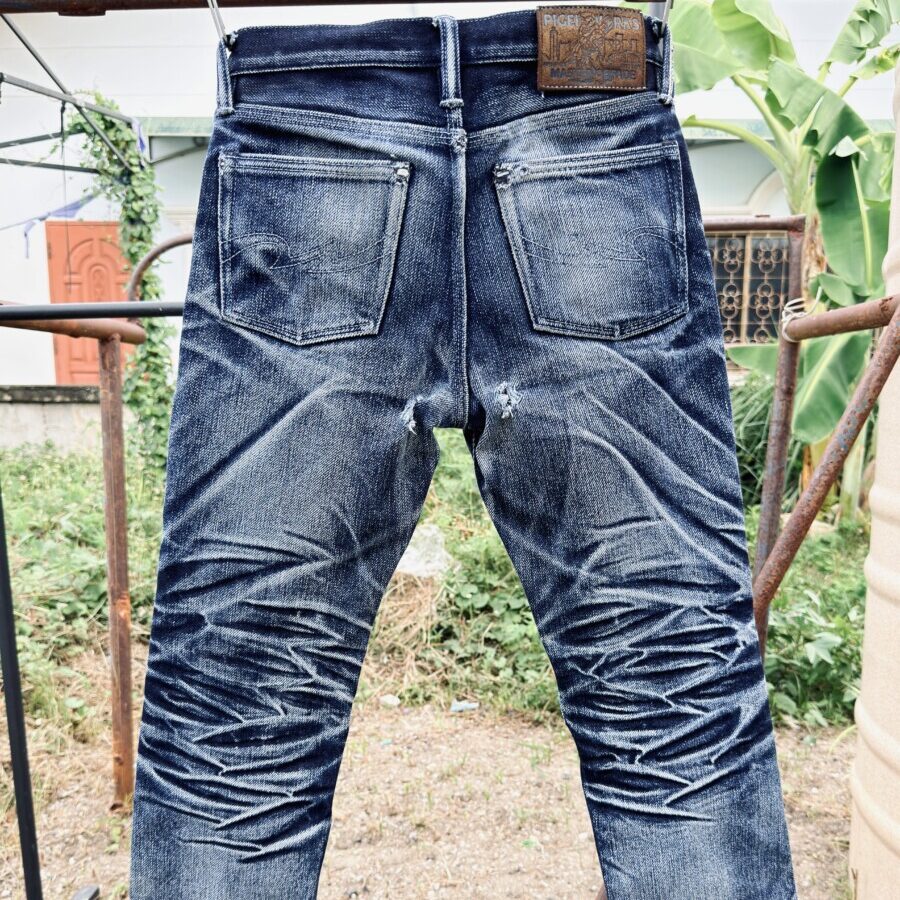
Repair support changed the ownership experience too. Prawit praised Piger Works for fast after-sales repairs. Khomsan had Piger Works handle a small rear-crotch repair. John plans to send his Left Hand Twill pair back to the legendary repair team at Iron Heart now that the competition is over.
Takeaway #6: Prepare for Repairs
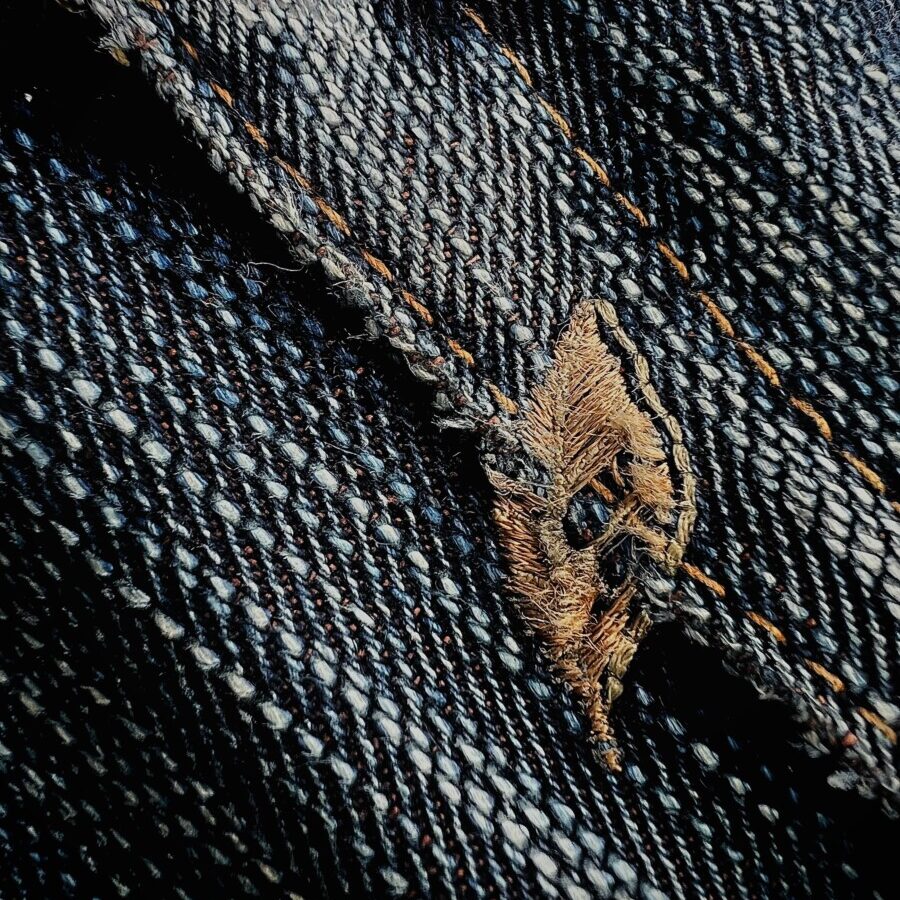
When jeans are sewn with polycore threads, seams should hold firm for years or even decades. But the denim will fray and rip when pushed for hundreds of wear days in a row. Carrying keys or anything with sharp edges in your pockets is a quick way to create holes in your denim or your pocket bags.
No matter how it happens, you should embrace blowouts and break-downs; take them as an opportunity to learn how to mend your own denim. If you want to prevent blowouts, a more generous fit will usually help, as will a more regular wash schedule.
#7: The Best Strategy Is One You’d Choose Again
The most revealing question we asked was not how many days the jeans had been worn; it was whether the wearer would make the same choice again.
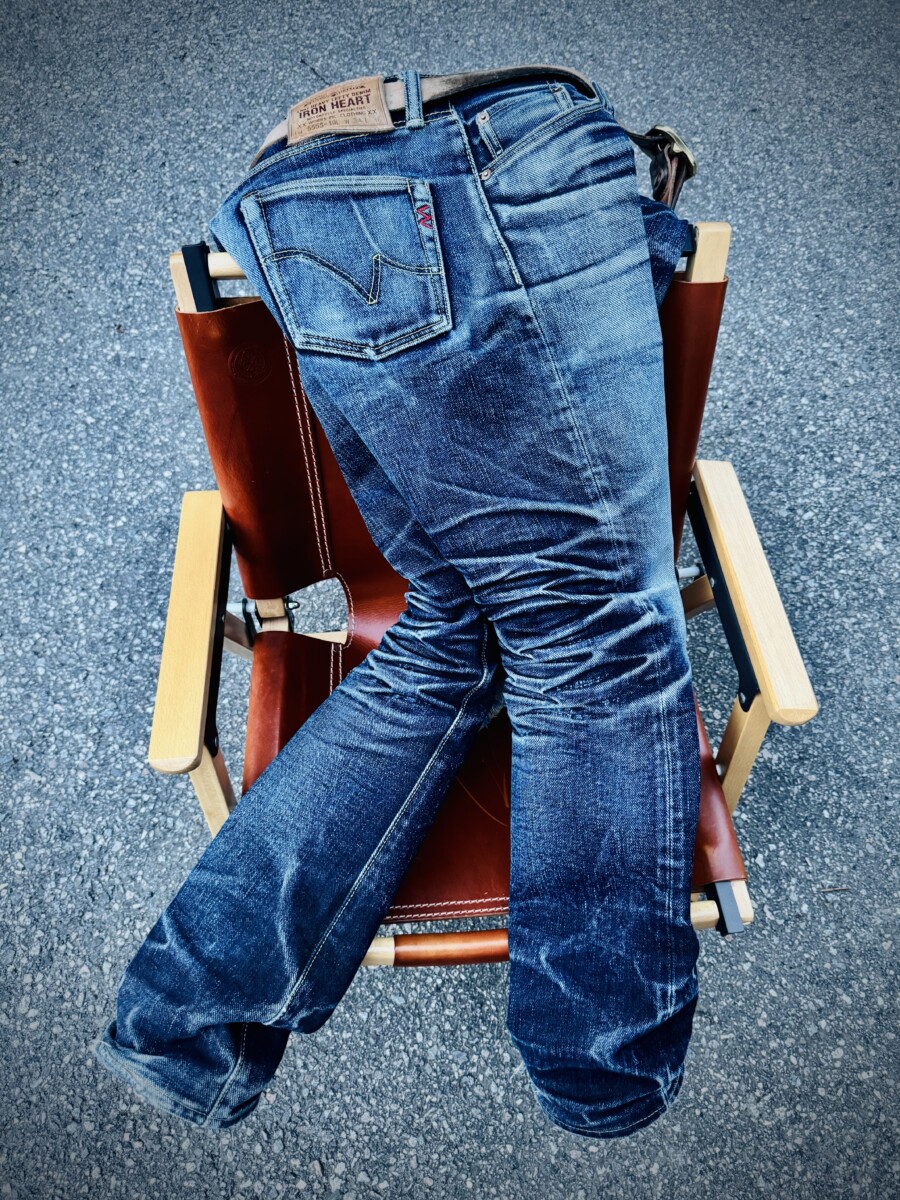
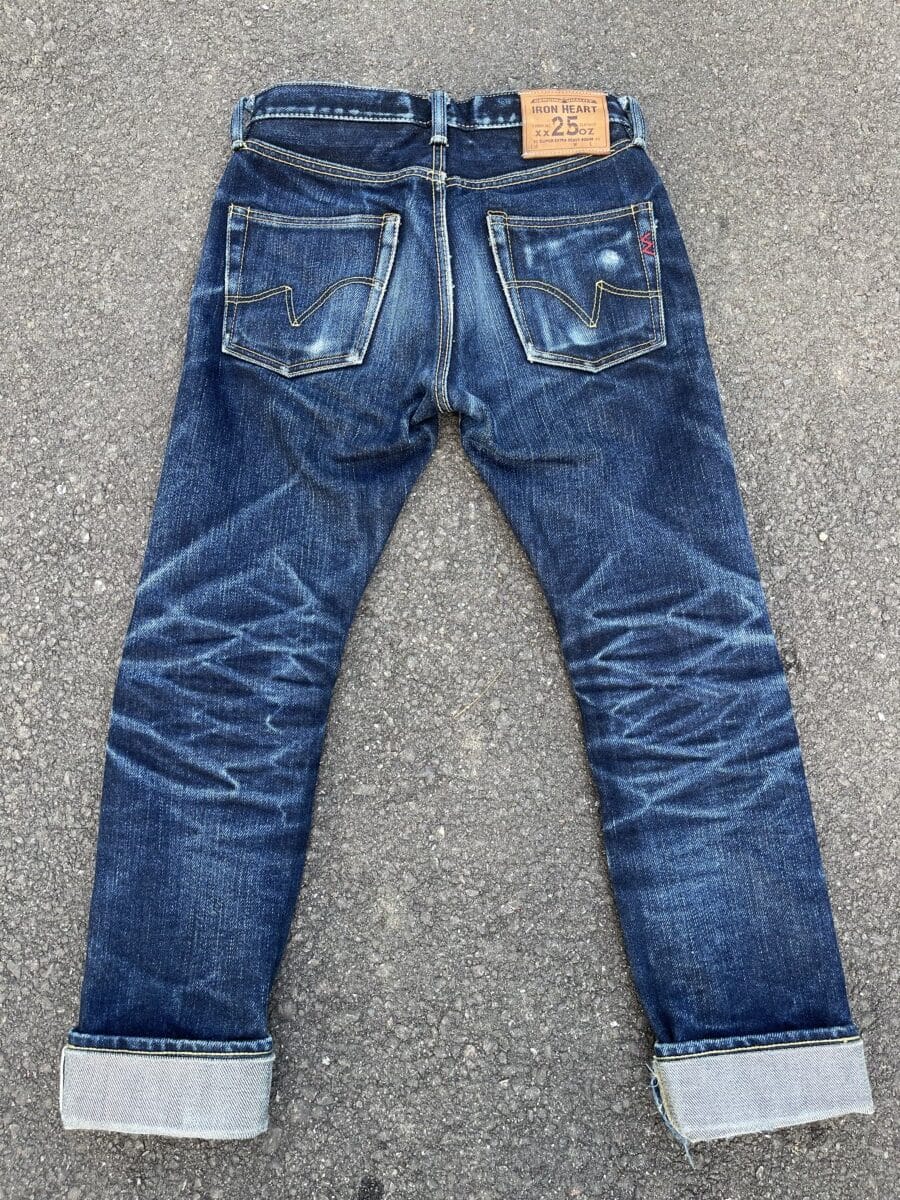
Jørn said he would happily buy Iron Hearts again, but next time with more room. Tom enjoyed his year in XHS, but he is ready to experiment with other cuts or perhaps other brands. Faez said he would happily choose Iron Hearts again.
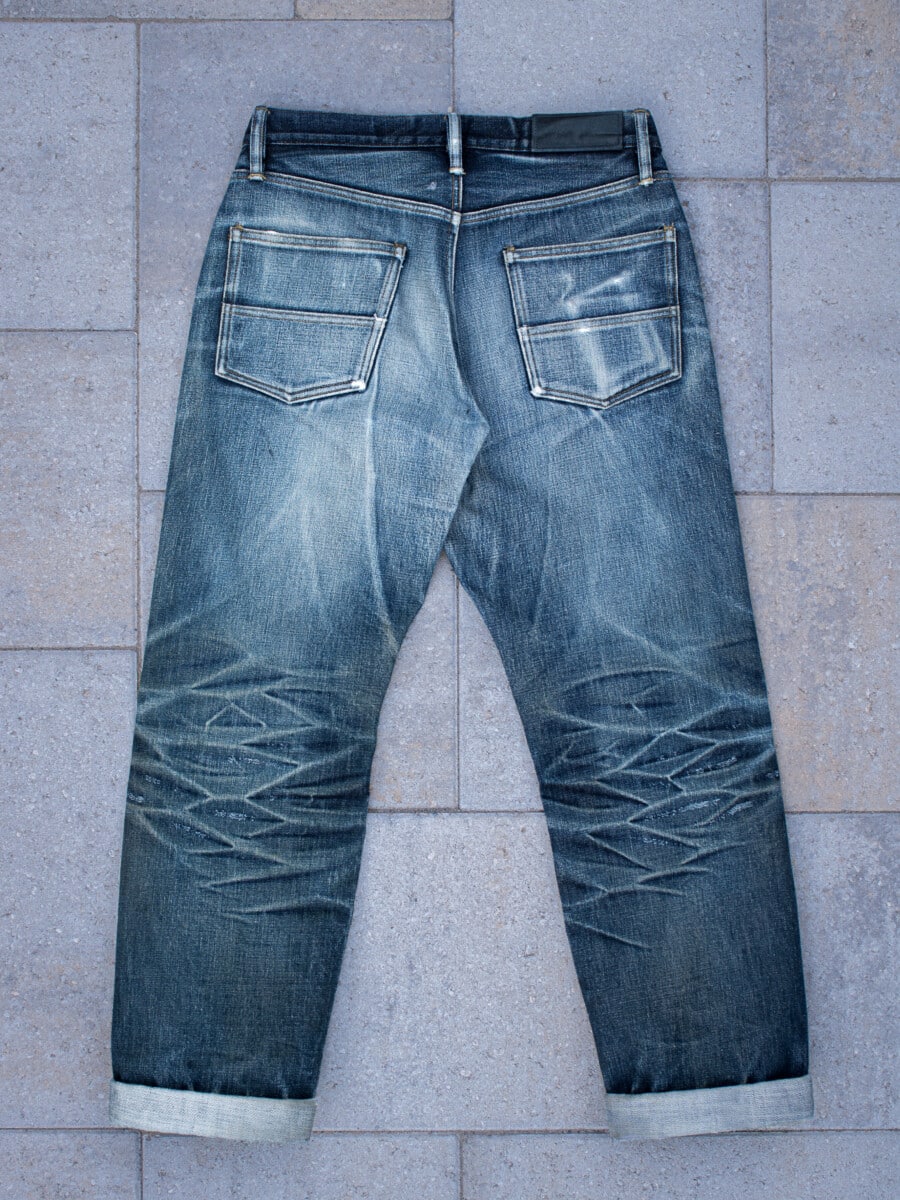
Aaron finished the year wanting to explore more of Big John’s denims. Derek is already planning another SOSOBROTHERS pair, but with a different heavyweight fabric. Fajrin wants Samurai again in another denim. Haziq plans to return to Pure Blue Japan.
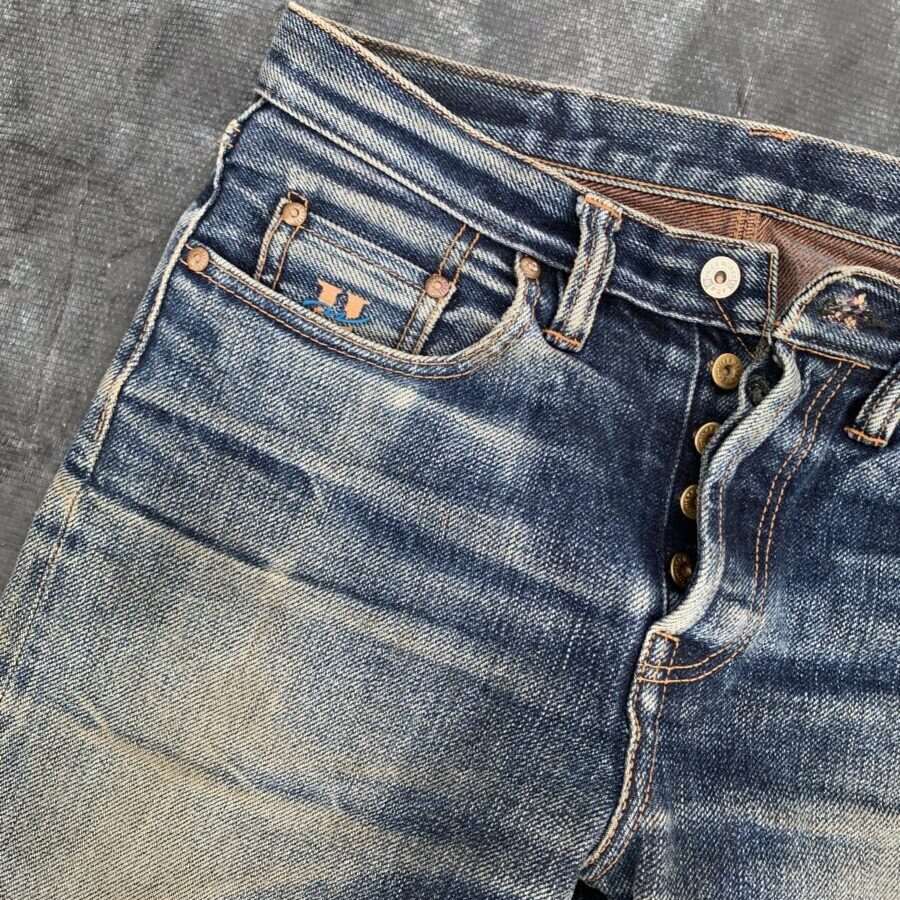
Pathorn still puts Piger Works high on his list but wants to explore other fabrics and brands. Prawit is staying with Piger Works partly because both the jeans and the repair service worked for him. Nigon would choose Piger Works again. Teerapol would too.
That is more useful than a simple approval rating (often a reflection of how happy the customer is at the time of purchase). A year in one pair turns preferences from theory into something tangible.
You find out whether you actually like a low rise after eight hours in a chair, whether 25 oz. still sounds appealing in summer, how washing changes the fit or the denim, and where your jeans tend to fail first.
And it’s not just about brand loyalty. George described wearing one garment day after day as a small act of rebellion against excess. The competition made him appreciate the pairs waiting for his attention in his closet.
The competition is premised on the belief that the pairs we have invested in deserve nothing less than a year of dedicated wear. George (and hundreds of faders like him) has learned that, rather than thinking about the next purchase and the one after that, we can slow things down and give these incredible pairs the attention that they’re due.
Takeaway #7: Let the Pair Teach You What to Buy Next
The Indigo Invitational compresses years of normal ownership into one very intense year. That is useful even if you never enter. Wear one good pair long enough and you stop buying from theory. You know which rise bothers you, which weight you actually enjoy and which fade characteristics still matter after the novelty has worn off.
Competition fades are the visible result. Better buying decisions are the quieter result. Even the winning faders are not necessarily trying to duplicate their process and the result in the next competition. They’re using everything they’ve learnt over the course of the year to inform their next buying decision.
What It Actually Takes to Create Winning Fades
Looking at the Top 20 from Year 5 does not give us some kind of secret formula. It gives us something more convincing: several very different routes to the same end of the leaderboard.
The people at the top wore their jeans a lot, but they did not all live unusually dramatic lives. They cared about fabric, but not all of them chose the heaviest option. Some delayed washing almost to the finish; others washed repeatedly after a strong initial push. Some pairs needed repairs and kept going. Others survived the year almost untouched.
The strongest common thread is simpler. Choose a denim with fading potential that aligns with what you really want. Start with a fit you can keep wearing. Put in the days. Wash purposefully with a clear end goal in mind. Repair the jeans if or when they need it. Then, at the end of the year, take stock of your journey and what it’s taught you.
At the end of the year, you might be an award-winning denim fader. You’ll definitely be a more savvy denim consumer. After all, you’re not just learning how to fade denim, you’re also learning how to buy it.
Keep Track of What I’m Working On
Hi, I’m Thomas, founder of Denimhunters. If you liked this article, you should check out the DH Weekly. It’s my weekly column and newsletter that I publish every Friday, with new guides, deals, and things worth paying attention to.