
This is a sponsored story, one of our paid services. We maintain full editorial independence. Read more here.
Heavy on Paper, Soft to Wear: The Appeal of Iron Heart’s Heavy Flannels
Buy one of these shirts and it’ll outlast even a pair of Iron Heart jeans. So why do some of us have wardrobes full of them, collecting flannels almost like Pokémons.
I’m one of those people. My first two Ultra Heavy Flannels (UHFs) were second-hand finds in 2018, and I still wear them. Two should have been plenty. Somehow, I’ve ended up with enough flannel to last me a lifetime. Yet another great colourway still catches my eye.
Then you pick one up. Remember how a good TV remote felt heavier than a cheap one? You get that same feeling. The cloth hangs like sturdy denim but feels so soft, really soft.
TL;DR – The Weight Gets You, the Softness Keeps You
Iron Heart’s heavy flannels have the heft of sturdy denim and the softness of flannel. The classic UHF leads the way, but slubby fabrics, herringbone weaves and changing colourways offer plenty more to explore.
How Iron Heart’s Flannels Got So Heavy
Iron Heart didn’t arrive at the Ultra Heavy Flannel overnight. Its first checked flannel, the IHSH-01, dates to 2006 and weighed 10 oz. That was about as heavy as its factories could reliably sew at the time, which says something about how far Iron Heart wanted to push the idea of a shirt.
You make flannel heavier by using thicker yarns, weaving more threads into each inch of cloth, or both. More cotton also means more bulk where layers meet at collars, cuffs and pockets. The factory had to be able to sew it.
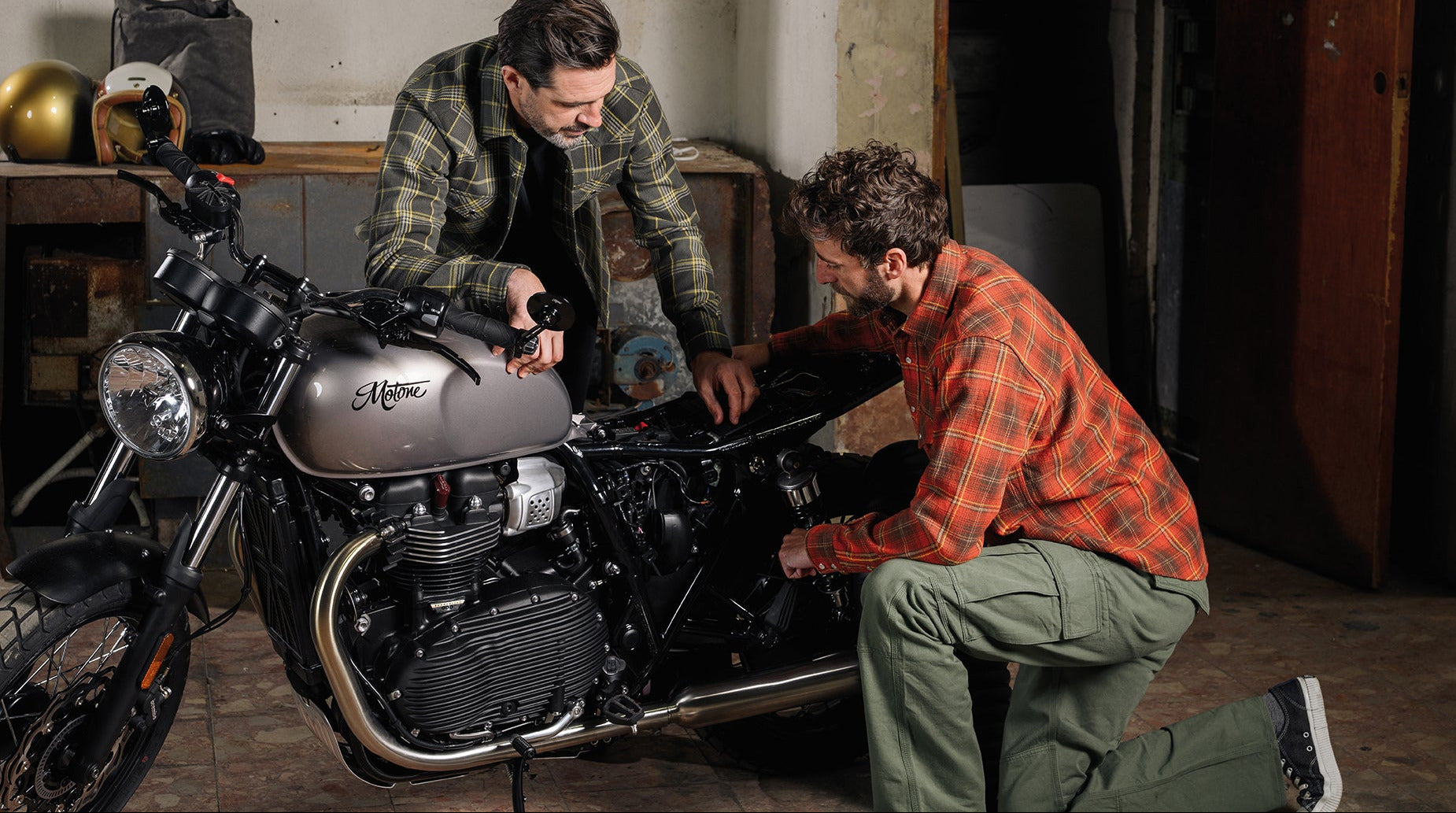
The classic UHF eventually settled at 12 oz. That’s an extraordinary amount of cloth to put into a shirt, but the achievement isn’t just the figure on the label. The result still buttons up, moves with you and works beneath a jacket.
Iron Heart’s motorcycle roots help explain the appetite for rugged clothes, but you don’t need a motorcycle to appreciate a shirt like this.

How Do You Make Heavy Flannel So Soft?
Twelve ounces is the weight of a square yard of fabric, not the finished shirt. But pick up a classic UHF and there’s no mistaking it for an ordinary flannel.
The starting point is Aspero cotton, grown and hand-picked in the foothills of the Andes in north-eastern Peru. Its long fibres are prized for their softness and strength.
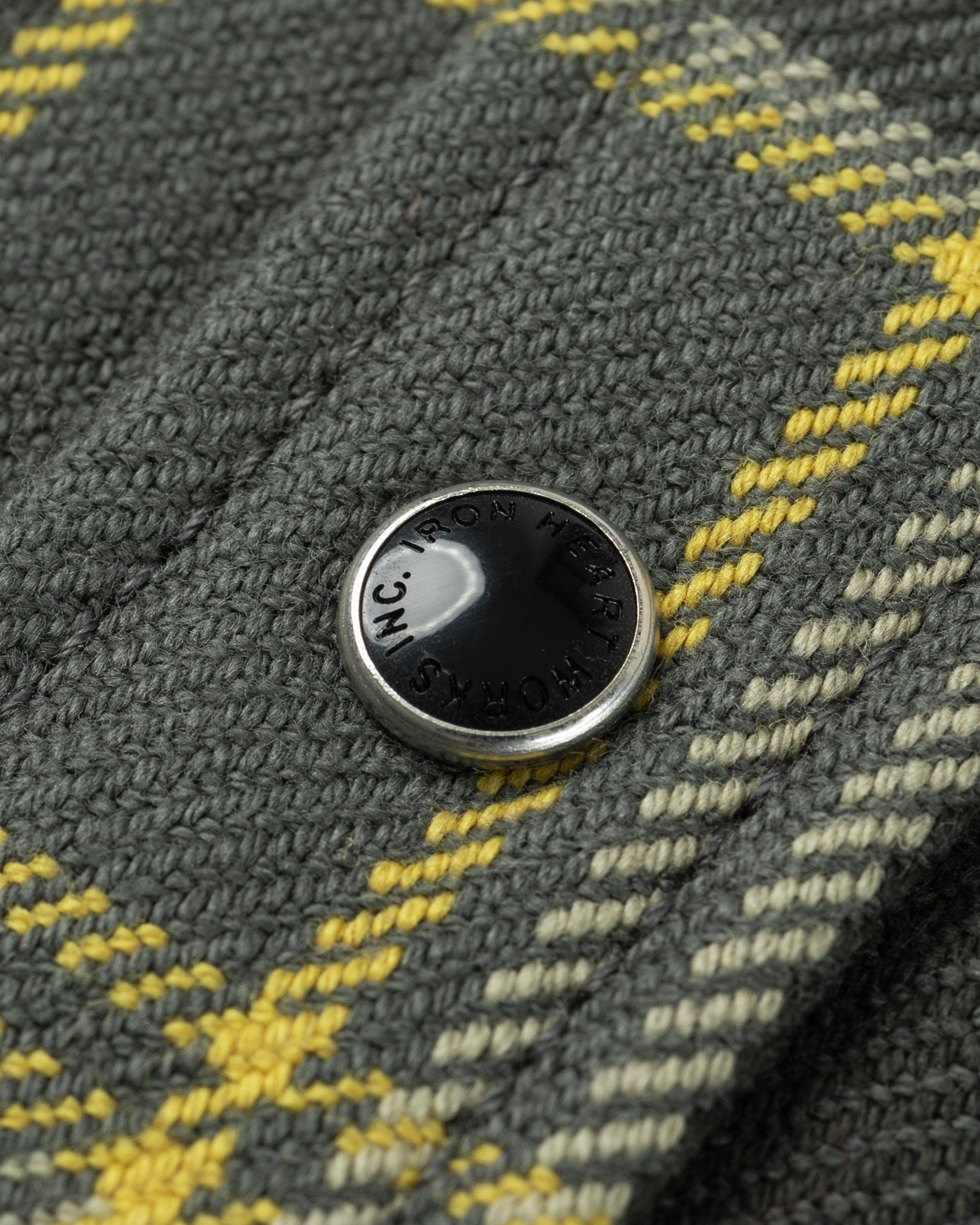
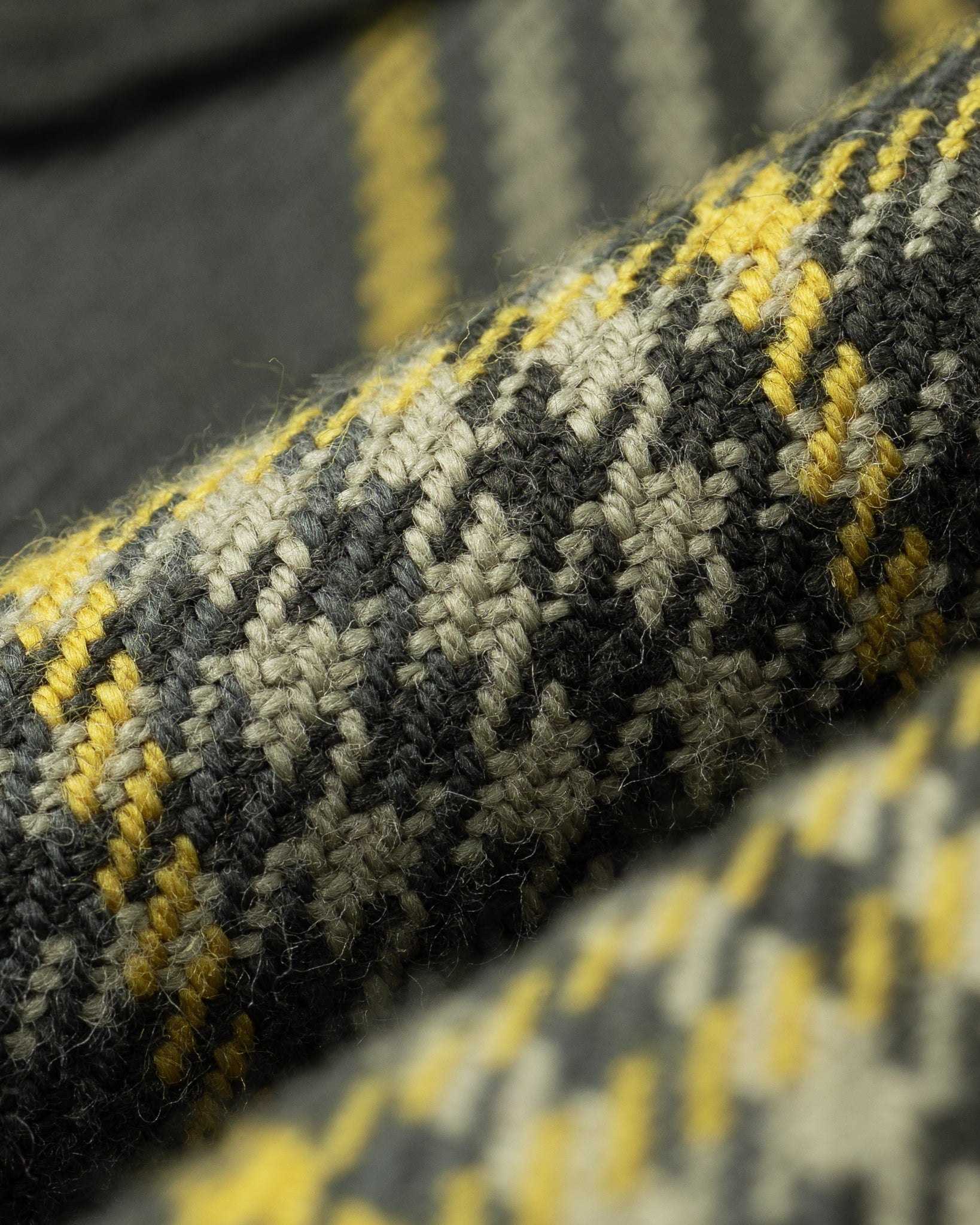
Japanese mills weave the cotton yarn into a dense twill, with diagonal lines familiar from denim. That compact weave helps cut the wind and gives the shirt its distinctive structure across the front and sleeves.
To soften all that cloth, Iron Heart brushes the outside once and the inside twice. The brushing lifts fibres into a fine nap; the face retains more texture, while the reverse feels wonderfully plush.
The finished shirts are one-washed to take care of most initial shrinkage. Hot washing or tumble drying can still change the measurements, though, so it’s worth checking the fit before buying.
How I Wear My UHFs—and How They Age
You could easily mistake a UHF for an overshirt. I don’t think of them as such.
The fabric has almost jacket-like substance, but I consider them winter shirts. I run hot, yet I’ve never found a UHF particularly hot. It’s nothing like the warmth of a thick wool jumper.
I wear mine over a T-shirt, with an M-65, a hardshell or an N1 deck jacket when it gets colder. That’s been my routine since 2018, from around September until spring.
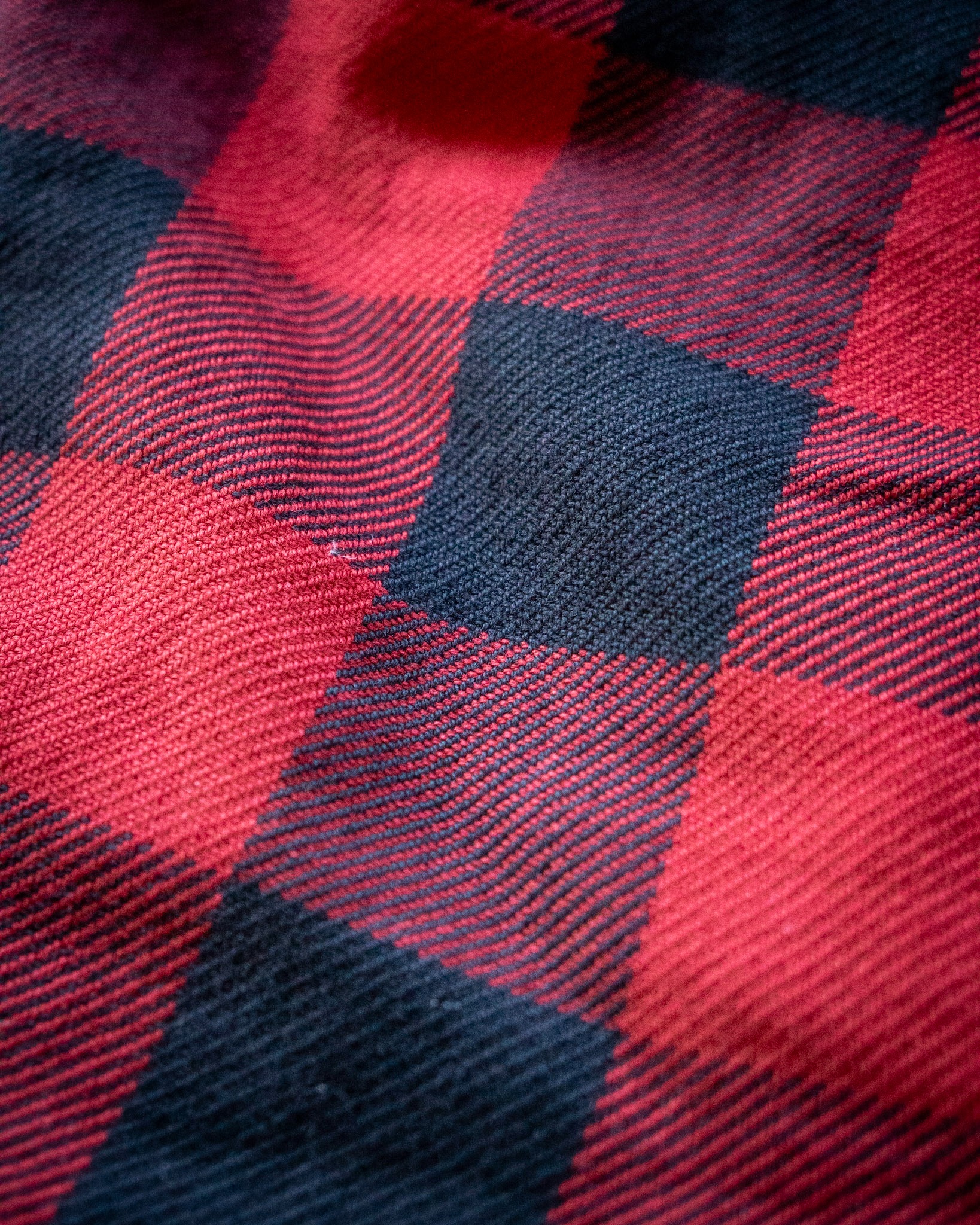
My red buffalo-check western has been with me since 2018, when I bought it second-hand. It was already an older shirt then. There was some pilling on the outside when I got it, so I shaved the face to tidy it up. I haven’t shaved the inside, thought, and the brushed reverse is still soft.
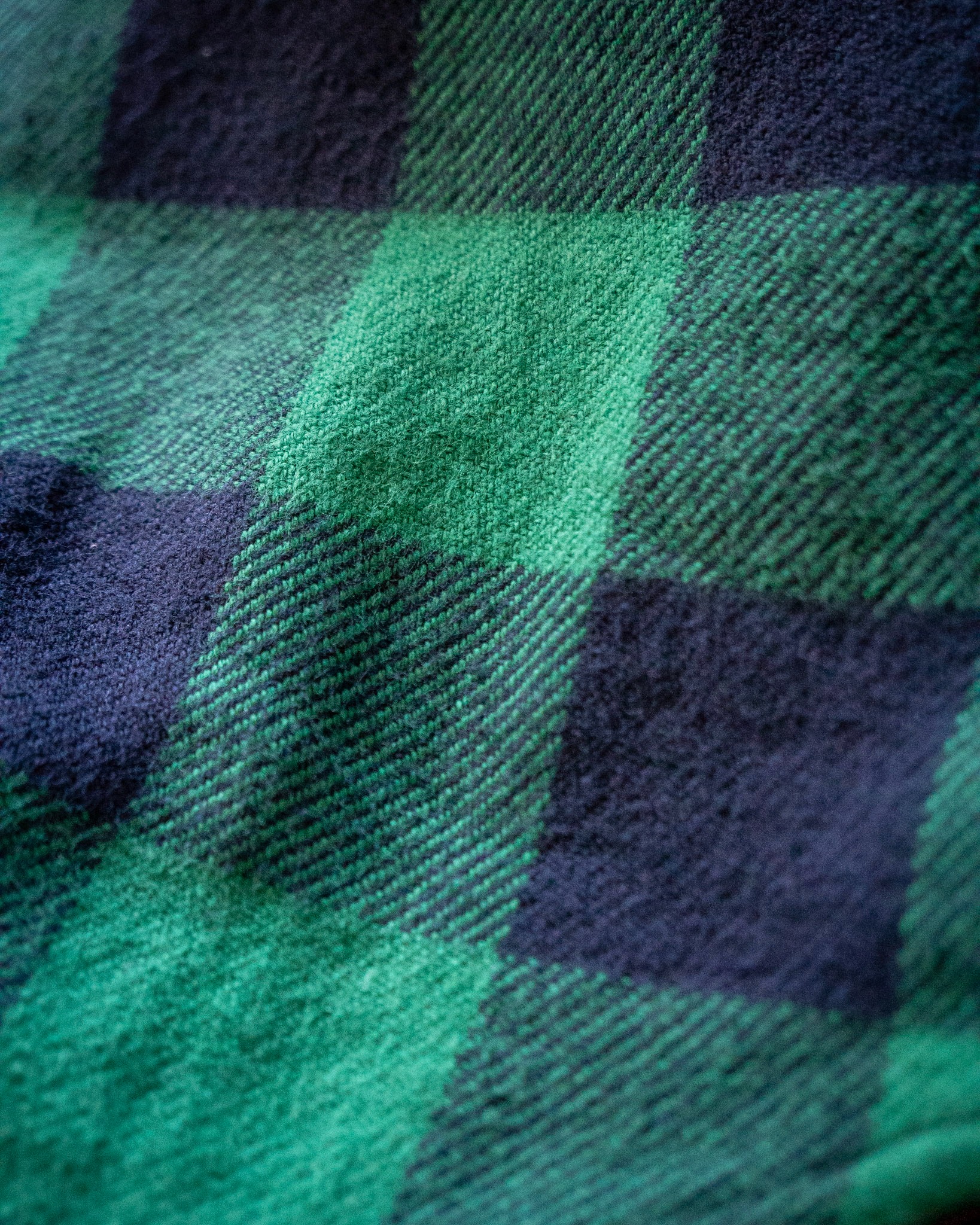
The green buffalo-check western has had far less use—around 50 wears or so—and its surface is still noticeably fuzzier.
That contrast says a lot about the raised nap on a UHF, although it’s not a straight wear test: I’ve shaved the outside of the red one, while the green has seen much less wear.
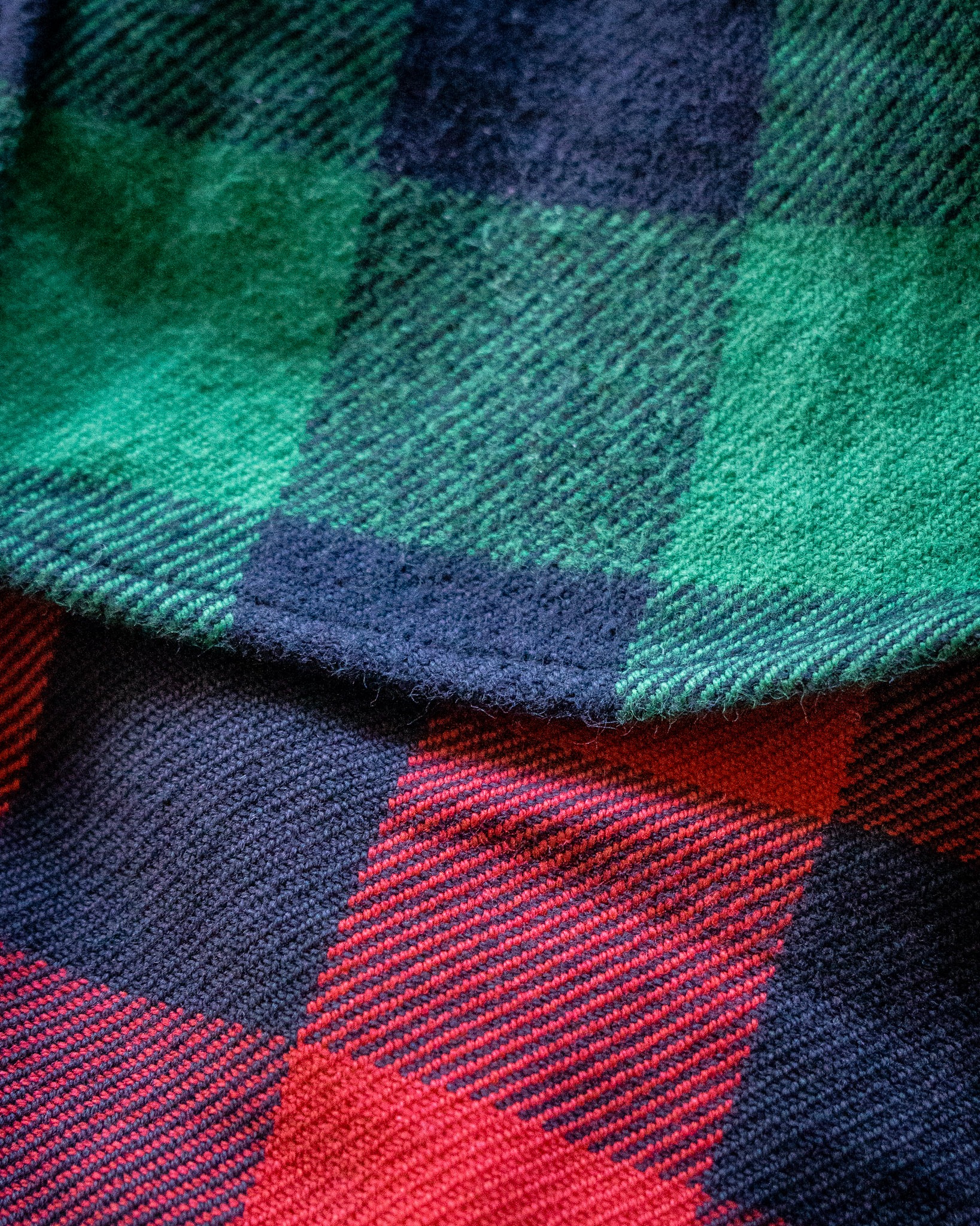
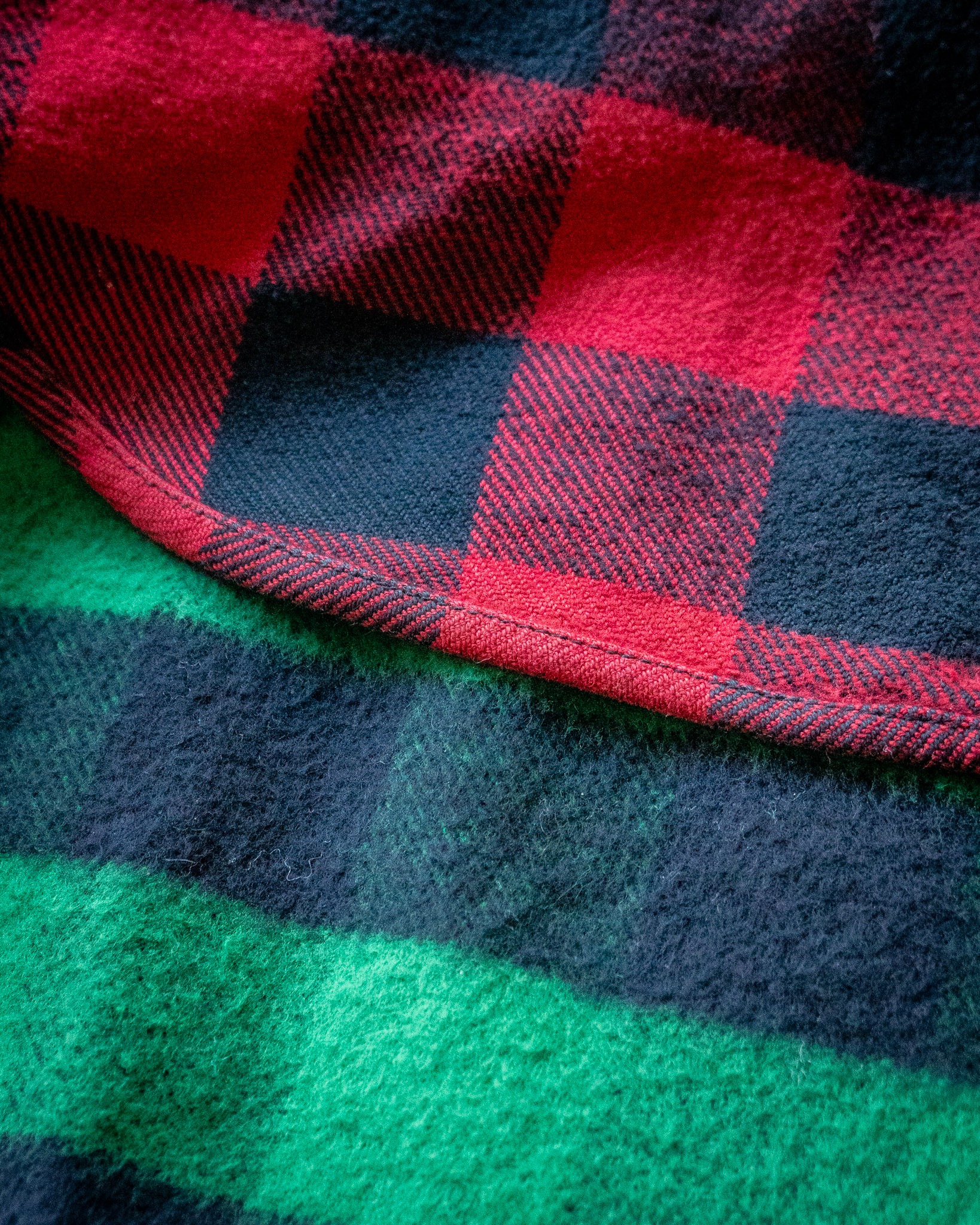
I wear them around the house/office, and throw on a jacket when I head outside. I wash them when they need it, on a cool cycle, and leave them to air-dry.
Western or Work Shirt: Same Cloth, Different Fit
Western and work-shirt UHFs share the same 12 oz. flannel, but they’re quite different shirts. I wouldn’t choose between them on colour alone.
Iron Heart originally offered each colourway in one cut or the other. Customers asked for both, and the brand obliged—for years. Eventually, the sheer number of options became difficult for retailers to stock and customers to choose between, so the brand scaled back.
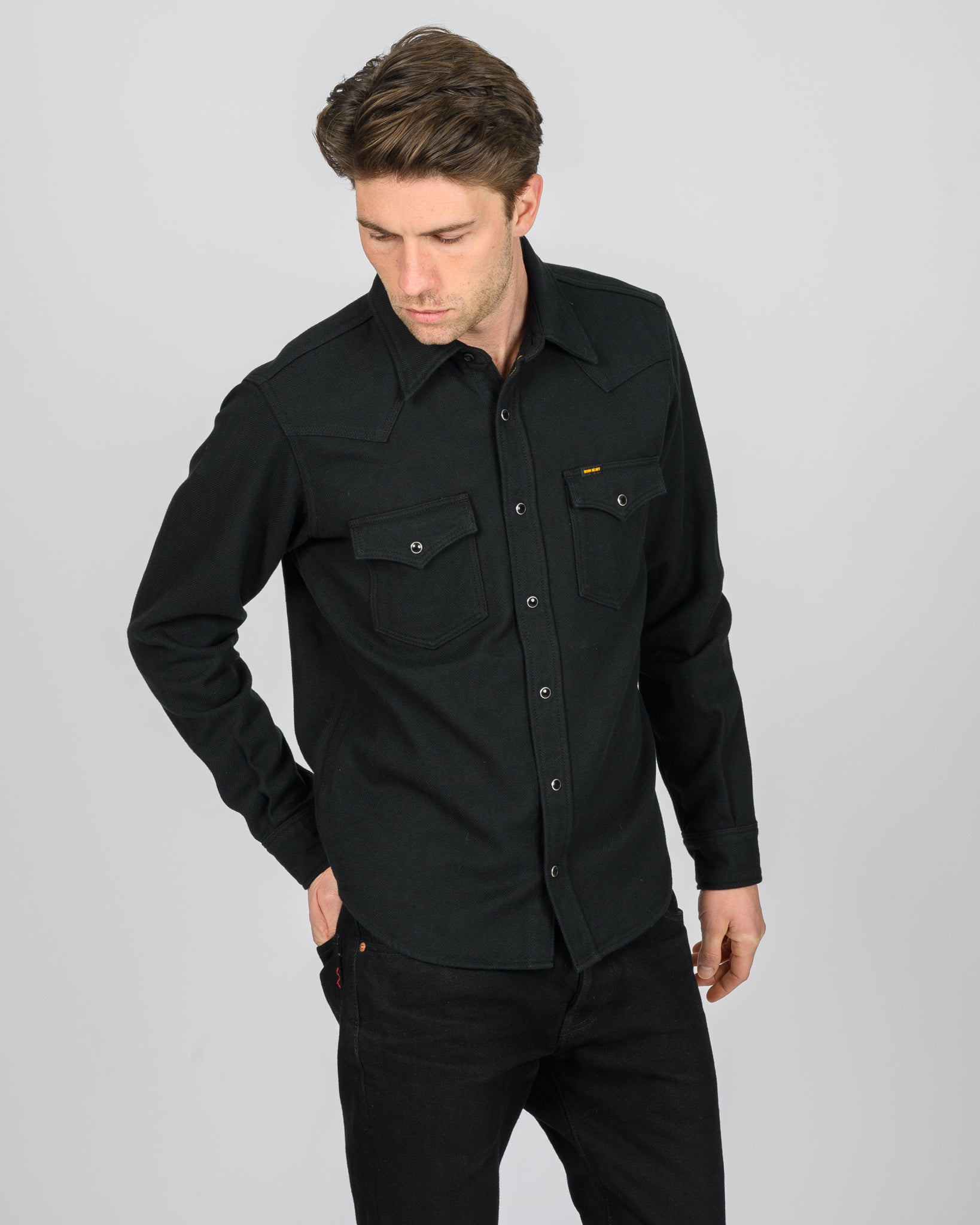
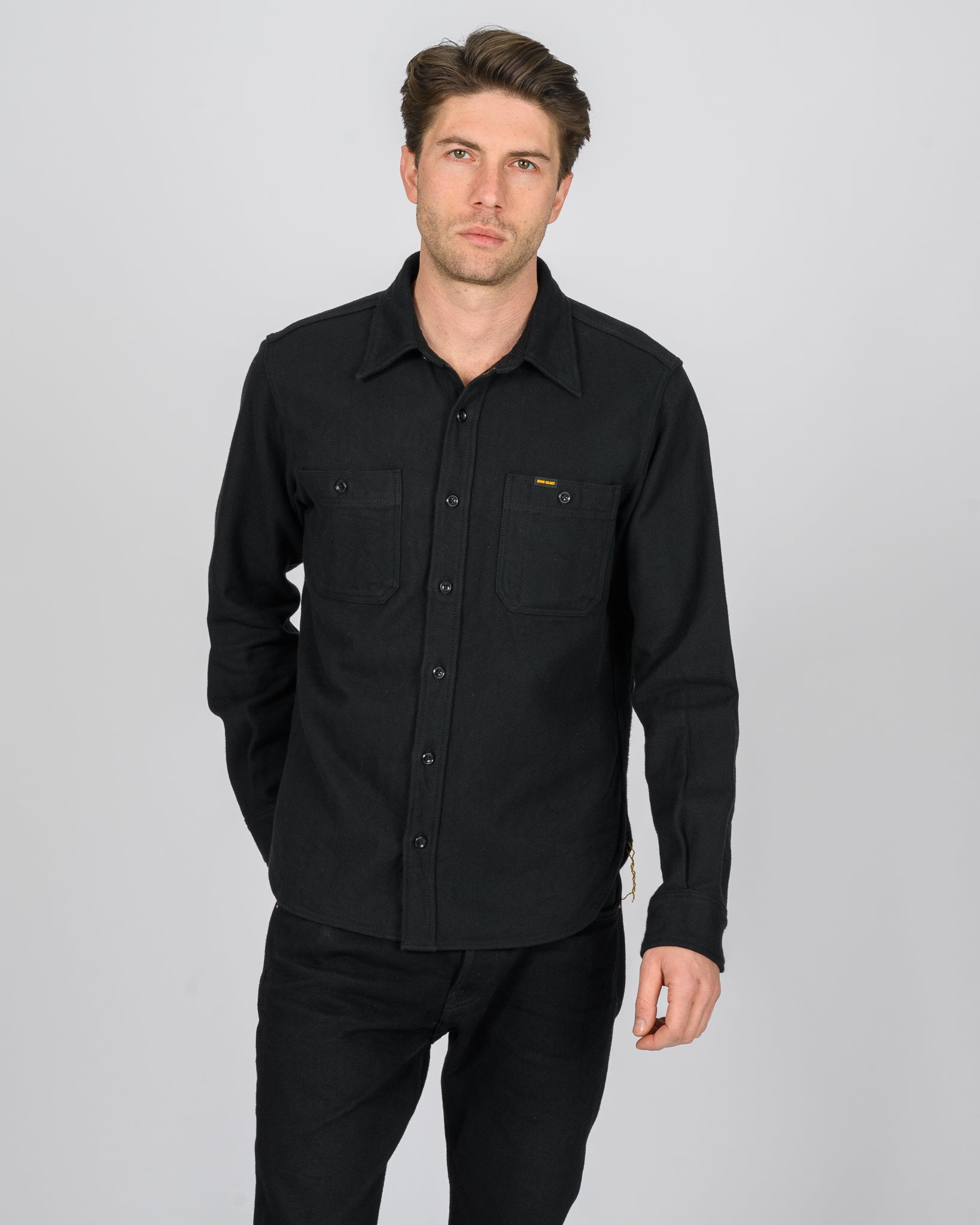
The western has a trimmer shape, pointed yokes, flap chest pockets, a curved hem and those unmistakable snaps. It’s the silhouette I associate most closely with the UHF.
The work shirt is roomier, with buttons, simple patch pockets and a more relaxed workwear look. One is a little sharper, the other gives you more room.
With fabric this thick, those differences are worth paying attention to. The western sits closer to the body, while the work shirt offers more space to move.
Whichever style catches your eye, compare the actual chest, shoulder and sleeve measurements with a shirt you already own. I wouldn’t buy a 12 oz. shirt based on the words slim or regular alone.
Beyond Checks: Slubby and Herringbone
Flannel isn’t a particular weave. The brushing creates its soft nap, leaving room to play with the yarn and the structure underneath. Iron Heart’s Slubby Heavy Flannel and herringbone UHF both weigh 12 oz., but get their character in different ways.
Slubby Heavy Flannel – Rougher Face, Soft Reverse
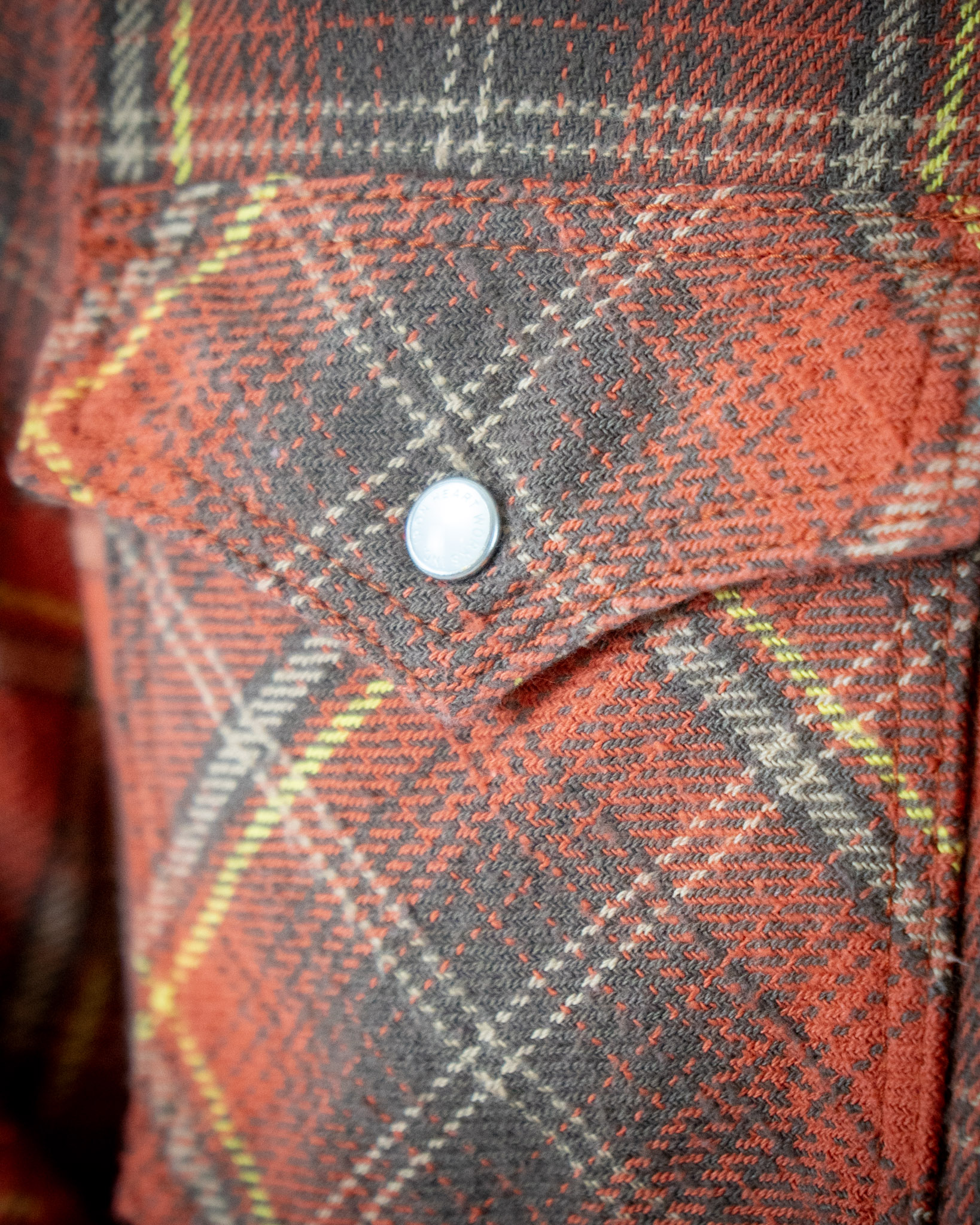
The red IHSH-455-RED western uses irregular slub yarns rather than the more even yarns of a classic UHF. I’ve handled a sample: run your fingers across the face and you feel dry, rougher patches and small changes in texture.
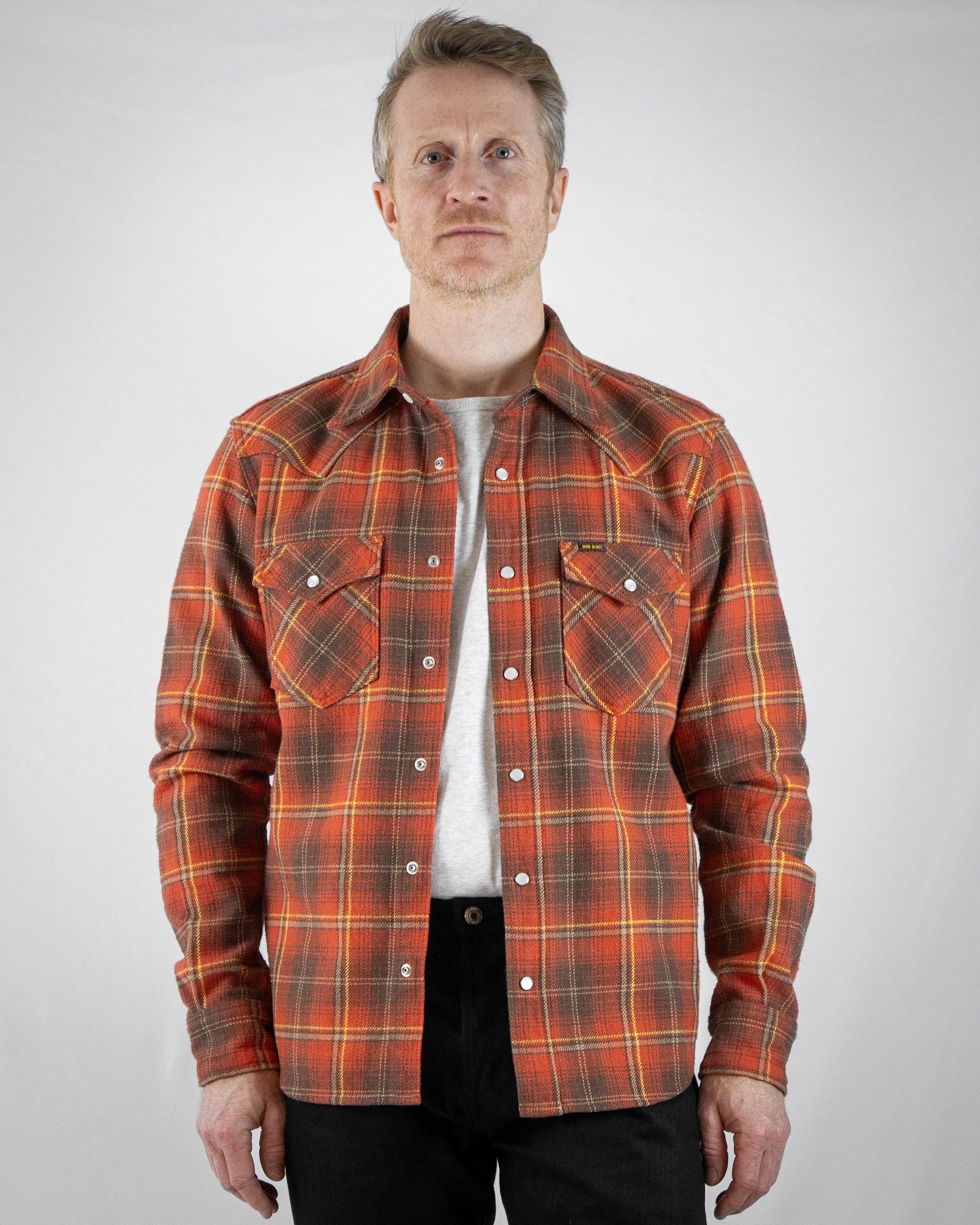
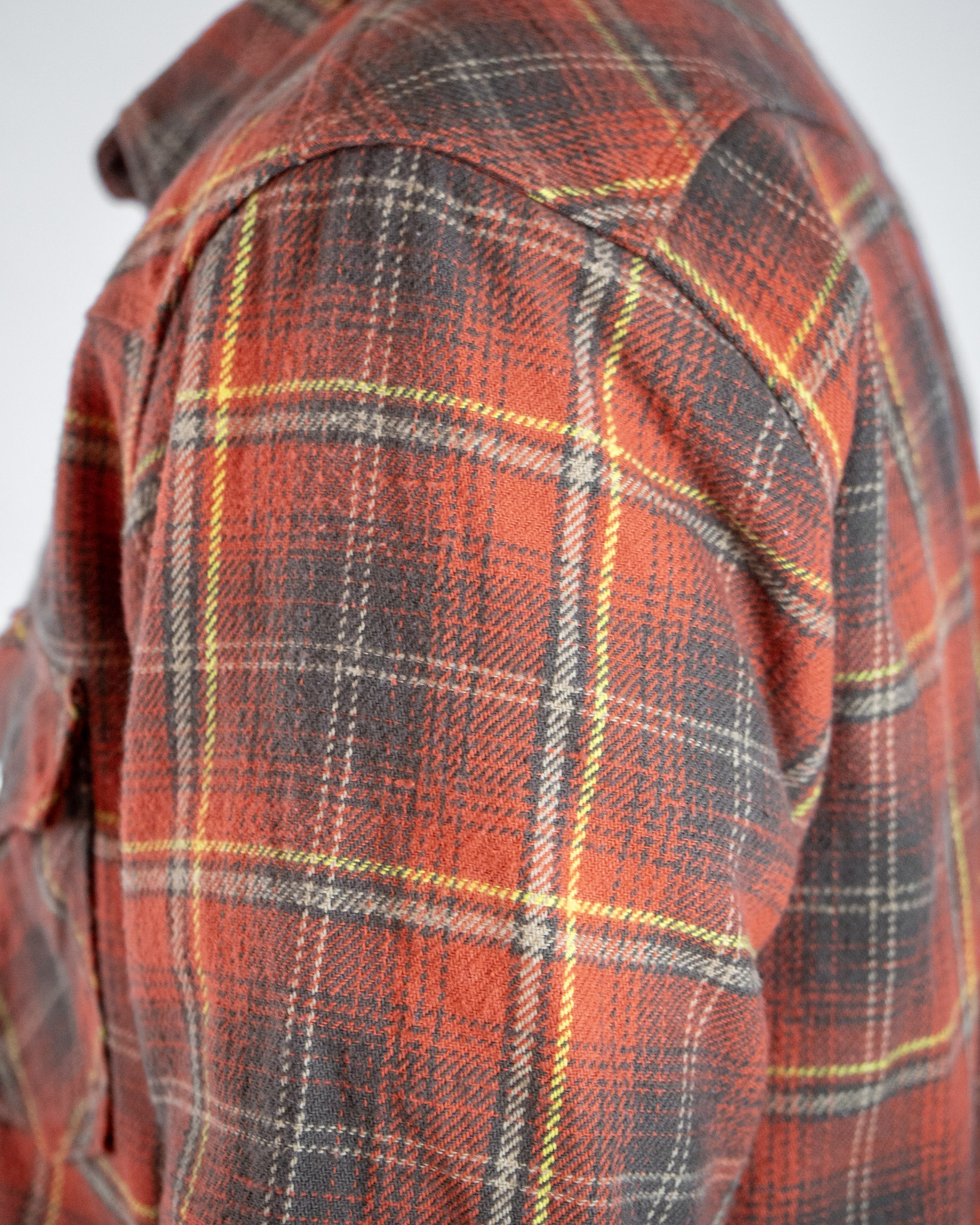
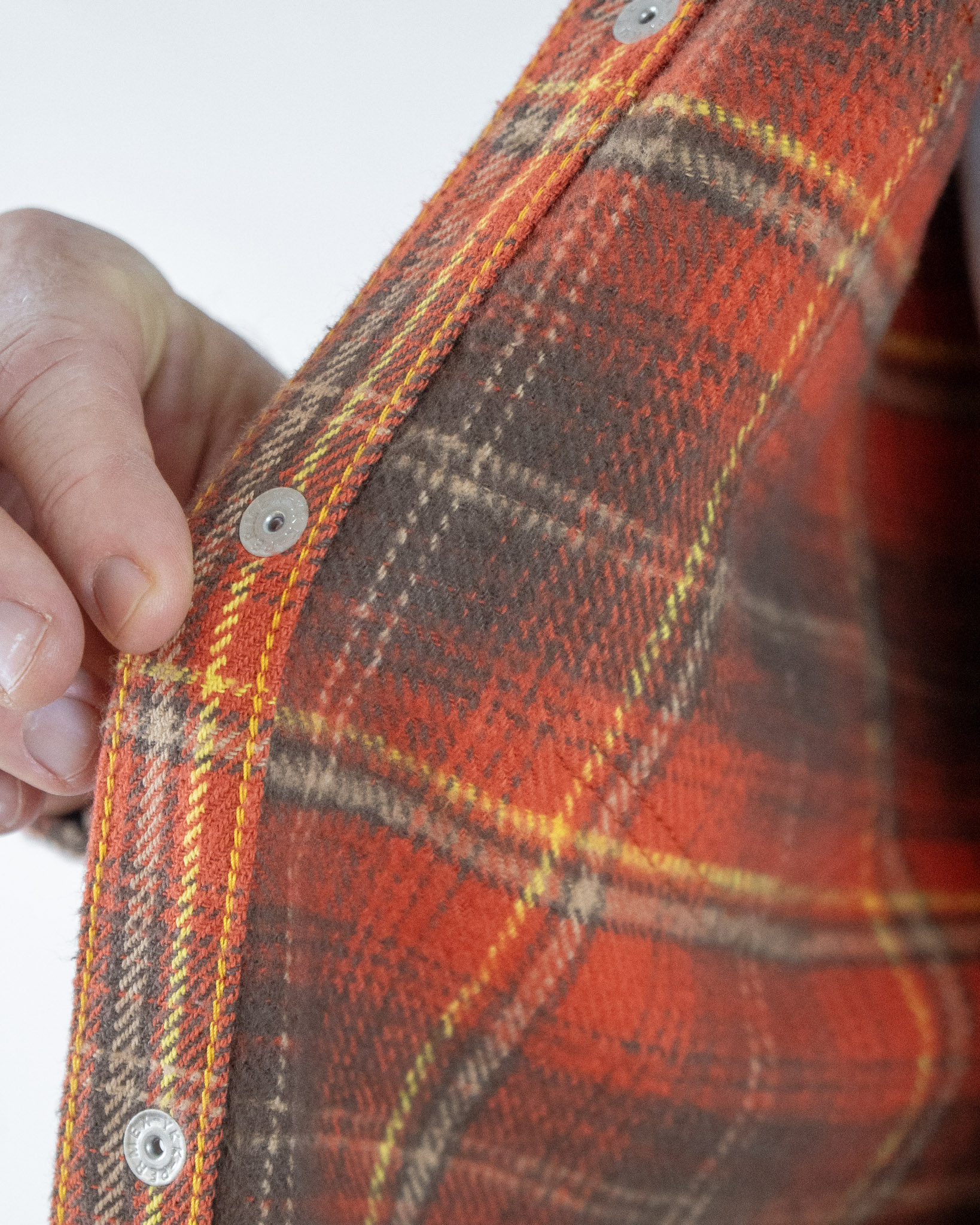
Turn it over and the brushed reverse is soft, although less fluffy to my hands than the standard UHF. It’s a separate fabric, with a rougher exterior but much of the comfort I enjoy in a heavyweight flannel.
Black Herringbone UHF – The Quieter Option
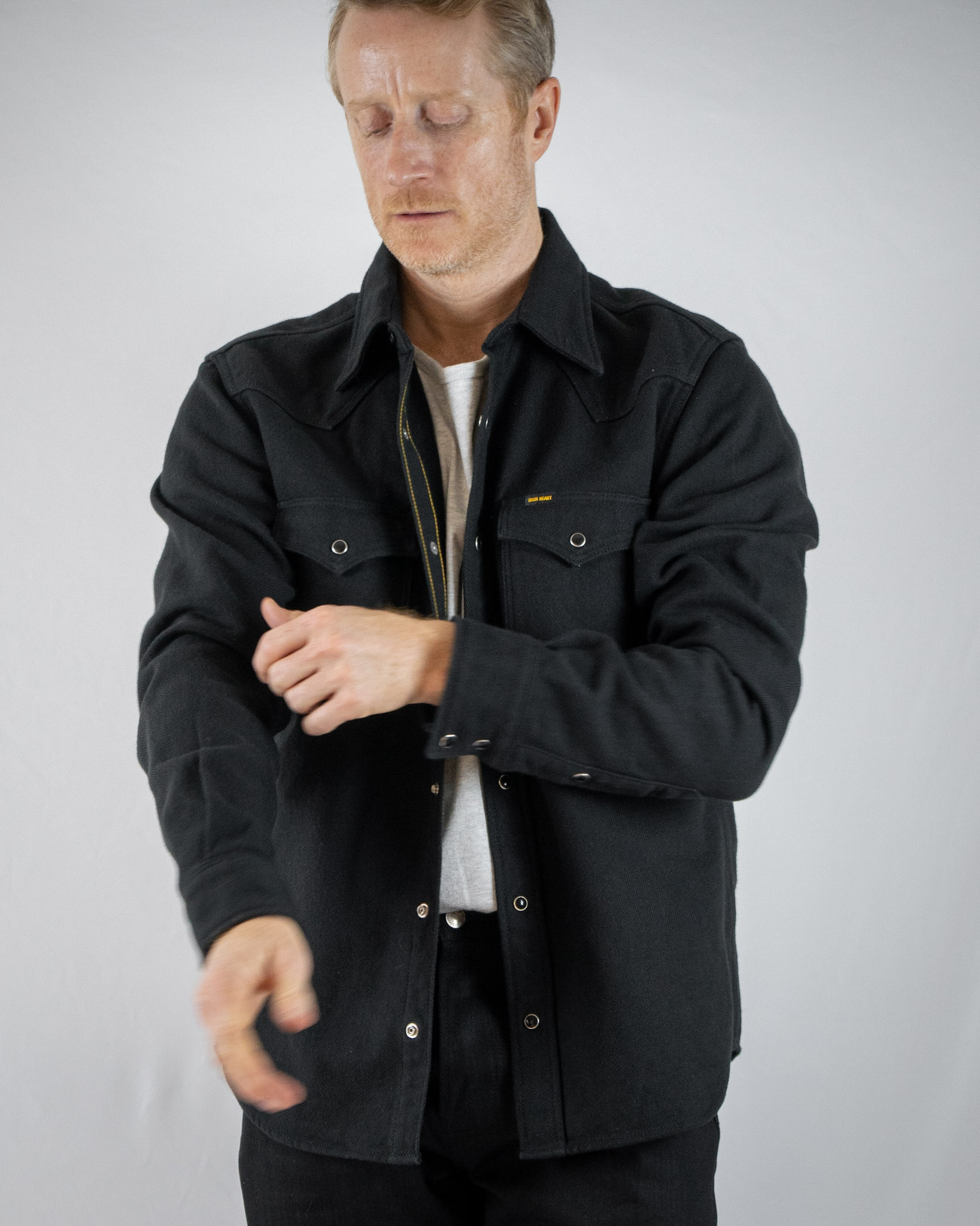
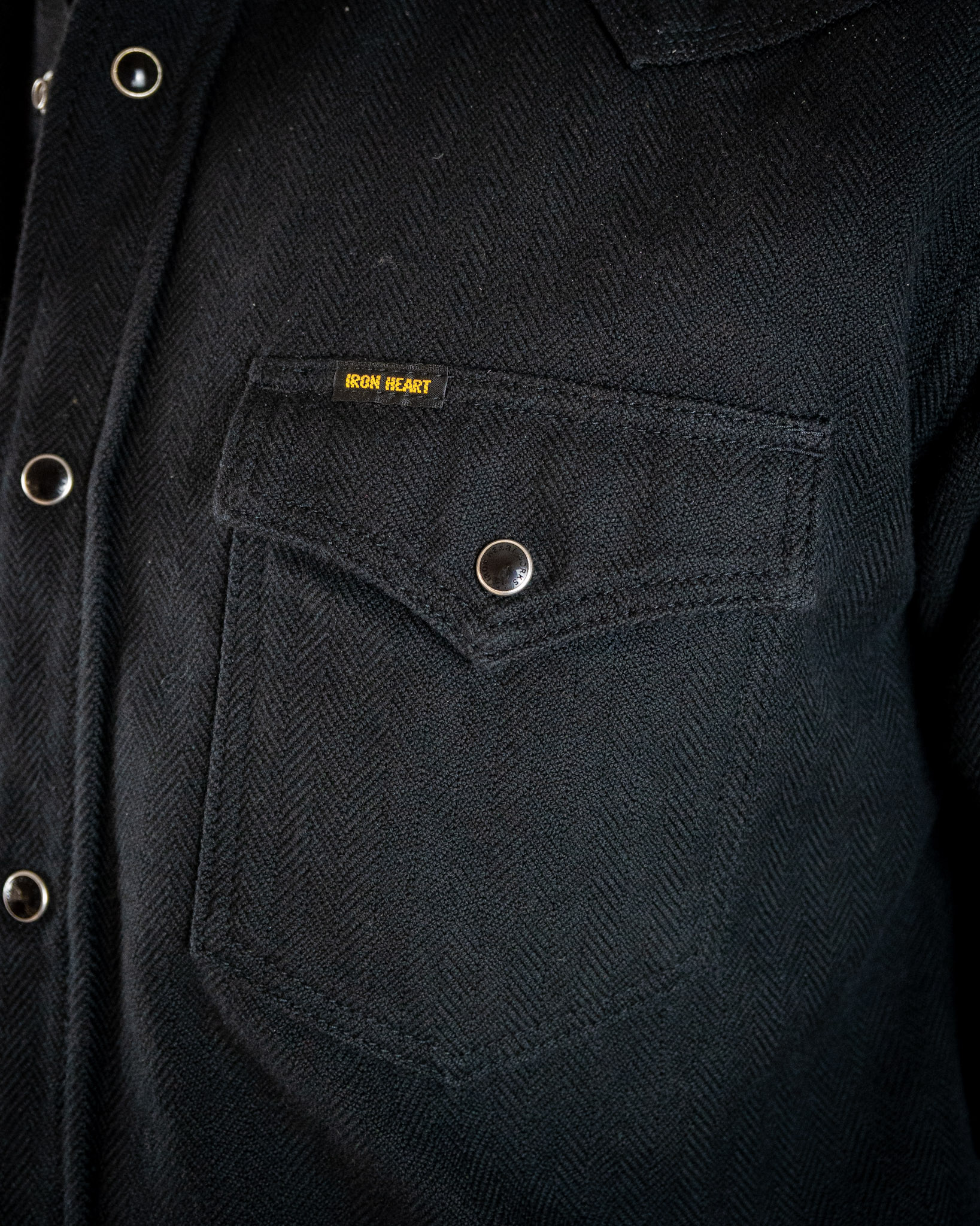
The black IHSH-459-BLK is a UHF, just with a subtle, broken-zigzag herringbone weave instead of a check. Iron Heart has done this before: the IHSH-239-BLK was a black 12 oz. Aspero-cotton herringbone UHF released in 2019.
The current sample’s face feels less fuzzy than the checked UHF I compared it with, although that shirt has been worn. Both use the same single-brushed face and double-brushed reverse. What draws me to the herringbone is how easily its restrained pattern works with clothes I wouldn’t pair with a bold buffalo check.
FW26 Flannels: Checks and New Textures
The familiar buffalo checks return for FW26 with updated button hardware and new model codes, alongside grey plaid, slubby yarns, black herringbone and a lighter 10 oz. flannel.
Iron Heart says the newer reactive-dyed UHFs hold their colour more consistently than older direct-dyed versions, which softened in tone with washing.
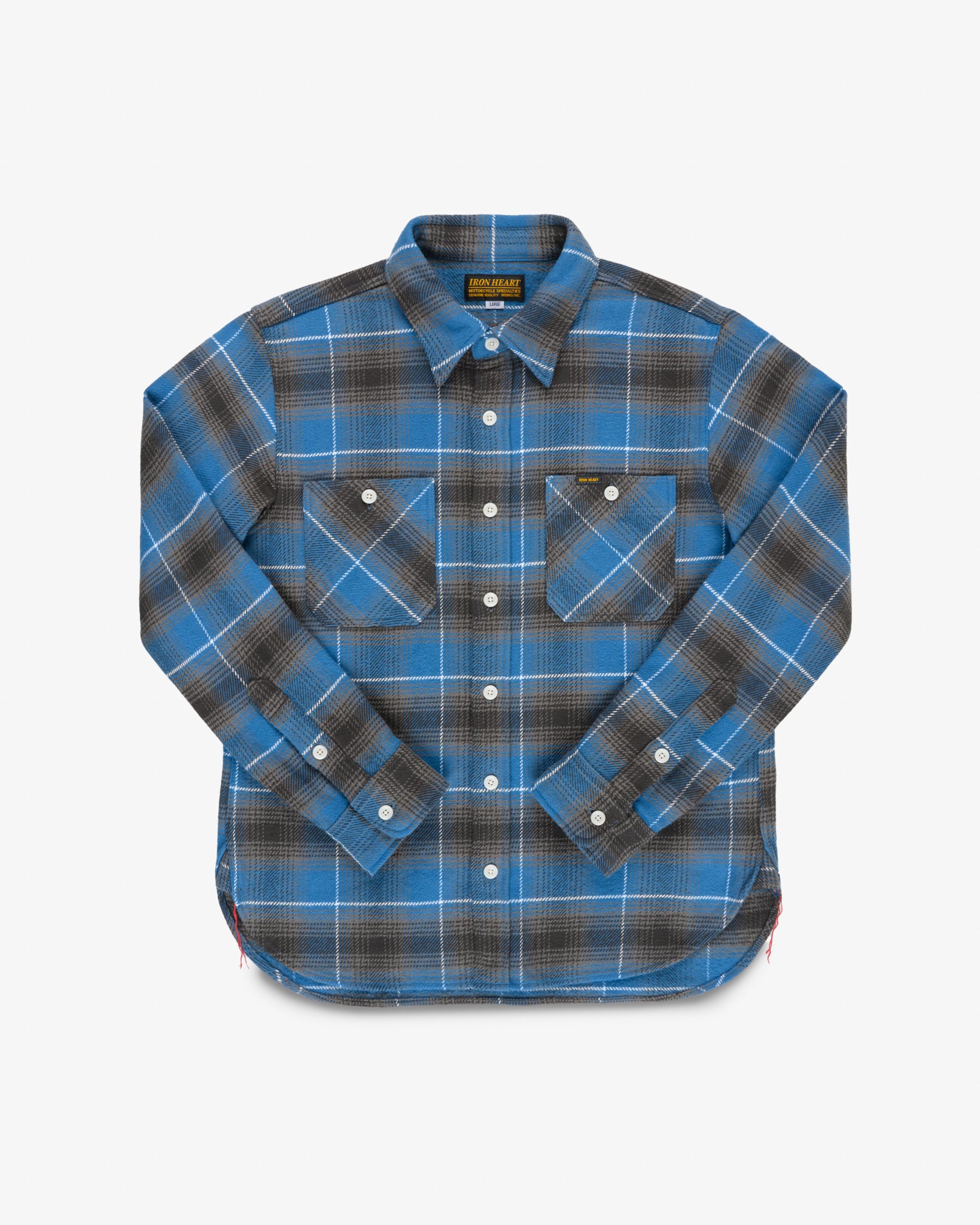
Blue Check Heavy Flannel Work Shirt
10 oz. Heavy Flannel | Work shirt cutIHSH-458-BLU
Not a UHF, but a slightly lighter cotton flannel with a heavily brushed reverse. Blue-grey checks, white buttons and the relaxed work-shirt fit.
VIEW BLUE FLANNEL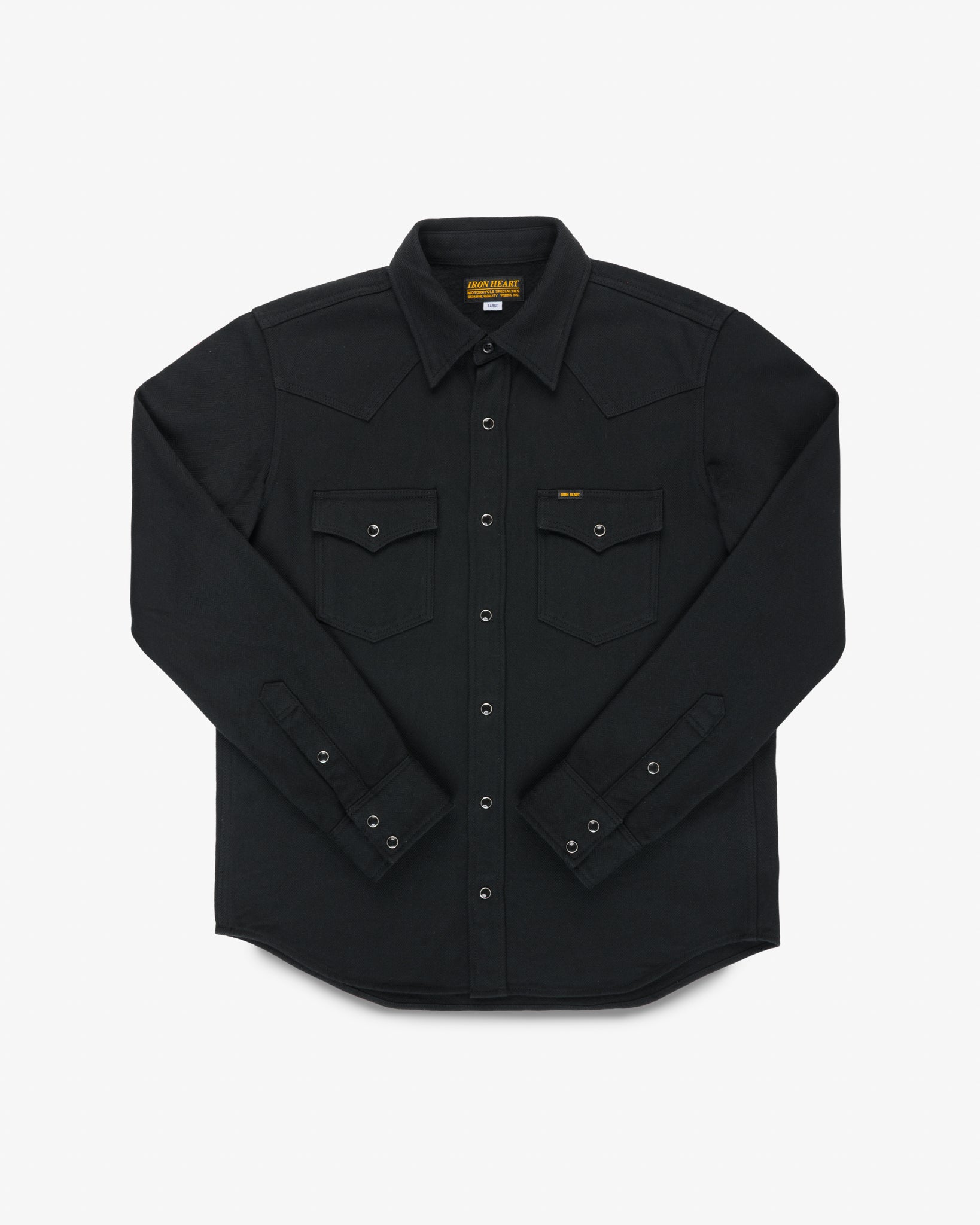
Black Herringbone UHF Western – IHSH-459-BLK
12 oz. UHF | Western cut
The 12 oz. Aspero-cotton UHF without the check. An understated black herringbone weave and matching snaps make this an easier shirt to dress up.
EXPLORE BLACK UHF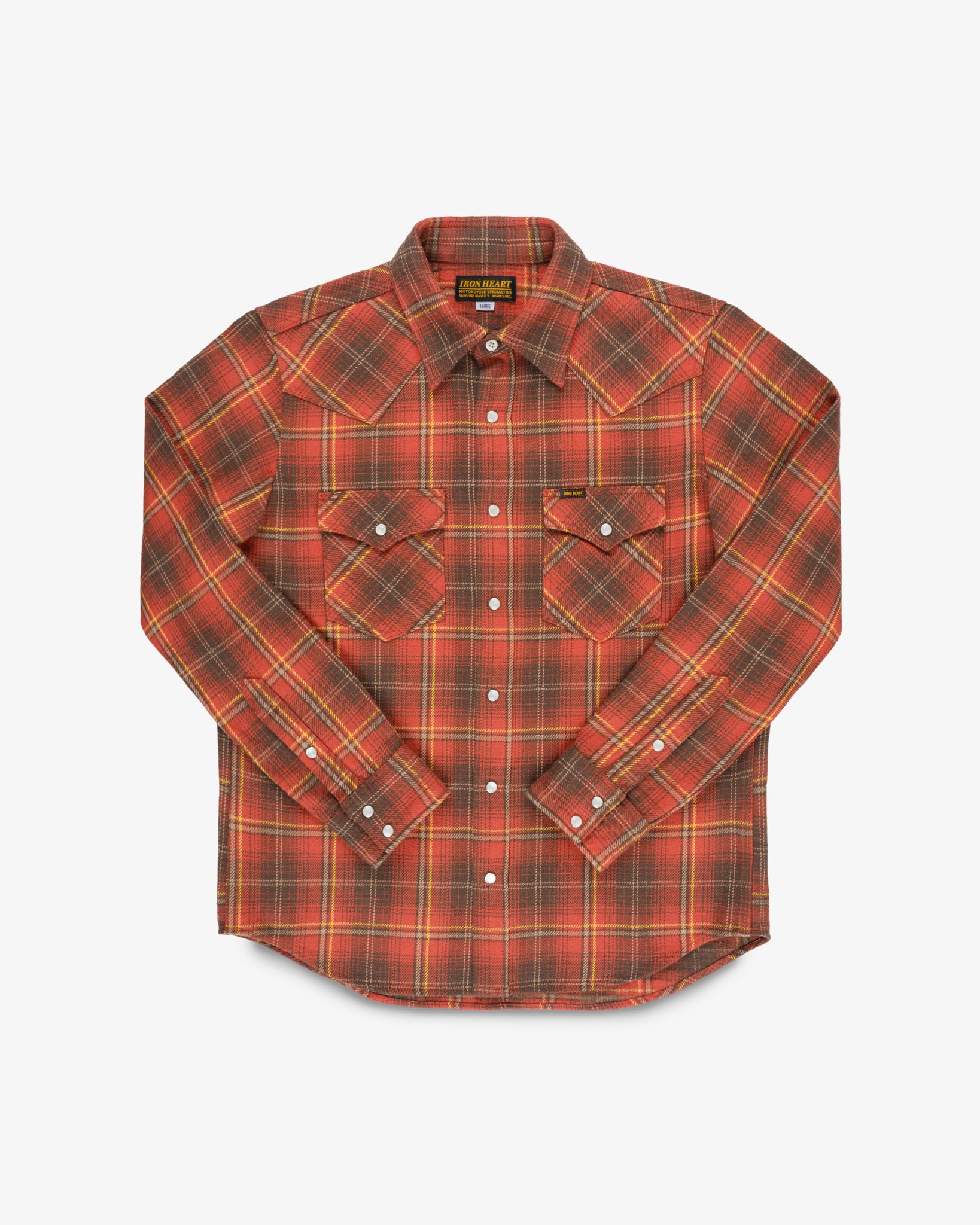
Red Slubby Heavy Flannel Western
12 oz. SHF | Western cutIHSH-455-RED
Irregular yarns give this red-and-black plaid a more uneven texture than classic UHF, with contrasting pearl snaps and a soft brushed reverse.
SEE SLUBBY FLANNEL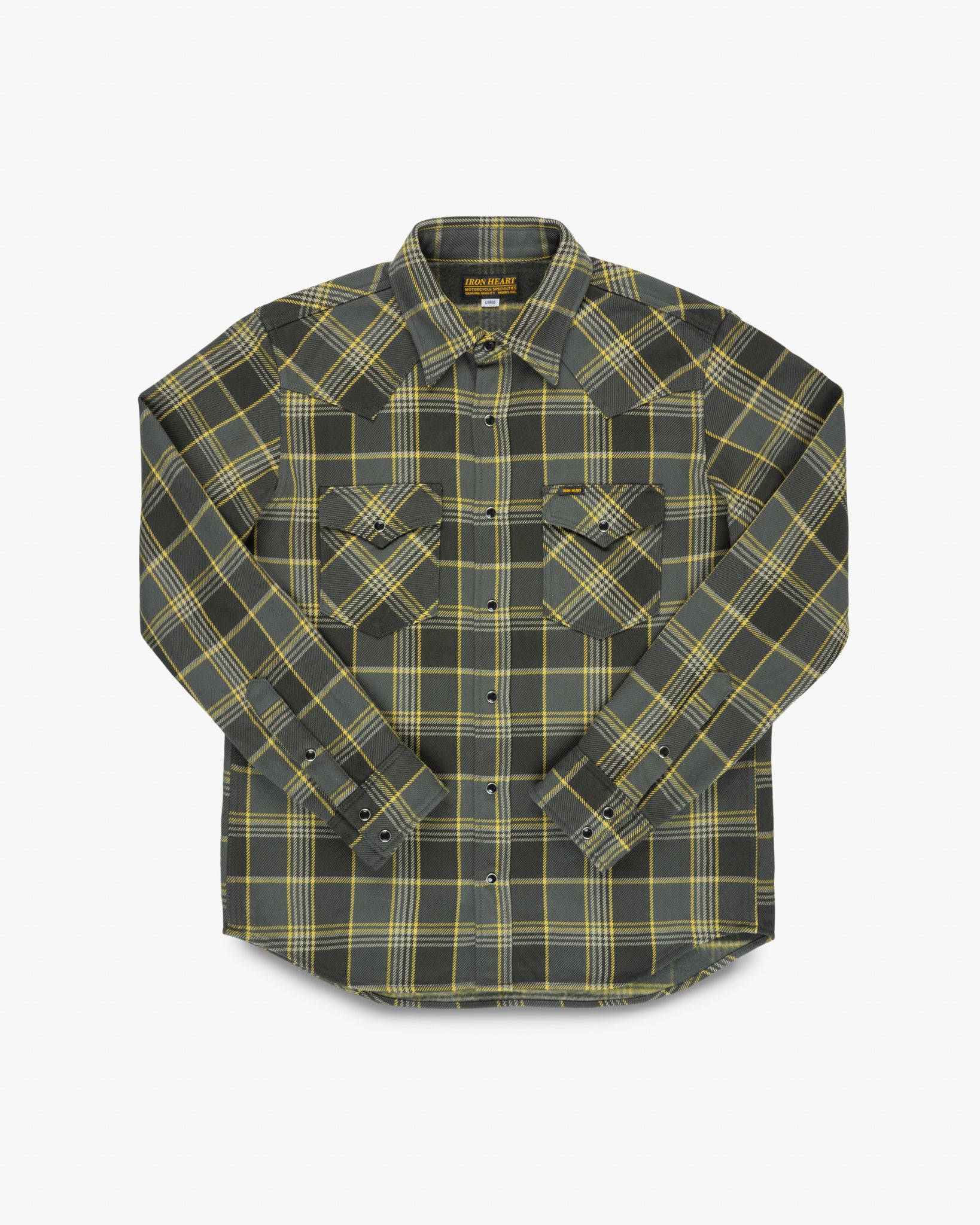
Grey Check Western – IHSH-461-GRY
12 oz. UHF | Western cut
A quieter grey check interrupted by a flash of yellow, finished with black snaps. The familiar UHF weight in a more subdued palette.
SEE GREY CHECK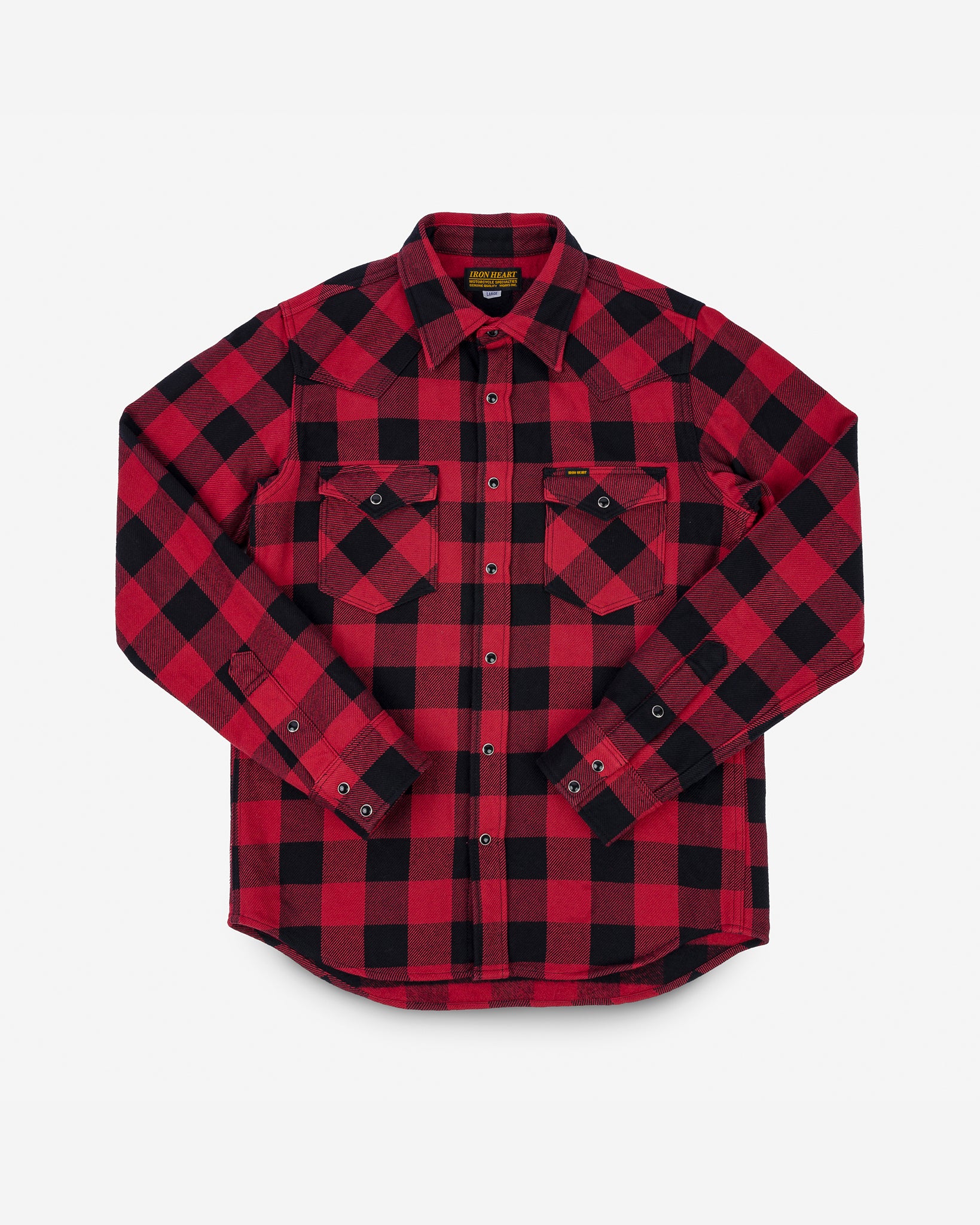
Red/Black Buffalo Check Western
12 oz. UHF | Western cutIHSH-467-RED
Red-and-black buffalo checks, a trimmer western fit and snap fastenings. The familiar Aspero-cotton UHF in its most recognisable form.
SHOP RED WESTERN
Green/Black Buffalo Check Western
12 oz. UHF | Western cutIHSH-467-GRN
The classic heavyweight buffalo check in green and black, cut as a trimmer western with snap fastenings, flap chest pockets and pointed yokes.
VIEW GREEN WESTERNWhy One Is Enough (Until the Next Colourway)
After all these winters, my oldest UHFs are still among the shirts I reach for most. That’s the strongest case for a heavyweight flannel: find one that fits, and you can keep wearing it for years.
Of course, that argument falls apart when you see another check you like. Or feel how different the slubby fabric is. Or realise the black herringbone would work with clothes your buffalo checks don’t.
You only need one good flannel. But that’s not the same as only wanting one.
Share


